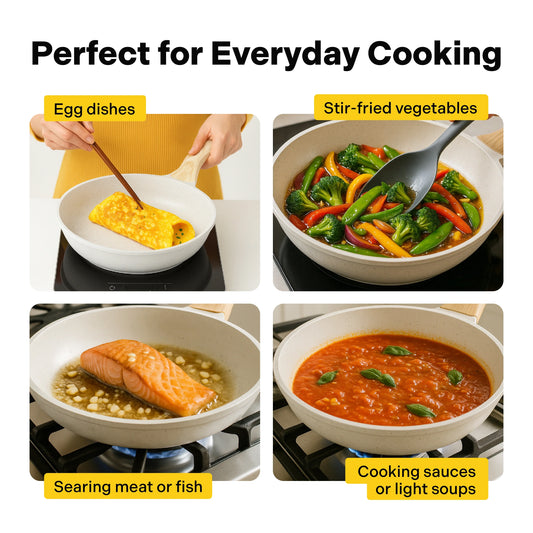
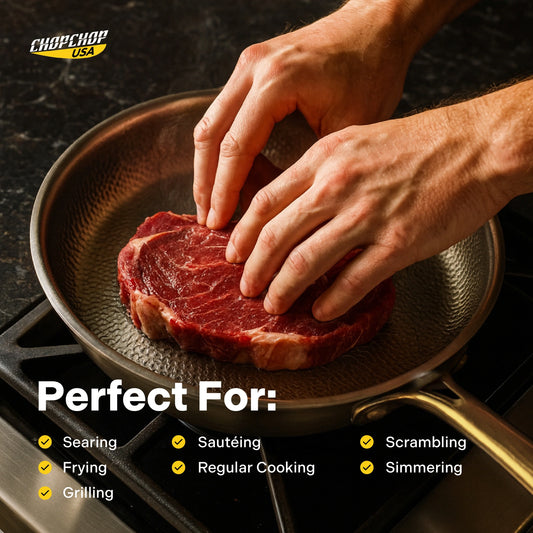
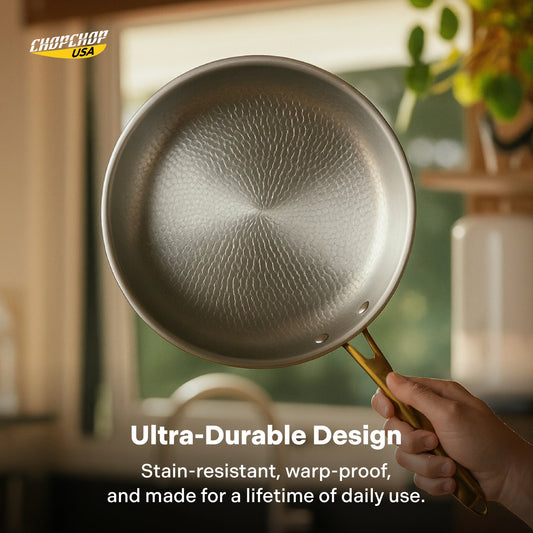
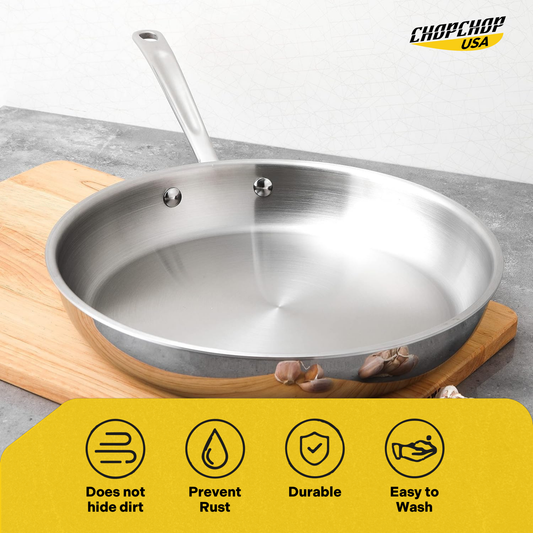
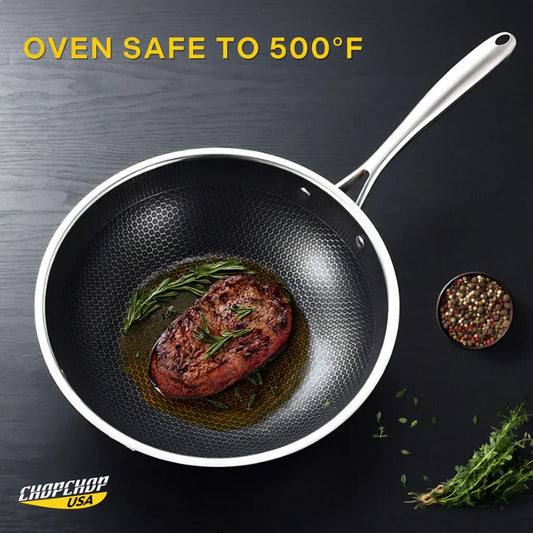
Are ceramic frying pans non-stick? Yes! Ceramic frying pans offer natural non-stick properties, providing an eco-friendly alternative to traditional nonstick cookware. In this guide, ChopChop USA explores the benefits of ceramic frying pans, including maintenance tips and why they’re a safer, healthier choice compared to traditional nonstick pans. Discover why ceramic pans are becoming kitchen essentials.
Traditional Nonstick Frying Pan Pros and Cons

Traditional nonstick frying pans, typically coated with PTFE (Teflon), are known for providing a slick cooking surface with minimal oil. But are ceramic frying pans non-stick better than these traditional options? Let’s explore:
Pros
- Minimal oil required: Ideal for healthy, low-fat cooking.
- Lightweight: Makes for easy handling and quick cooking.
- Easy to clean: Nonstick surface reduces food sticking, making cleanup a breeze.
Cons
- Durability: PTFE coating wears off over time with improper care.
- Health risks: Overheating PTFE pans can release toxic fumes.
- Scratching: Metal utensils can scratch and damage the non-stick surface.
- Heat limitations: High temperatures may release fumes, posing risks, especially to birds.
- Not dishwasher safe: Hand washing is recommended to preserve the ceramic coating.
While traditional nonstick pans excel at convenience, they come with significant concerns about safety and longevity, making are ceramic frying pans non-stick an attractive alternative for many.
Ceramic Frying Pan Pros and Cons

Crafted from natural materials like silica and sand, ceramic coatings are free from PFOA and PTFE. Offering a smooth, non-stick surface, ceramic pans ensure even cooking, durability, and easy maintenance. Wondering if ceramic frying pans are truly non-stick? Let’s explore their pros and cons.
Pros
- Non-toxic: Free from harmful chemicals like PTFE and PFOA.
- Even heat distribution: Cooks food evenly, reducing hot spots.
- Easy maintenance: Easy to clean.
- Eco-friendly: Made from natural materials.
Cons
- Not dishwasher safe: Hand wash to preserve the coating.
- Not ideal for high heat: High temperatures can damage the ceramic coating.
Are ceramic frying pans non-stick as good as people say? Despite these cons, ceramic frying pans are becoming a popular option because of their non-toxic properties and overall cooking performance. However, proper care is essential to extending their lifespan.
Are Ceramic Frying Pans Non-Stick?

Are ceramic frying pans non-stick? Yes, ceramic frying pans are naturally non-stick. Their mineral-based coating, made from materials like silica and sand, creates a smooth surface that allows food to release easily with minimal oil. Free of PTFE and PFOA, they offer a healthier, safer cooking experience with easy cleanup.
What Makes Ceramic Frying Pans Non-Stick?
- Mineral-based coating: Made from silica and sand, the coating forms a naturally smooth surface that prevents food from sticking.
- Chemical-free: Free from PTFE and PFOA, ensuring no harmful chemicals are released during cooking.
- Durability: The ceramic coating is highly durable, resisting wear and maintaining its non-stick properties over time.
- Minimal oil required: Cook with little to no oil, making meals healthier and reducing fat content.
- Easy to clean: The non-stick surface makes it easy to wipe down and clean, saving time and effort after cooking.
How Do Ceramic and Traditional Nonstick (PTFE/Teflon) Compare?

Many home cooks wonder: Are ceramic frying pans non-stick better than traditional nonstick pans? Let’s compare the two options, looking at factors like health benefits, ease of use, durability, and performance to determine which is the best choice.
|
Feature |
Ceramic Frying Pans |
Traditional Nonstick (PTFE/Teflon) Frying Pans |
|
Material |
Made from natural mineral-based coatings like silica and sand. |
Made from synthetic polymers like PTFE (Teflon). |
|
Non-Toxic |
Yes, free from harmful chemicals like PTFE, PFOA, and PFAS. |
Can release toxic fumes if overheated (above 500°F). |
|
Durability |
Less durable than PTFE; may wear over time, especially with high heat. |
Highly durable but can degrade if scratched or overheated. |
|
Ease of Cleaning |
Easy to clean, but can stain over time. |
Very easy to clean with a non-stick surface. |
|
Heat Resistance |
High heat resistance (typically up to 550°F). |
Moderate heat resistance |
|
Eco-Friendliness |
More eco-friendly due to natural coatings and no harmful chemicals. |
Less eco-friendly due to synthetic materials. |
|
Maintenance |
Requires careful maintenance to avoid scratches. |
Requires careful maintenance to avoid scratches. |
|
Cooking Performance |
Even heat distribution but can have hot spots. |
Consistent non-stick performance but can develop hotspots over time. |
How Long Do Nonstick Ceramic Frying Pans Last?

On average, a ceramic frying pan lasts between 1.5 to 5 years, depending on usage and care. Are ceramic frying pans non-stick durable enough for long-term use? With proper care, such as using low to medium heat and gentle cleaning, high-quality ceramic pans can maintain reliable non-stick performance for years.
Factors affecting lifespan include cooking temperature, where high heat weakens the ceramic coating. Cleaning methods also matter—harsh detergents or dishwashing can damage the surface. Utensils and storage are important too; using metal utensils or stacking without protection can scratch the coating.
Signs it’s time to replace a ceramic frying pan include food sticking, visible damage like discoloration or scratches, and performance issues like difficulty cleaning or uneven heating. These indicate the non-stick surface is worn or the coating is deteriorating.
How to Clean a Ceramic Frying Pan

Cleaning a ceramic frying pan is easy, but requires some care to maintain the non-stick coating. Are ceramic frying pans non-stick as easy to clean as other non-stick pans? Absolutely! Their non-stick surface makes cleanup quick and hassle-free.
- Cool down first: Always allow the pan to cool down before cleaning to prevent thermal shock.
- Use warm, soapy water: Gently clean the pan with a soft sponge and warm, soapy water.
- Avoid abrasive sponges: Do not use harsh sponges or chemicals, as they can damage the ceramic coating.
- Hand wash only: Hand washing is recommended to preserve the integrity of the non-stick surface.
- Tough residues: If food is stuck, let the pan soak for a few minutes, then gently scrub with a soft sponge.
By following these steps, your ceramic frying pan will stay in top condition, ensuring long-lasting performance.
How to Maintain a Ceramic Frying Pan

Proper care for a ceramic frying pan is essential to maintaining its non-stick surface and prolonging its lifespan for healthy cooking.
- Preheat on low to medium heat: Gradual heating preserves the ceramic coating.
- Avoid high heat: Excessive heat can damage the surface.
- Cool before washing: Prevent warping and coating damage.
- Hand wash with a soft sponge: Protects the pan from scratches.
- Use proper utensils: Stick to silicone, wood, or nylon tools.
- Store with protection: Use pan protectors or cloth between stacked pans.
By following these tips, you ensure your ceramic frying pan remains durable, non-stick, and performs reliably over time, extending its life and enhancing your cooking experience. Proper care helps maintain the non-stick surface, answering the question "are ceramic frying pans non-stick?" and ensures long-lasting, healthy cooking performance.
Choosing the Right Non-Stick Pan - ChopChop USA Ceramic

ChopChop USA Ceramic Frying Pan
Limited-Time Offer — Get Free Gifts
When selecting a non-stick frying pan, consider the following specifications to find the best option for your cooking needs. Are ceramic frying pans non-stick the right choice for your kitchen? If you're looking for a safer, eco-friendly alternative to traditional nonstick cookware, ChopChop USA Ceramic Frying Pan is an excellent option.
Key Specs:
- Weight: Lightweight yet sturdy construction for easy handling.
- Materials: Reinforced aluminum base, ceramic-coated for non-toxic, eco-friendly cooking.
- Diameter: Available in various sizes, typically ranging from 9.45" (24 cm) to 11.81" (30 cm).
- Oven safe: Safe up to 550°F, making it versatile for various cooking methods.
- Induction compatible: Yes, works with all stove types, including induction.
- Care instructions: Hand-washing is recommended to preserve the coating
ChopChop USA offers high-quality ceramic frying pans that are built to last and provide a healthier cooking experience. Whether you're sautéing vegetables or making a delicate omelet, ChopChop USA ceramic frying pan delivers performance and safety.
Conclusion
In conclusion, are ceramic frying pans non-stick? Yes, ceramic frying pans offer excellent non-stick properties, making them a healthier, eco-friendly choice for home cooks. ChopChop USA offers top-quality ceramic pans that ensure durability, easy cleanup, and a safer cooking experience.
For more amazing recipes, follow me on Facebook and Instagram! If you have any questions about ChopChop USA's products or promotions, please feel free to contact us at support@chopchopusa.com. Our dedicated team is available 24/7 and always happy to assist you.
Frequently Asked Questions
1. Are Ceramic Frying Pans Non-Stick?
Yes, ceramic frying pans are non-stick due to their natural ceramic coating, which provides a smooth and slick cooking surface without the need for harmful chemicals.
2. What Makes Frying Pan Non-Stick?
The non-stick properties of frying pans come from their coatings, such as PTFE (Teflon) or ceramic. Ceramic pans use a natural, non-toxic mineral-based coating for non-stick performance.
3. Are Ceramic Frying Pans Dishwasher Safe?
Ceramic frying pans are generally not dishwasher safe. Hand-washing with warm soapy water and a soft sponge is recommended to maintain the non-stick surface.
4. Does the Ceramic Coating Release Microplastics?
No, ceramic coatings do not contain plastic materials, so they do not release microplastics during cooking. Ceramic is a natural, eco-friendly alternative to traditional non-stick coatings.
5. Is Ceramic Frying Pan Safe?
Yes, ceramic frying pans are safe, as they are made from natural materials without harmful chemicals like PFOA or PTFE, making them a safer option for cooking.