








Wood/Bamboo
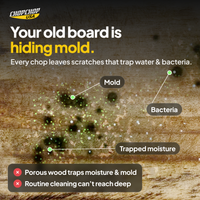
- Up to 50% harbor E. coli and Salmonella
- Porous wood traps moisture, food and mold
- Routine cleaning can’t reach deep
Read more
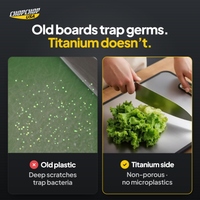
Studies find up to 50% of wooden cutting boards harbor E. coli and Salmonella. Porous wood traps moisture, food particles, and mold in knife grooves; routine cleaning can’t reach deep. For safer prep, sanitize often or switch to non-porous stainless or titanium.

The Hidden Risks of Old Wooden Cutting Boards. Still using an old wooden cutting board? Every chop makes deep scratches that trap water, crumbs, and harmful bacteria.
According to a recent study, worn wooden boards in home kitchens hide far more bacteria even after washing, and 87% of food handlers admit they use the same board for meat, fruits, and vegetables, risking cross-contamination.
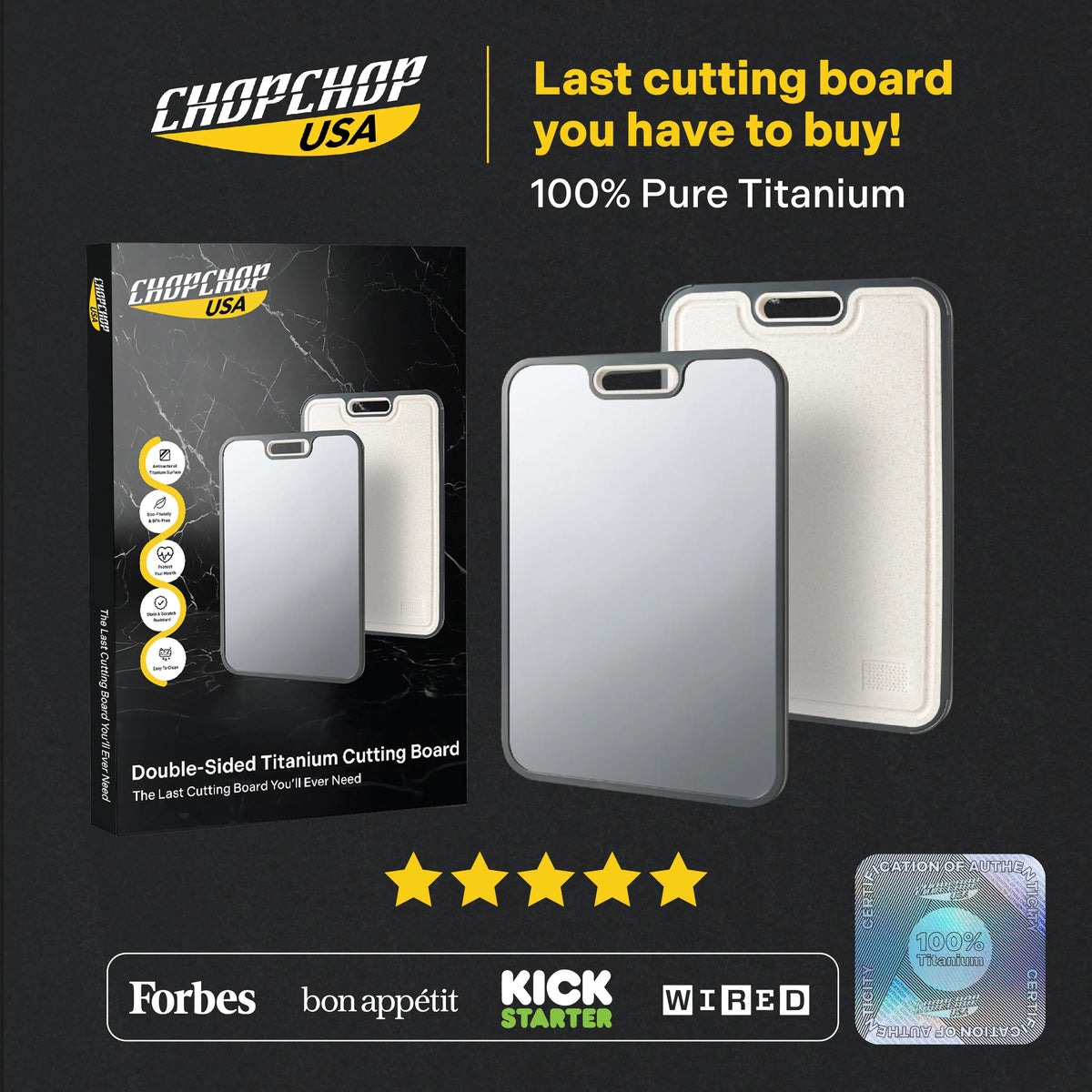
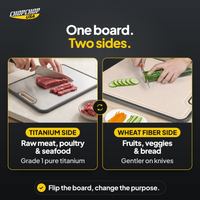
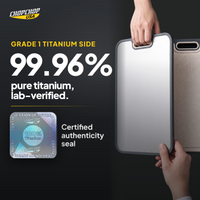
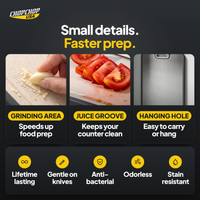
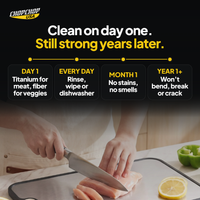
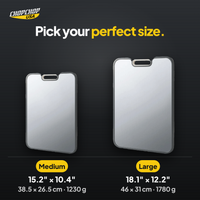
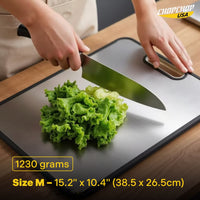
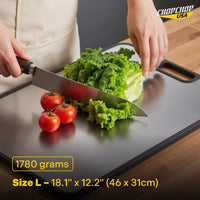
Switch to the ChopChop USA Double-Sided Titanium Cutting Board: one side is made of durable titanium, ideal for handling raw meats, while the other is crafted from natural wheat fiber, perfect for preparing fruits and vegetables.
Both sides resist stains and odors, wipe clean in seconds, and protect your knife’s edge—so you can prep with confidence every time.