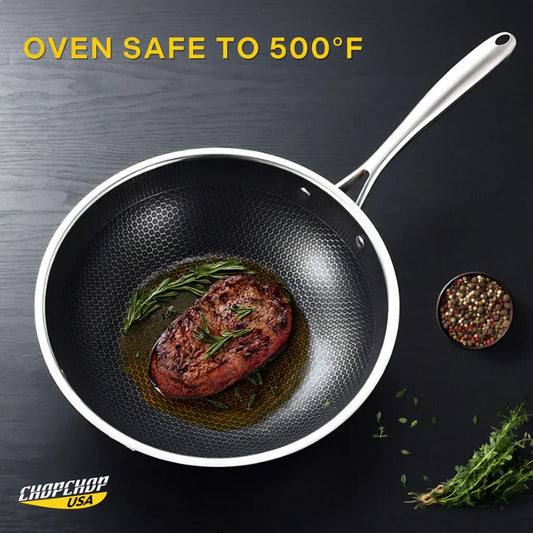
Is a ceramic frying pan non-toxic and truly safe for everyday cooking? Yes, when properly manufactured and used correctly, ceramic pans offer one of the safest nonstick options available today. In this guide, ChopChop USA will explain how ceramic cookware works, why toxicity matters, how it compares to other materials, and how to choose the safest ceramic frying pan confidently.
What Exactly Are Ceramic Frying Pans?

Ceramic frying pans feature a metal base coated with a silica-based, sand-derived ceramic layer that creates a smooth, glossy nonstick surface, allowing food to release easily with less oil.
Unlike traditional nonstick surfaces, ceramic coatings are cured using high heat rather than chemical bonding. This process eliminates the need for PTFE and PFOA, which are commonly found in older nonstick cookware.
Many buyers today ask, Is a ceramic frying pan non-toxic because they want cookware that does not release chemicals during cooking. The answer depends on quality, certifications, and proper use.
Modern ceramic pans are designed for healthy cooking, fast heat response, and easy cleanup while avoiding dangerous chemical coatings found in earlier nonstick technologies.
The Problems with Traditional Non-Stick Cookware

Traditional nonstick cookware often uses synthetic coatings that deteriorate under high heat. When overheated, these coatings may emit fumes that can irritate the lungs and cause flu-like symptoms.
Scratching is another major issue. Once the protective layer is damaged, food sticks more easily, and the exposed surface can degrade rapidly.
Consumers researching Is a ceramic frying pan non-toxic are usually reacting to concerns about older nonstick materials that contain harmful compounds.
Long-term chemical exposure, even at low levels, raises concerns about hormone disruption, liver stress, and environmental damage, which is why safer cookware materials have gained popularity.
What Are PFOA and PTFE, and Why Should You Avoid Them?

PFOA (perfluorooctanoic acid) and PTFE (polytetrafluoroethylene) are synthetic chemicals historically used in nonstick coatings. PFOA has been linked to cancer, thyroid disease, and immune system disruption.
PTFE itself is stable at low temperatures but begins breaking down when overheated. This breakdown releases toxic fumes that can be harmful to humans and fatal to birds.
If you are asking Is a ceramic frying pan non-toxic, the most important reason is that true ceramic coatings do not require PTFE or PFOA at all.
This absence of toxic compounds is what makes ceramic cookware a preferred option for families, health-conscious cooks, and eco-aware consumers.
Is a Ceramic Frying Pan Non-Toxic?

Yes—Is a ceramic frying pan non-toxic is a question with a reassuring answer when the pan is properly manufactured. High-quality ceramic frying pans use natural minerals without synthetic chemicals.
Certified ceramic cookware is free from PTFE, PFOA, lead, cadmium, and other heavy metals. This makes it safe for daily cooking at recommended heat levels.
However, not all ceramic pans are equal. Low-quality options may use hybrid coatings that contain trace chemicals. Always check safety certifications.
A true ceramic pan delivers clean cooking, no chemical fumes, and peace of mind for your household.
Comparing Frying Pan Materials: Which Is the Safest?

To truly understand Is a ceramic frying pan non-toxic, it helps to compare ceramic with other common cookware materials.
Ceramic vs Teflon
Teflon achieves its nonstick performance through PTFE, a synthetic chemical coating, while ceramic uses a natural silica-based surface. Ceramic offers superior chemical safety, while Teflon may withstand rough handling slightly better.
Ceramic vs Copper
Copper provides exceptional heat control but often requires a metal lining that can include toxic materials. Ceramic ensures safer food contact, easier maintenance, and greater everyday practicality.
Ceramic vs Aluminum
Bare aluminum reacts with acidic ingredients and can leach into food. Ceramic-coated aluminum prevents this reaction, delivering a safer, more stable cooking surface.
Overall, ceramic offers the best balance of safety, performance, durability, and affordability for modern kitchens.
Benefits of Non-Toxic Ceramic Frying Pan

Choosing a non-toxic ceramic frying pan offers several powerful advantages beyond chemical safety.
First, ceramic requires significantly less oil. This promotes heart-healthy cooking and supports low-calorie meal preparation.
Second, ceramic surfaces heat evenly and prevent hot spots. This reduces burning, improves texture, and enhances flavor consistency.
Third, easy cleanup saves time and water. Most residue wipes away with a soft sponge.
Fourth, ceramic supports sustainable living through safer production and a longer lifespan when well-maintained.
And finally, if you are still wondering Is a ceramic frying pan non-toxic, the overwhelming scientific consensus is yes—when properly certified and used correctly.
How to Keep Your Ceramic Frying Pan Safe and Long-Lasting

Use low to medium heat always. High heat damages ceramic coatings. It also risks releasing any materials in the coating. Keep it cool, and the ceramic stays safe.
Avoid metal utensils completely. Use wood, silicone, or plastic. Metal scratches ceramic instantly. One scratch might be fine. But repeated scratching adds up.
Hand wash with gentle detergents. Dishwashers are too harsh. The spray pressure and heat degrade the coating over time. Spend two minutes hand washing instead.
Store pans carefully. Don't stack them directly on top of each other. Use pan protectors or store them on a rack. Stacking causes scratches on the bottom of the pan above.
Preheat gently. Don't blast the heat. Let the pan warm gradually. This extends coating life significantly.
Doing all of this ensures Is a ceramic frying pan non-toxic and remains true for many years.
What to Do If Your Ceramic Frying Pan Gets Scratched

Minor surface scratches on a ceramic frying pan are usually cosmetic and do not immediately make the pan unsafe to use. However, deeper grooves can weaken the nonstick coating and may expose the metal base underneath. When this happens, food can begin sticking more easily, requiring extra oil and reducing cooking performance.
If you notice scratches forming, lower your cooking heat immediately and avoid using acidic ingredients such as tomatoes, vinegar, or citrus. These foods can accelerate surface breakdown once the coating is compromised. Always switch to silicone, wood, or plastic utensils to prevent additional damage.
Scratches alone do not instantly determine whether Is a ceramic frying pan non-toxic, but severe surface damage reduces both the pan’s lifespan and its safety margin. When deterioration becomes significant, replacing the pan is the safest long-term decision.
The Best Ceramic Frying Pan: ChopChop USA Ceramic Frying Pan

ChopChop USA Ceramic Frying Pan
Limited-Time Offer — Get Free GiftsThe ChopChop USA Ceramic Frying Pan is crafted with durable ceramic construction for long-lasting strength and dependable everyday performance. If you’re wondering Is a ceramic frying pan non-toxic, this pan delivers a confident yes with its 100% ceramic, non-toxic coating that contains no PTFE, PFOA, lead, or cadmium, ensuring safe and clean cooking.
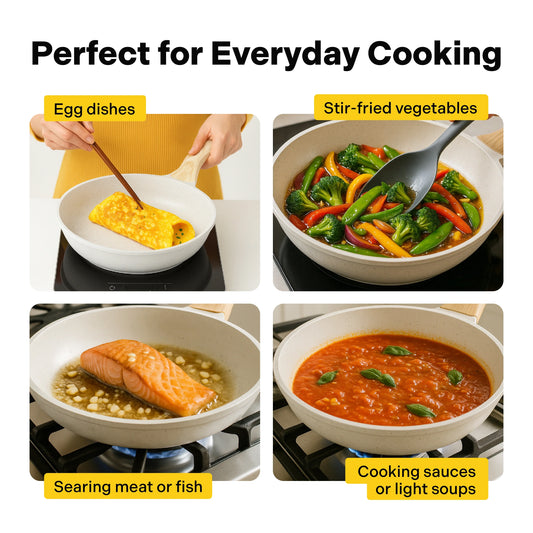
The smooth ceramic surface prevents sticking and makes cleaning effortless, while the pan’s even-heat design distributes heat consistently for perfectly cooked results every time.

Available Sizes
- 9.45" (24 cm) – Compact and perfect for eggs, pancakes, and quick daily meals.
- 11.02" (28 cm) – A versatile all-purpose pan for stir-fries, searing, and one-pan dishes.
- 11.81" (30 cm) – Spacious and ideal for family meals with even, consistent cooking.
Why You Need the ChopChop USA Ceramic Frying Pan
- Chemical-Free Cooking – Made with a natural, toxin-free ceramic coating to ensure safe and clean meals.
- Even Heat Distribution – Reinforced aluminum base heats quickly and evenly, preventing hot spots for consistent cooking.
- Scratch-Resistant Surface – Durable ceramic resists scratches and maintains a smooth, high-performing finish over time.
- Effortless Cleanup – Nonstick surface allows food to release easily; just a quick rinse or wipe is enough.
- Built to Last – Premium ceramic with a sturdy aluminum core ensures long-term durability and daily reliability.
- Lightweight & Comfortable – Strong yet lightweight design makes handling easy for everyday cooking.
- Oven & Cooktop Safe – Oven-safe up to 550°F and compatible with gas, electric, and induction cooktops.
Conclusion
Is a ceramic frying pan non-toxic? Ceramic cookware offers safe, efficient, and chemical-free cooking when chosen wisely. For guaranteed performance and verified safety, ChopChop USA Ceramic Frying Pans deliver trusted, non-toxic results for modern kitchens.
For more amazing recipes, follow me on Facebook and Instagram! If you have any questions about ChopChop USA's products or promotions, please feel free to contact us at support@chopchopusa.com. Our dedicated team is available 24/7 and always happy to assist you.
Frequently Asked Questions
1. Is a Ceramic Frying Pan Non-Toxic?
Yes, certified ceramic frying pans are free from PTFE, PFOA, lead, and cadmium. When used on low to medium heat, they deliver safe, clean, and reliable everyday cooking.
2. Is A Ceramic Frying Pan Safer Than Teflon?
Ceramic frying pans are considered safer because they do not rely on PTFE coatings that release fumes when overheated. Ceramic surfaces maintain safety under proper cooking temperatures consistently.
3. What Are The Benefits Of Buying A Ceramic Frying Pan?
Ceramic frying pans offer non-toxic cooking, low-oil food release, even heat distribution, fast cleanup, lightweight handling, and environmentally safer materials compared to many traditional cookware options today.
4. How To Clean a Ceramic Frying Pan?
Allow the pan to cool fully, wash with warm water and mild soap, avoid abrasive scrubbers, dry immediately, and never soak for extended periods to preserve the ceramic coating.
5. Are Ceramic Frying Pans Safe If Scratched?
Light surface scratches are usually safe but reduce nonstick performance. Deep scratches expose the base metal and signal that it’s time to replace the pan for continued cooking safety.