Are you trying to decide between a titanium saucepan and a stainless steel saucepan? The answer depends on your cooking style, budget, and priorities. When comparing titanium saucepan vs stainless steel, both materials offer excellent durability, but they differ in weight, maintenance, and overall cooking experience. In this guide, ChopChop USA will help you understand the key differences and choose the best option for your kitchen.
What Is a Titanium Saucepan?

When evaluating titanium saucepan vs stainless steel, it helps to understand what titanium cookware actually is.
A titanium saucepan is cookware that incorporates titanium as part of its cooking surface or construction. Titanium is known for its exceptional strength-to-weight ratio, corrosion resistance, and non-reactive properties. Unlike some metals, titanium does not react with acidic foods such as tomatoes, vinegar, or citrus.
Many modern titanium saucepans use multi-layer construction to improve performance. Because pure titanium is not the best conductor of heat on its own, manufacturers often combine it with aluminum or other conductive materials to create faster and more even heating.
Titanium saucepans are commonly used for preparing sauces, soups, grains, oatmeal, reheating leftovers, boiling eggs, and other everyday cooking tasks. Their lightweight design makes them especially appealing to home cooks who prefer cookware that is easy to handle.
Pros and Cons of Titanium Saucepans

A major part of the titanium saucepan vs stainless steel debate centers around the strengths and weaknesses of titanium cookware.
Pros of Titanium Saucepans
- Lightweight and easy to lift.
- Naturally resistant to rust and corrosion.
- Non-reactive with acidic and alkaline foods.
- Highly durable and resistant to wear.
- Does not absorb odors or flavors.
- Often requires minimal maintenance.
Cons of Titanium Saucepans
-
Usually more expensive than traditional stainless steel cookware.
For many households, the benefits outweigh the drawbacks, particularly if durability and easy maintenance are important factors.
What Is a Stainless Steel Saucepan?

Understanding stainless steel cookware is equally important when comparing titanium saucepan vs stainless steel.
A stainless steel saucepan is made from an alloy containing steel, chromium, and sometimes nickel. The chromium creates a protective layer that helps prevent rust and corrosion, making stainless steel one of the most popular cookware materials in the world.
Most high-quality stainless steel saucepans include an aluminum or copper core to improve heat distribution. This combination helps deliver reliable cooking performance while maintaining the durability that stainless steel is known for.
Stainless steel cookware is widely used in both home and professional kitchens because it is versatile, durable, and suitable for a wide range of cooking techniques.
Pros and Cons of Stainless Steel Saucepans

The titanium saucepan vs stainless steel discussion often highlights the long-standing popularity of stainless steel cookware.
Pros of Stainless Steel Saucepans
- Widely available in various price ranges.
- Excellent durability and longevity.
- Attractive appearance.
- Compatible with most cooktops.
- Great for browning and searing.
- Trusted by professional chefs worldwide.
Cons of Stainless Steel Saucepans
- Can be heavier than titanium cookware.
- Food may stick if cooking techniques are not used properly.
Despite these disadvantages, stainless steel remains one of the most dependable cookware materials available today.
Titanium Saucepan vs Stainless Steel Saucepan: Quick Comparison

When comparing titanium saucepan vs stainless steel, both materials offer excellent durability and versatility. However, they differ in weight, maintenance requirements, heat performance, and overall cooking experience. The table below provides a quick overview before we explore each category in more detail.
|
Feature |
Titanium Saucepan |
Stainless Steel Saucepan |
|
Weight |
Lightweight |
Heavier |
|
Heat Distribution |
Excellent with aluminum core |
Excellent with clad construction |
|
Heat Retention |
Good |
Very good |
|
Food Reactivity |
Non-reactive |
Generally non-reactive |
|
Corrosion Resistance |
Excellent |
Excellent |
|
Induction Compatibility |
Depends on construction |
Usually compatible |
|
Maintenance |
Low |
Low to Moderate |
|
Durability |
Excellent |
Excellent |
|
Price |
Higher |
Wider price range |
Weight and Handling
Titanium saucepans are generally lighter than stainless steel models, making them easier to lift, pour, and maneuver during everyday cooking. Stainless steel cookware is often heavier but offers a sturdy feel that many cooks appreciate.
Heat Distribution and Retention
Both materials can provide excellent cooking performance when paired with an aluminum or copper core. Stainless steel often retains heat slightly longer, while titanium cookware can respond more quickly to temperature adjustments.
Food Release and Cooking Performance
Neither material is naturally non-stick, so proper preheating and cooking techniques are important. Stainless steel is traditionally preferred for searing and creating pan sauces, while titanium excels at everyday cooking tasks.
Corrosion Resistance and Maintenance
Titanium is naturally non-reactive and highly resistant to corrosion, making it ideal for acidic foods. Stainless steel is also durable and easy to maintain, although occasional polishing may be needed to preserve its appearance.
Durability and Value
Both cookware materials are built to last for years. Titanium typically comes with a higher upfront cost but offers exceptional corrosion resistance and lightweight performance, while stainless steel provides excellent value across a wide range of budgets.
Why More Home Cooks Are Choosing Titanium Saucepans

The growing popularity of titanium cookware has made titanium saucepan vs stainless steel an increasingly common search among shoppers.
Lightweight Yet Durable Construction
Titanium delivers impressive strength while remaining lighter than many traditional cookware materials. This combination creates a comfortable cooking experience without sacrificing durability.
Corrosion and Rust Resistance
One of titanium's biggest advantages is its natural resistance to corrosion. Unlike many other materials, it maintains its appearance and performance over time.
Modern Design and Long Lifespan
Many titanium cookware products feature advanced engineering and premium materials designed to withstand years of daily use.
Suitable for a Wide Range of Cooking Tasks
Titanium saucepans can handle everything from simmering sauces and cooking grains to reheating leftovers and preparing soups, making them versatile kitchen tools.
How to Choose the Right Saucepan for Your Kitchen

If you are still deciding between titanium saucepan vs stainless steel, consider the following factors before making your purchase.
Consider Your Cooking Style
If you value lightweight cookware and low maintenance, titanium may be the better option. If you frequently sear foods and create pan sauces, stainless steel may appeal to you.
Evaluate Your Budget
Stainless steel offers excellent options across a broad range of prices. Titanium cookware typically requires a larger investment but can provide long-term value.
Check Cooktop Compatibility
Always verify compatibility with your cooking surface, especially if you use induction.
Think About Long-Term Maintenance
Titanium's corrosion resistance and easy upkeep may be attractive if you want cookware that requires minimal attention over the years.
Why Choose the ChopChop USA Titanium Saucepan Pro?

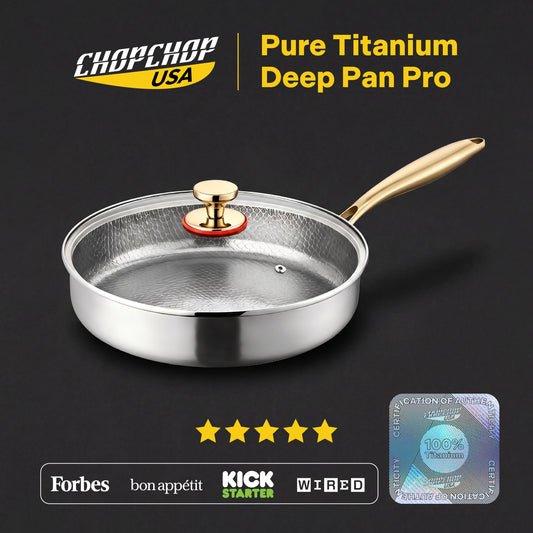
ChopChop USA Pure Titanium Saucepan Pro
Limited-Time Offer — Get Free Gifts
If you're comparing titanium saucepan vs stainless steel, the ChopChop USA Titanium Saucepan Pro is an excellent example of how modern titanium cookware combines premium materials, everyday practicality, and long-lasting durability.
100% Grade 1 Pure Titanium Cooking Surface
The interior features 100% Grade 1 Pure Titanium with 99.96% lab-verified purity. Its non-reactive surface won't absorb odors, affect flavors, or react with acidic foods, helping preserve the natural taste of your ingredients.
Fast and Even Heating
A high-conductivity aluminum core promotes quick, even heat distribution and helps minimize hot spots for more consistent cooking results.
Built for Everyday Durability
The stainless steel exterior adds strength and durability, while the tri-ply construction resists corrosion, stains, and everyday wear.
Compatible With All Major Cooktops
Designed for induction, gas, electric, ceramic, and halogen cooktops. It is also oven safe up to 600°F (315°C).
Easy to Use and Maintain
With no coating to peel or chip, this saucepan is built for hassle-free cooking. It's dishwasher safe, requires no seasoning, and is easy to clean.
Key Benefits
- 100% Grade 1 Pure Titanium cooking surface
- Fast and even heat distribution
- Lightweight and easy to handle
- Corrosion- and stain-resistant construction
- No coating to maintain
- Dishwasher safe
- Oven safe up to 600°F (315°C)
- Compatible with all major cooktops
- Perfect for everyday cooking tasks
For home cooks looking for a premium titanium cookware option, the ChopChop USA Titanium Saucepan Pro offers an outstanding balance of performance, durability, and convenience.
Conclusion
When comparing titanium saucepan vs stainless steel, there is no universal winner. Titanium offers lightweight durability and corrosion resistance, while stainless steel provides proven versatility. For cooks seeking premium modern cookware, the ChopChop USA Titanium Saucepan Pro is a compelling option worth considering.
For more amazing kitchen information, follow us on Facebook and Instagram! If you have any questions about ChopChop USA's products or promotions, please feel free to contact us at support@chopchopusa.com. Our dedicated team is available 24/7 and always happy to assist you.
Frequently Asked Questions
1. Is Titanium Saucepan Better Than Stainless Steel?
The answer depends on your priorities. In the titanium saucepan vs stainless steel comparison, titanium is typically lighter and more corrosion resistant, while stainless steel remains highly versatile and widely available.
2. Can Titanium Work On Induction?
Yes. In many titanium saucepan vs stainless steel comparisons, induction compatibility depends on the cookware's construction. Products with a magnetic stainless steel exterior generally work on induction cooktops.
3. What Are The Disadvantages Of Titanium Saucepans?
Regarding titanium saucepan vs stainless steel, titanium cookware is often more expensive and may offer fewer product choices. However, many users consider the durability benefits worthwhile.
4. Do Professional Chefs Use Titanium Saucepans?
While stainless steel remains more common in professional kitchens, the titanium saucepan vs stainless steel discussion continues to evolve as more chefs appreciate titanium's lightweight and corrosion-resistant qualities.
5. Are Titanium Saucepans Safe?
Yes. In the titanium saucepan vs stainless steel debate, titanium is widely recognized as a non-reactive material that does not easily interact with acidic foods during normal cooking.