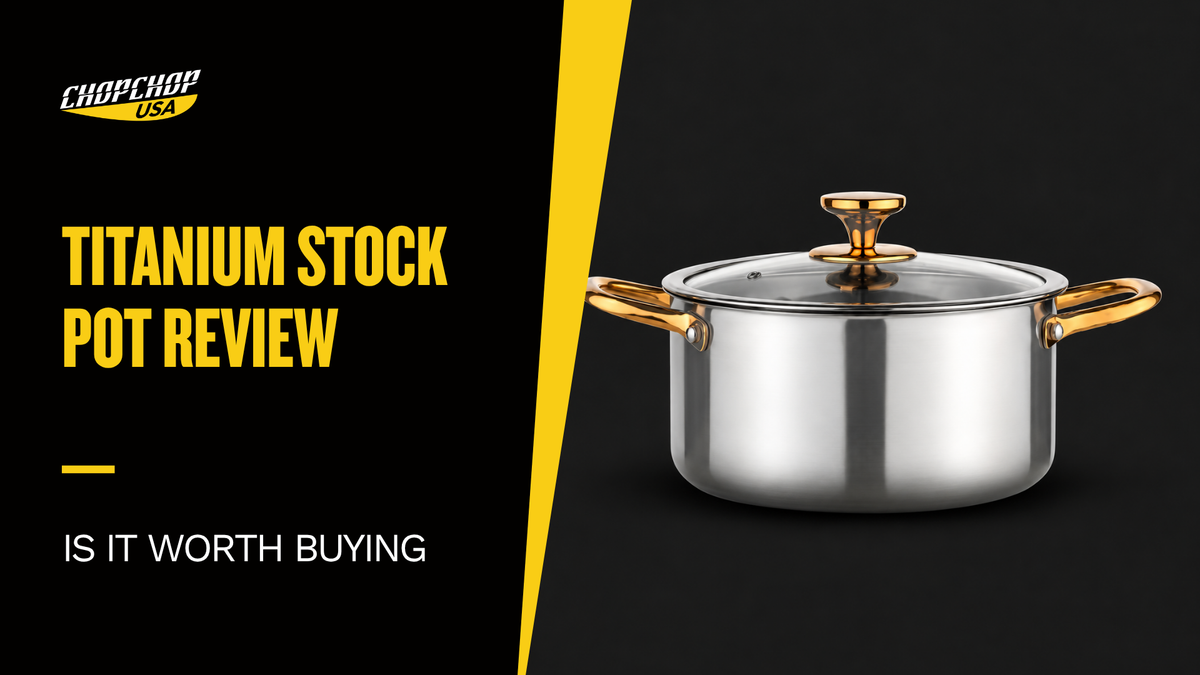
Is a titanium stock pot worth buying, or is it just an expensive trend? For home cooks who often make stocks, soups, and pasta, a well-made tri-ply titanium stock pot is usually worth it. In this guide, ChopChop USA will cover the pros, cons, comparisons, and who should buy one.
In this article
- What Is a Titanium Stock Pot?
- What Matters Most in a Titanium Stock Pot Review
- Pros of a Titanium Stock Pot
- Cons of a Titanium Stock Pot
- Titanium vs. Stainless Steel vs. Nonstick Stock Pots
- Who Should Buy a Titanium Stock Pot?
- How to Get the Most From Your Titanium Stock Pot
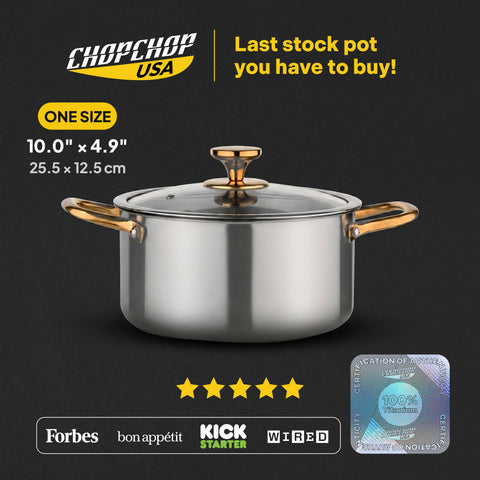
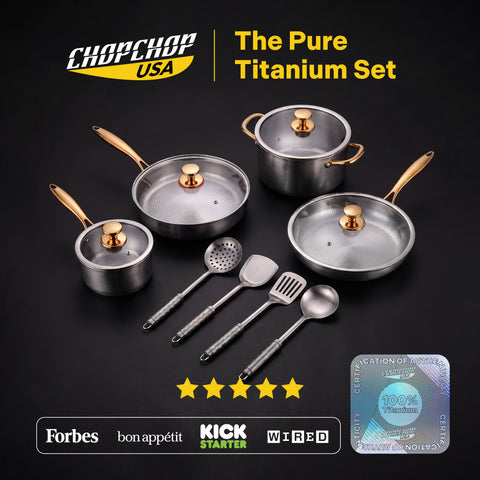
- Introduce ChopChop USA Titanium Stock Pot Pro
- Conclusion
- Frequently Asked Questions
What Is a Titanium Stock Pot?

Before any titanium stock pot review can judge value, it needs to define the product. "Titanium" on a label can describe three very different pots:
- Pure titanium pots. Solid titanium throughout. Very light, but titanium alone spreads heat slowly, so they can scorch at the bottom.
- Tri-ply titanium-clad pots. A titanium cooking surface, an aluminum core, and a stainless steel exterior. This design combines a non-reactive surface with even heating.
- Titanium-reinforced nonstick pots. A PTFE or ceramic coating with titanium particles. Here the coating, not the titanium, touches your food.
Pure titanium pots are popular with campers because they are so light, but in a home kitchen the tri-ply design usually performs better. This titanium stock pot review focuses mainly on tri-ply titanium-clad pots. They are the type most home cooks compare with stainless steel, and they offer the best balance of safety, heat control, and durability.
What Matters Most in a Titanium Stock Pot Review

A stock pot spends hours on the stove with large amounts of liquid. That makes some features more important than they would be in a frying pan. A fair titanium stock pot review should look at:
- Cooking surface. Does only titanium touch your food, or is there a coating?
- Heat distribution. Does the aluminum core run through the base and sides to prevent scorching?
- Cooktop compatibility. Does the exterior work on induction as well as gas and electric?
- Weight and handling. Can you lift and pour it safely when it is full?
- Cleaning. Is it dishwasher safe, and does it resist stains?
- Durability. Will it resist warping, corrosion, and everyday wear?
- Price. Does the long-term value justify the upfront cost?
We use these seven points throughout this titanium stock pot review to keep the comparison honest and practical.
Pros of a Titanium Stock Pot

A tri-ply titanium stock pot has several clear strengths:
- Non-reactive surface. Tomato sauces, wine-based stews, and vinegar brines will not react with titanium or pick up a metallic taste.
- No coating to wear off. Long simmers and constant stirring will not chip or peel the cooking surface.
- Even heating. The aluminum core spreads heat across the base, reducing hot spots that can scorch thick soups and beans.
- Corrosion and stain resistance. Salty stocks and spices like turmeric will not rust or stain the interior.
- Works on every cooktop. A stainless steel exterior makes the pot induction ready.
- Long service life. With no coating to fail, a well-made pot can last for many years.
- Versatile. It handles stocks, soups, stews, pasta, seafood boils, and family-sized meals in one pot.
For anyone reading a titanium stock pot review to decide on safety, the first point matters most. A stock pot often holds acidic or salty liquids for hours, and titanium handles that without reacting.
Cons of a Titanium Stock Pot

No honest titanium stock pot review should skip the downsides:
-
Higher price. Titanium-clad cookware usually costs more than basic stainless steel or aluminum pots.
- Cosmetic marks. High heat can leave rainbow tints, and hard water can leave white spots. Both are harmless and wipe away with diluted white vinegar.
-
Weight when full. Any large stock pot is heavy once it is filled with liquid, regardless of material.
None of these issues affect food safety or cooking results. They are mainly about cost and care. For most buyers, the long life of the pot offsets the higher price over time.
Titanium vs. Stainless Steel vs. Nonstick Stock Pots

Here is how the three most common stock pot types compare:
|
Feature |
Tri-ply titanium |
Stainless steel |
Nonstick |
|
Cooking surface |
Pure titanium |
Stainless steel |
PTFE or ceramic coating |
|
Reacts with acidic food |
No |
Very little |
No, until the coating wears |
|
Heat distribution |
Even (aluminum core) |
Even (aluminum core) |
Usually even |
|
Induction compatible |
Yes |
Usually |
Only with a magnetic base |
|
Coating to wear out |
None |
None |
Yes |
|
Typical lifespan |
Many years |
Many years |
Shorter, as coatings wear |
This titanium stock pot review finds that titanium and clad stainless steel are close in durability and heat control. Titanium's main advantage is its fully non-reactive surface. Nonstick pots are easier for sticky foods but wear out faster, which matters for a pot you use for long simmers.
Who Should Buy a Titanium Stock Pot?

Based on this titanium stock pot review, a titanium stock pot is a strong choice if you:
- Make homemade stock, bone broth, chili, or tomato sauce often.
- Want a cooking surface with no coating to worry about.
- Cook on induction and need a pot that works on every cooktop.
- Prefer to buy one durable pot instead of replacing cheaper pots.
- Cook large batches for meal prep or family dinners.
It may not be the best fit if you only boil pasta a few times a year, or if your top priority is the lowest possible price. In those cases, a basic stainless steel pot may be enough.
How to Get the Most From Your Titanium Stock Pot

A titanium stock pot is simple to use, but a few habits help it perform at its best:
- Preheat gently. Start on low to medium heat. The aluminum core spreads heat fast, so high heat is rarely needed.
- Use a little oil for searing. Brown meat or sauté vegetables in a thin layer of oil before adding liquid.
- Keep the simmer gentle. Small bubbles at the edge give clearer stock and protect the finish.
- Avoid thermal shock. Never pour cold water into a hot, empty pot.
- Hand wash when you can. Warm water, mild soap, and a soft sponge keep the interior bright.
- Dry before storing. Towel-dry right away to prevent water spots, and avoid stacking it with sharp cookware.
Every titanium stock pot review agrees on one point: good care habits turn a quality pot into a long-term kitchen staple.
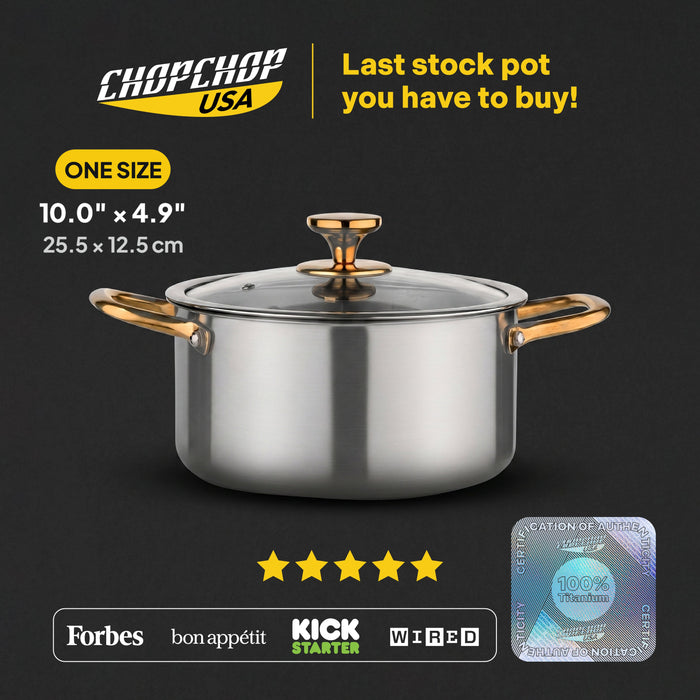
Introduce ChopChop USA Titanium Stock Pot Pro
$280.00Save 29%
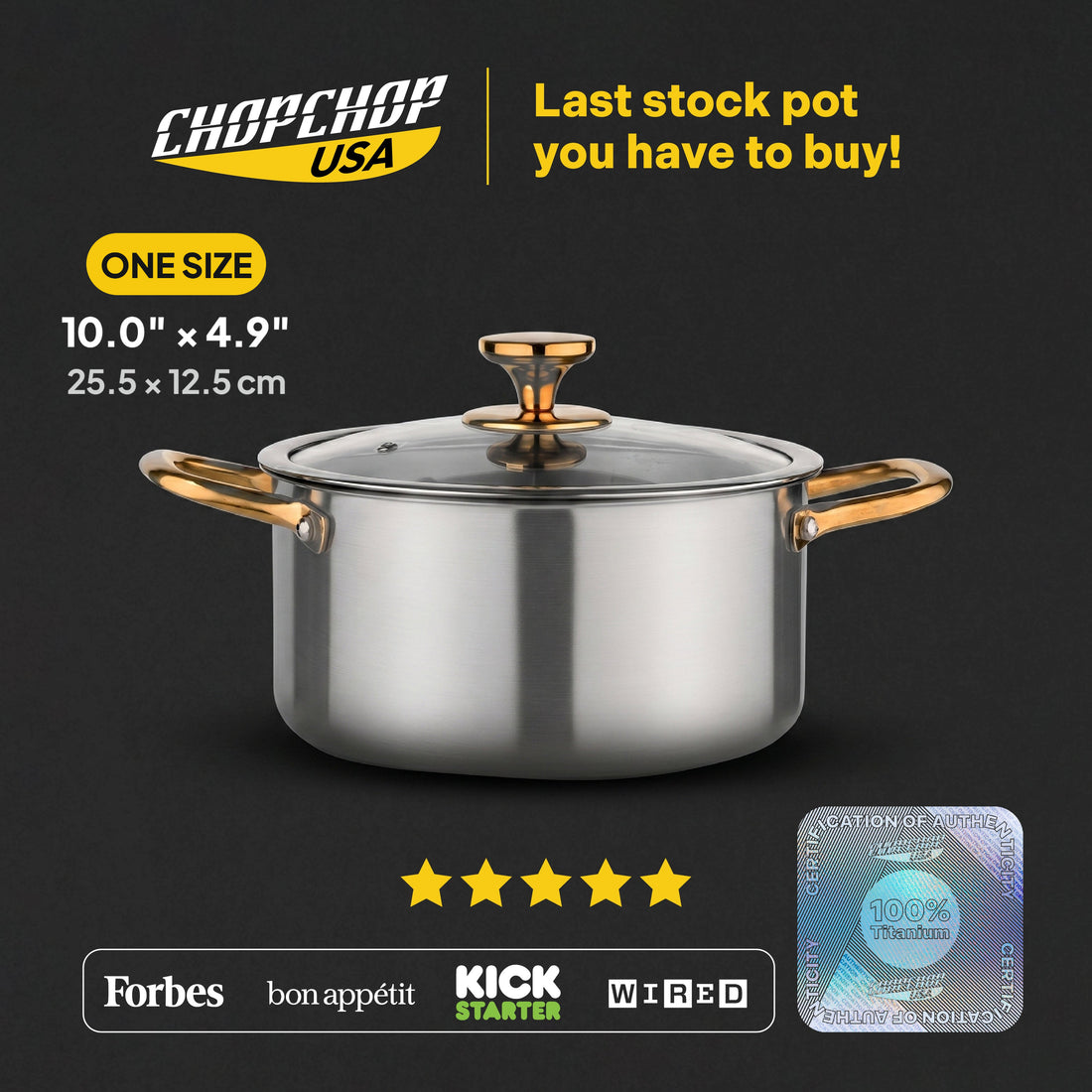
The ChopChop USA Titanium Stock Pot Pro is built around the same features this titanium stock pot review rates highest:
- 100% Grade 1 pure titanium cooking surface: 99.96% lab-verified purity, so only pure titanium touches your food.
- High-conductivity aluminum core: Fast, even heat with fewer hot spots for stocks, soups, pasta, and family-sized meals.
- Durable stainless steel exterior: Adds strength, resists warping, and works on gas, electric, ceramic, halogen, and induction cooktops.
- Easy care: Dishwasher safe, with hand washing recommended for maximum longevity.
The non-reactive surface keeps tomato-based soups and long-simmered stocks tasting clean, and the tri-ply design helps prevent scorching on the bottom. It is designed for everyday use, from weeknight pasta to weekend seafood boils.
Because there is no coating, there is nothing to replace or re-season. The stainless steel exterior helps the pot keep its shape over time, and the smooth titanium interior makes cleanup simple after soups, stews, and sauces.
If this titanium stock pot review has convinced you that titanium is worth it, the Titanium Stock Pot Pro gives you three premium materials in one professional-grade pot.
Conclusion
Is a titanium stock pot really worth buying? For frequent cooks, yes. This titanium stock pot review shows that the ChopChop USA Titanium Stock Pot Pro delivers a pure titanium surface, even heating, and lasting durability for everyday family meals.
For more amazing kitchen information, follow us on Facebook and Instagram! If you have any questions about ChopChop USA's products or promotions, please feel free to contact us at support@chopchopusa.com. Our dedicated team is available 24/7 and always happy to assist you.
Frequently Asked Questions
1. Is a Titanium Stock Pot Worth the Money?
Yes, for frequent cooks. A tri-ply titanium stock pot offers a non-reactive surface, even heat, and no coating to wear out, so it lasts years.
2. Is a Titanium Stock Pot Safe for Cooking?
Yes. Pure titanium is non-reactive and corrosion-resistant, so it does not react with acidic, salty, or alkaline foods, even during long, slow simmers of stock.
3. Does a Titanium Stock Pot Work on Induction?
Yes, if it has a magnetic exterior. The stainless steel exterior of a tri-ply titanium stock pot makes it fully compatible with all induction cooktops.
4. What Does This Titanium Stock Pot Review Recommend for Cleaning?
Hand wash it with warm water, mild soap, and a soft sponge, then towel-dry it right away. Avoid using steel wool or harsh abrasive cleaners.
5. Is the ChopChop USA Titanium Stock Pot Pro Dishwasher Safe?
Yes. The ChopChop USA Titanium Stock Pot Pro is dishwasher safe, but hand washing is still recommended for maximum longevity and the best long-term appearance.