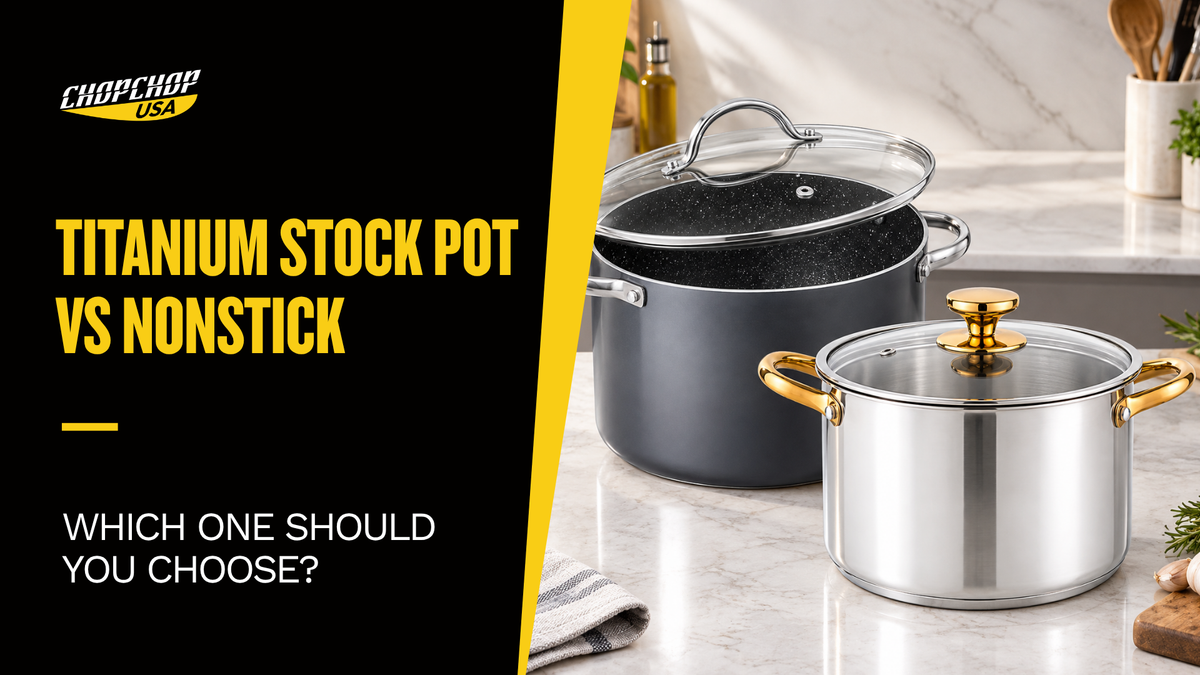
Titanium stock pot vs nonstick: Which is better for your kitchen? Titanium offers a durable, coating-free cooking surface, while nonstick cookware makes food release and cleanup easier. In this guide, ChopChop USA will compare their key differences, pros and cons, and cooking performance to help you choose the right stock pot for your needs.
In this article
What Is a Titanium Stock Pot?

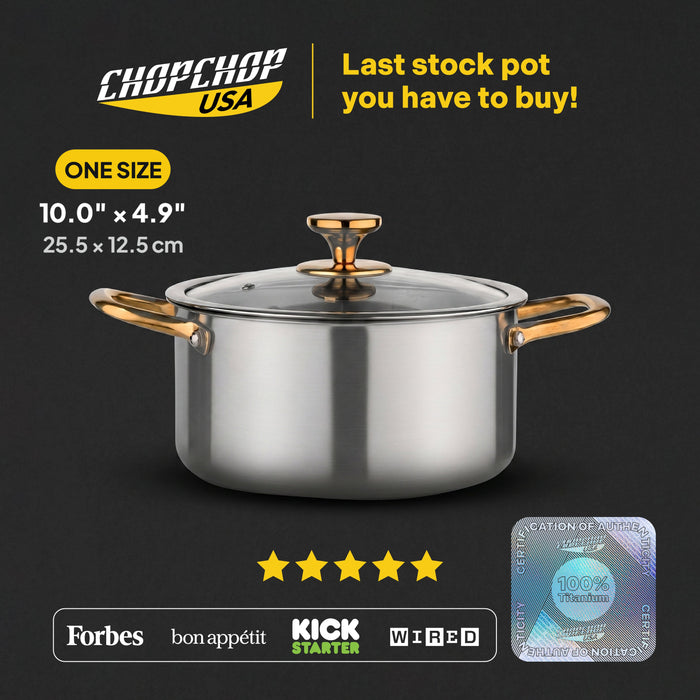
A titanium stock pot is a large, deep pot with a titanium cooking surface, designed for stocks, soups, stews, pasta, and seafood boils. Most kitchen versions use tri-ply construction: a pure titanium interior, an aluminum core for even heat, and a stainless steel exterior for strength and induction compatibility.
Because the metal itself is the cooking surface, there is no coating to protect or replace. Titanium is also known for strength and corrosion resistance, which is why it is used in aerospace parts and medical implants. That is the starting point for any titanium stock pot vs nonstick comparison.
Pros of a Titanium Stock Pot
- No coating to wear out. The titanium surface does not chip, peel, or lose performance over time.
- Fully non-reactive. Tomato sauce, chili, and wine-based stews keep their natural flavor.
- Handles higher heat. Searing, boiling, and long simmers will not damage the surface.
- Metal-utensil friendly. Ladles and spoons may leave light cosmetic marks, but nothing wears away.
- Long lifespan. A well-made pot can serve your kitchen for many years.
Cons of a Titanium Stock Pot
- Not nonstick. Thick mixtures and seared foods need a little oil and proper preheating.
- Higher upfront price. Tri-ply titanium usually sits at the premium end.
What Is a Nonstick Stock Pot?

A nonstick stock pot has a coated cooking surface, usually PTFE or ceramic, applied over an aluminum or stainless steel body. Some are marketed as titanium nonstick, which means titanium particles reinforce the coating. In these pots, the coating, not the titanium, touches your food.
Nonstick cookware is popular for good reason. It is easy to use, quick to clean, and widely available in every price range. Used as directed, it is a convenient choice for everyday cooking. Understanding both surfaces makes the titanium stock pot vs nonstick choice much clearer.
Pros of a Nonstick Stock Pot
- Easy food release. Thick soups, oatmeal, and rice are less likely to stick.
- Quick cleanup. Most residue wipes away with a soft sponge.
- Affordable. Many good options cost less than premium clad cookware.
- Lightweight. Aluminum-body nonstick pots are often easy to lift.
- Beginner friendly. Little technique is needed to get good results.
Cons of a Nonstick Stock Pot
- The coating wears over time. With good care, a quality nonstick coating typically lasts about five to seven years.
- Gentle tools only. Metal utensils and abrasive scrubbers can scratch the surface.
- Moderate heat recommended. High heat can shorten the life of the coating.
- Hand washing preferred. Many brands recommend hand washing to protect the coating.
Titanium Stock Pot vs Nonstick: Key Differences

Here is a side-by-side look at the titanium stock pot vs nonstick comparison:
|
Feature |
Tri-ply titanium stock pot |
Nonstick stock pot |
|
Cooking surface |
Pure titanium |
PTFE or ceramic coating |
|
Food release |
Good with oil and proper heat |
Excellent |
|
Heat tolerance |
High |
Low to moderate |
|
Utensils |
Metal, wood, or silicone |
Wood, silicone, or nylon |
|
Typical lifespan |
Many years |
About five to seven years |
|
Cleaning |
Dishwasher safe, hand wash preferred |
Hand wash usually recommended |
|
Price |
Premium |
Wide range, often lower |
Cooking Performance
The biggest titanium stock pot vs nonstick difference is how each surface handles heat and time. Titanium is built for long simmers, rolling boils, and searing before adding liquid. Nonstick shines with gentle cooking and sticky foods, but it prefers low to medium heat. For a pot that often simmers stock for hours, titanium is the more natural fit. Nonstick does have an edge with delicate, starchy dishes.
In the titanium stock pot vs nonstick matchup, each surface wins in different situations.
Durability and Lifespan
This is where titanium stands out. Because there is no coating, the surface keeps performing year after year. A nonstick coating gradually loses its release, and the pot eventually needs replacing. In the titanium stock pot vs nonstick durability test, titanium is the long-term winner.
Cleaning and Care
Nonstick is easier to clean day to day, since food slides off with little effort. Titanium needs a short soak for stuck-on food but tolerates more scrubbing and the dishwasher. Both stay in top shape with mild dish soap and a soft sponge. So in the titanium stock pot vs nonstick cleanup comparison, nonstick wins for speed, while titanium wins for toughness.
Price and Value
Nonstick usually costs less upfront. However, the titanium stock pot vs nonstick value picture changes over time. If a nonstick pot needs replacing every five to seven years, one durable titanium pot can outlast several of them, lowering the cost per use.
Heat and Cooktop Compatibility
Tri-ply titanium stock pots work on gas, electric, ceramic, halogen, and induction cooktops thanks to their stainless steel exterior. Many nonstick pots also work on induction, but aluminum-only bodies need a magnetic base to do so. Before you buy, check the product details carefully. When weighing titanium stock pot vs nonstick, cooktop compatibility is an easy detail to overlook.
Which Stock Pot Should You Choose?

The best answer to titanium stock pot vs nonstick depends on how you cook.
Choose a titanium stock pot if you:
- Simmer stock, bone broth, or chili for hours
- Like to sear or sauté before adding liquid
- Want a coating-free surface that lasts for years
- Prefer to buy once instead of replacing pots
Choose a nonstick stock pot if you:
- Cook thick, sticky foods like oatmeal or rice often
- Want the easiest possible cleanup
- Prefer a lower upfront price
- Mostly cook at low to medium heat
Real-Kitchen Examples
- Sunday bone broth: A 12-hour simmer favors titanium's durable, coating-free surface.
- Weeknight mac and cheese: Nonstick makes cheesy sauces easy to stir and clean.
- Big-batch chili: Searing meat first and simmering for hours suits titanium well.
- Seafood boil: Large volumes of salty, boiling water are easy for titanium, with no coating to worry about.
- Morning oatmeal for a crowd: Nonstick keeps sticky grains from clinging to the bottom.
Many home cooks find the titanium stock pot vs nonstick decision is not either-or. A titanium pot can handle heavy-duty simmering, while a smaller nonstick pot covers delicate, sticky dishes.
However you decide, think about the recipes you make every week. That is the most reliable way to settle titanium stock pot vs nonstick for your own kitchen.
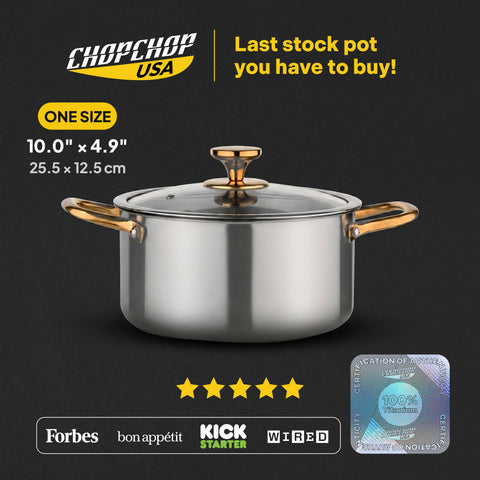
Explore the ChopChop USA Titanium Stock Pot Pro
$280.00Save 29%
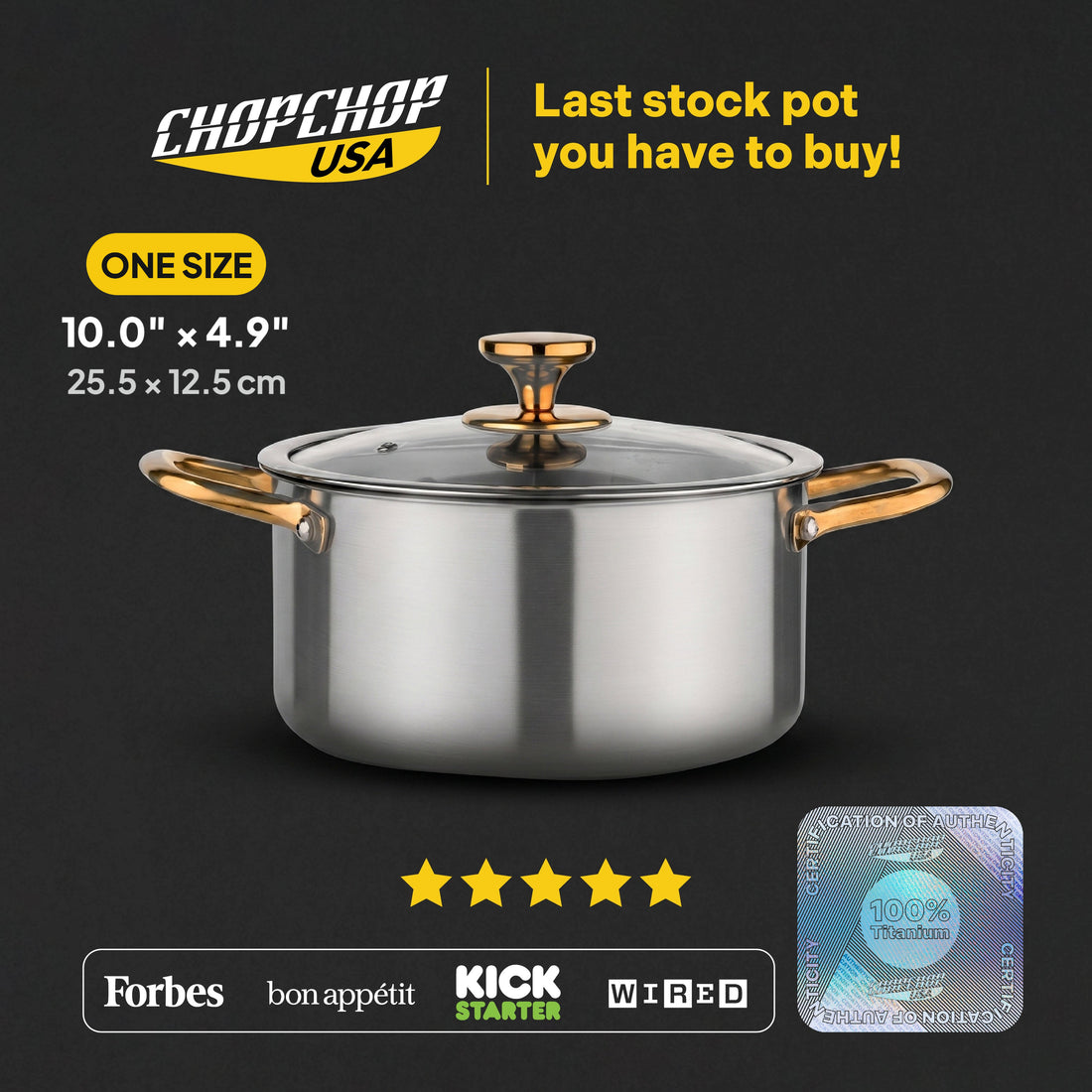
If the titanium side of the titanium stock pot vs nonstick comparison fits your kitchen, the ChopChop USA Titanium Stock Pot Pro is built for years of everyday cooking.
- 100% Grade 1 pure titanium cooking surface: 99.96% lab-verified purity, with no coating to chip or peel.
- High-conductivity aluminum core: Fast, even heat for stocks, soups, pasta, and family-sized meals.
- Durable stainless steel exterior: Adds strength, resists warping, and works on gas, electric, ceramic, halogen, and induction cooktops.
- Built for heat: Sear, boil, and simmer without worrying about damaging a coating.
- Easy care: Dishwasher safe, with hand washing recommended for maximum longevity.
From homemade stock to seafood boils, the Titanium Stock Pot Pro gives you a clean, reliable cooking surface that keeps performing long after a coating would wear out. Three premium materials. One professional-grade stock pot.
Conclusion
In the titanium stock pot vs nonstick debate, nonstick offers easy release, while titanium offers lasting durability. For long simmers and everyday family cooking, the ChopChop USA Titanium Stock Pot Pro is built to perform for many years to come.
For more amazing kitchen information, follow us on Facebook and Instagram! If you have any questions about ChopChop USA's products or promotions, please feel free to contact us at support@chopchopusa.com. Our dedicated team is available 24/7 and always happy to assist you.
Frequently Asked Questions
1. Is a Titanium Stock Pot Better Than Nonstick?
It depends on your cooking. Titanium lasts longer and handles higher heat, while nonstick offers easier food release and cleanup. Many home cooks use both.
2. Is Titanium Cookware Nonstick?
No. Pure titanium has no nonstick coating. Proper preheating, a little oil, and moderate heat help reduce food sticking when searing or cooking thick mixtures.
3. How Long Does a Nonstick Stock Pot Last?
With good care, a quality nonstick coating typically lasts about five to seven years. Gentle utensils, moderate heat, and hand washing help it last longer.
4. Can I Use Metal Utensils in a Titanium Stock Pot?
Yes. Metal utensils will not damage a pure titanium surface, though they may leave light cosmetic marks. Wooden or silicone tools keep it looking new.
5. Is the ChopChop USA Titanium Stock Pot Pro Dishwasher Safe?
Yes. The ChopChop USA Titanium Stock Pot Pro is dishwasher safe, but hand washing with mild soap and a soft sponge is recommended for longevity.