




Are stainless steel cutting boards bad for knives? Although harder than wood or plastic, high-quality stainless steel boards are designed to minimize blade wear and preserve sharpness. In this guide, ChopChop USA explains how stainless steel cutting boards affect knives, highlights their benefits, and offers tips to protect your blades while ensuring safe, hygienic, and long-lasting kitchen use.
Related: Are Stainless Steel Cutting Boards Good?
In this article
- The Importance of Choosing the Right Cutting Board
- Comparing Cutting Board Materials
- What Makes Stainless Steel Cutting Boards Worth Considering
- Why People Worry: Are Stainless Steel Cutting Boards Bad for Knives?
- How to Use Stainless Steel Boards Without Harming Your Knives
- Who Should Use Stainless Steel Cutting Boards?
- ChopChop USA Stainless Steel Cutting Board
- Final Thoughts
- Frequently Asked Questions
The Importance of Choosing the Right Cutting Board

Choosing the right cutting board is essential for both kitchen safety and knife longevity. The wrong board can harbor bacteria, retain odors, or dull your knives over time. Stainless steel, wood, bamboo, plastic, and composite boards all have unique benefits and drawbacks, so understanding their differences helps you make the best choice.
A high-quality cutting board provides a stable, hygienic surface for food prep, reducing cross-contamination risks and protecting your knives from unnecessary wear. It also contributes to efficiency in the kitchen, making chopping, slicing, and dicing easier and more precise.
For those asking are stainless steel cutting boards bad for knives, selecting a premium, well-designed board is key. Modern stainless steel boards balance durability with a smooth surface that preserves blade sharpness, offering a long-term, safe, and practical solution for any kitchen.
Related: Are Stainless Steel Cutting Boards Safe?
Comparing Cutting Board Materials

When deciding between different kitchen surfaces, many cooks ask, are stainless steel cutting boards bad for knives? Understanding how materials like wood, bamboo, plastic, composite, and stainless steel affect blade longevity and hygiene helps you make the best choice for your kitchen.
|
Material |
Pros |
Cons |
|
Wood |
Gentle on knives, classic look |
Can harbor bacteria, requires oiling |
|
Bamboo |
Eco-friendly, durable |
Harder than wood, may dull knives |
|
Plastic |
Lightweight, dishwasher-safe |
Scratches easily, can stain |
|
Stainless Steel |
Hygienic, durable, stylish |
Hard surface, mild metallic sound |
|
Composite |
Knife-friendly, durable |
Expensive, may discolor over time |
Stainless steel boards shine in hygiene, durability, and modern aesthetics, making them a favorite in professional kitchens and modern homes alike.
Related:
- Stainless Steel Cutting Board Pros And Cons: Complete Guide
- Titanium vs Stainless Steel Cutting Board – Which Is Better?
What Makes Stainless Steel Cutting Boards Worth Considering

Before deciding whether to avoid stainless steel for fear of dulling knives, it helps to understand their major benefits — which also explain why many people ask, are stainless steel cutting boards bad for knives.
Hygiene and Sanitation
Are Stainless Steel Cutting Boards Hygienic? Because stainless steel is non-porous, it naturally resists moisture, bacteria, and odor absorption. Unlike wood or bamboo, which can harbor mold or bacteria in tiny grooves, stainless steel provides a clean, sanitary surface—perfect for prepping raw meats, fish, or fresh produce.
Durability and Longevity
Stainless steel boards won’t warp, or stain and maintain their shape under heavy use. For those asking are stainless steel cutting boards bad for knives, high-quality boards balance hardness with smoothness, protecting blades while ensuring long-term durability.
Related: Do Stainless Steel Cutting Boards Scratch?
Easy Maintenance
Cleaning stainless steel is simple: rinse, scrub, or place it in the dishwasher without fear of damage. No oiling or special care is required. Their smooth surface also makes wiping off residues fast and efficient, saving time in the kitchen.
Related: How to Clean a Stainless Steel Cutting Board Easily & Safely
Versatility and Sleek Style
Stainless steel cutting boards complement modern kitchens with their polished, professional appearance. They work for all types of prep—meats, vegetables, fruits—and can even double as heat-resistant surfaces or stylish serving platters.
Given these advantages, many home cooks and chefs find the benefits outweigh concerns about dulling knives, prompting a reconsideration of the question: are stainless steel cutting boards bad for knives?
Why People Worry: Are Stainless Steel Cutting Boards Bad for Knives?

The main concern when it comes to cutting boards and knives is surface hardness. A cutting board that’s too hard or too abrasive can damage edges, causing knives to dull faster. That’s why some people wonder: are stainless steel cutting boards bad for knives — after all, stainless steel is metal.
Traditional boards like wood or bamboo feel gentler under a blade’s edge. Plastic and composite boards offer softness to protect knives. But stainless steel feels hard and cold. On first glance, it seems like the kind of surface that might chip or wear down fine edges.
However, modern stainless steel boards aren’t merely raw metal slabs — they’re engineered surfaces. High-quality stainless steel boards often use polished finishes or slightly textured surfaces that reduce friction. When used with proper cutting techniques, they pose far less risk to knives than many expect.
Related: Are Stainless Steel Cutting Boards Healthy?
How to Use Stainless Steel Boards Without Harming Your Knives

If you’ve decided to use a stainless steel board—or are testing the waters and wondering are stainless steel cutting boards bad for knives—here are smart habits that help preserve blade sharpness and ensure the board works for, not against, your knives:
- Use smooth, slicing motions instead of heavy chopping or hacking. Let the blade glide through food rather than force it.
- Choose high‑quality knives. A good stainless steel or carbon-steel blade holds up better against harder surfaces.
- Keep knives sharp. Regular honing and occasional sharpening reduce the need to press hard — blunt blades cause more wear.
- Avoid grit or debris. Make sure your board is clean and dry before cutting, so microscopic particles don’t scratch the blade.
- Dry the board after washing. Moisture can trap sediments or cause rust spots (on lower-grade boards), which could scratch blades over time.
With this approach, many users find that stainless steel cutting boards do not reduce edge life—and sometimes even outperform other surfaces that absorb moisture or trap debris. For those still asking, are stainless steel cutting boards bad for knives, choosing the right board and using proper techniques ensures blade longevity.
Who Should Use Stainless Steel Cutting Boards?

Stainless steel cutting boards are versatile and durable. If you’re wondering are stainless steel cutting boards bad for knives, high-quality boards protect blades while offering hygiene, sleek design, and easy maintenance—ideal for both professional chefs and home cooks.
- Professional chefs: Need sturdy, hygienic surfaces that endure heavy daily use without warping or staining.
- Home cooks: Appreciate easy cleaning, stylish designs, and a modern kitchen aesthetic.
- Frequent meat preparers: Benefit from a non-porous surface that resists bacteria, mold, and odors.
- Eco-conscious users: Seek toxin-free, durable boards that reduce replacements and environmental impact.
Whether slicing vegetables, prepping meats, or serving foods, stainless steel cutting boards provide a safe, efficient, and stylish solution. Choosing the right board ensures optimal knife protection and a cleaner, more enjoyable cooking experience.
Related: 5 Best Stainless Steel Cutting Boards - Tested & Reviewed
ChopChop USA Stainless Steel Cutting Board
If you’re still wondering are stainless steel cutting boards bad for knives, the ChopChop USA offers a durable, hygienic, and knife-friendly surface for safe and efficient kitchen prep.
ChopChop USA Stainless Steel Cutting Board
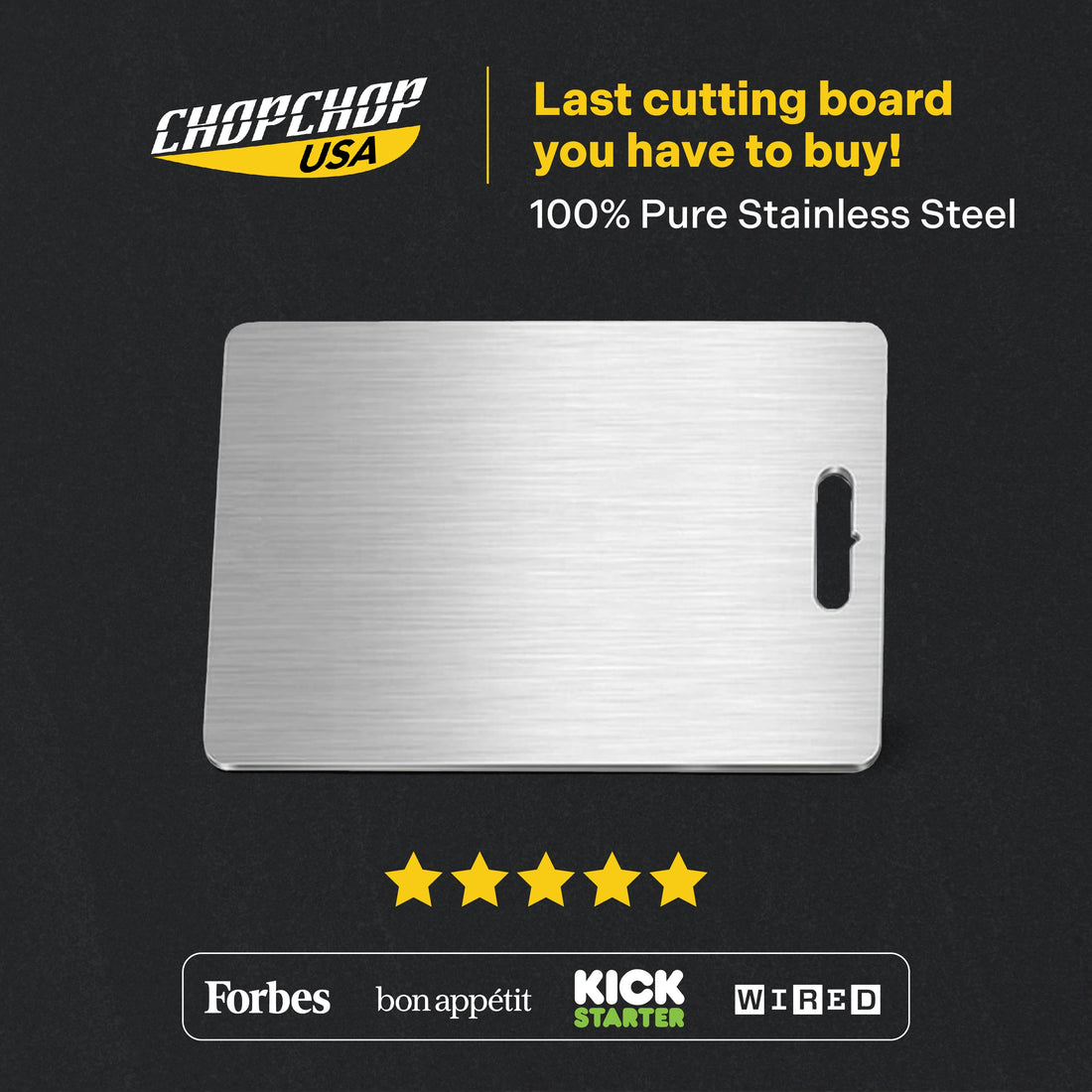
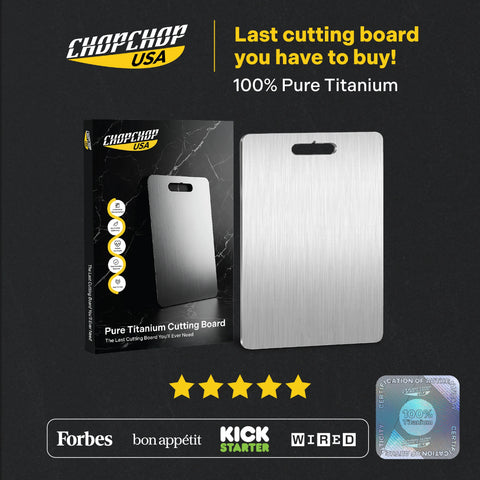
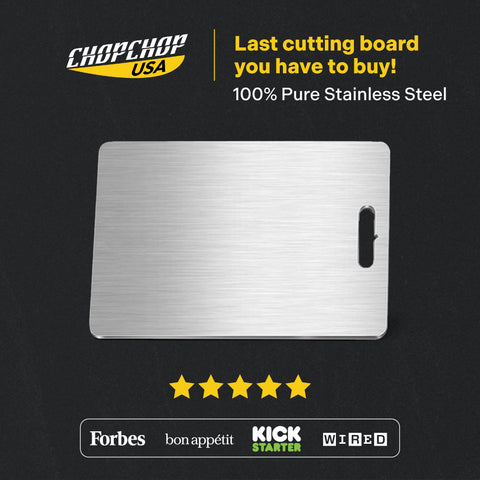
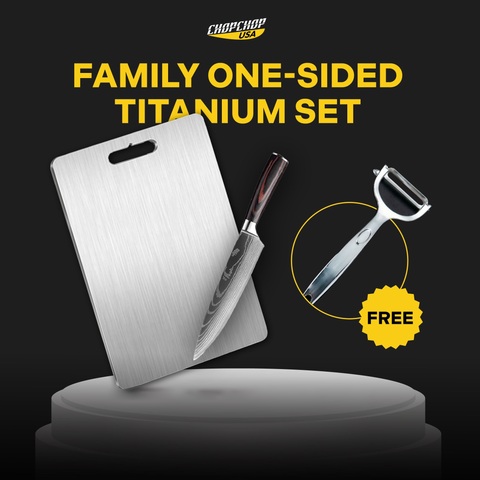
The ChopChop USA Stainless Steel Cutting Board is a premium kitchen essential designed for hygiene, efficiency, and long-lasting use.
Key Benefits:
- Durable: Won’t warp, crack, or absorb liquids.
- Antibacterial surface: Prevents cross-contamination.
- Easy to clean: 100% dishwasher-safe.
- Non-slip design: Provides chopping stability.
- Rust-resistant: Maintains shine and integrity for years.

Its optimized surface balances hardness with smoothness, protecting knives while offering the full benefits of stainless steel. If you’re wondering are stainless steel cutting boards bad for knives, this board’s design ensures your blades stay sharp without compromising hygiene.
Related: Stainless Steel Cutting Board Review – Is It Worth It?
ChopChop USA Double-Sided Stainless Steel Cutting Board
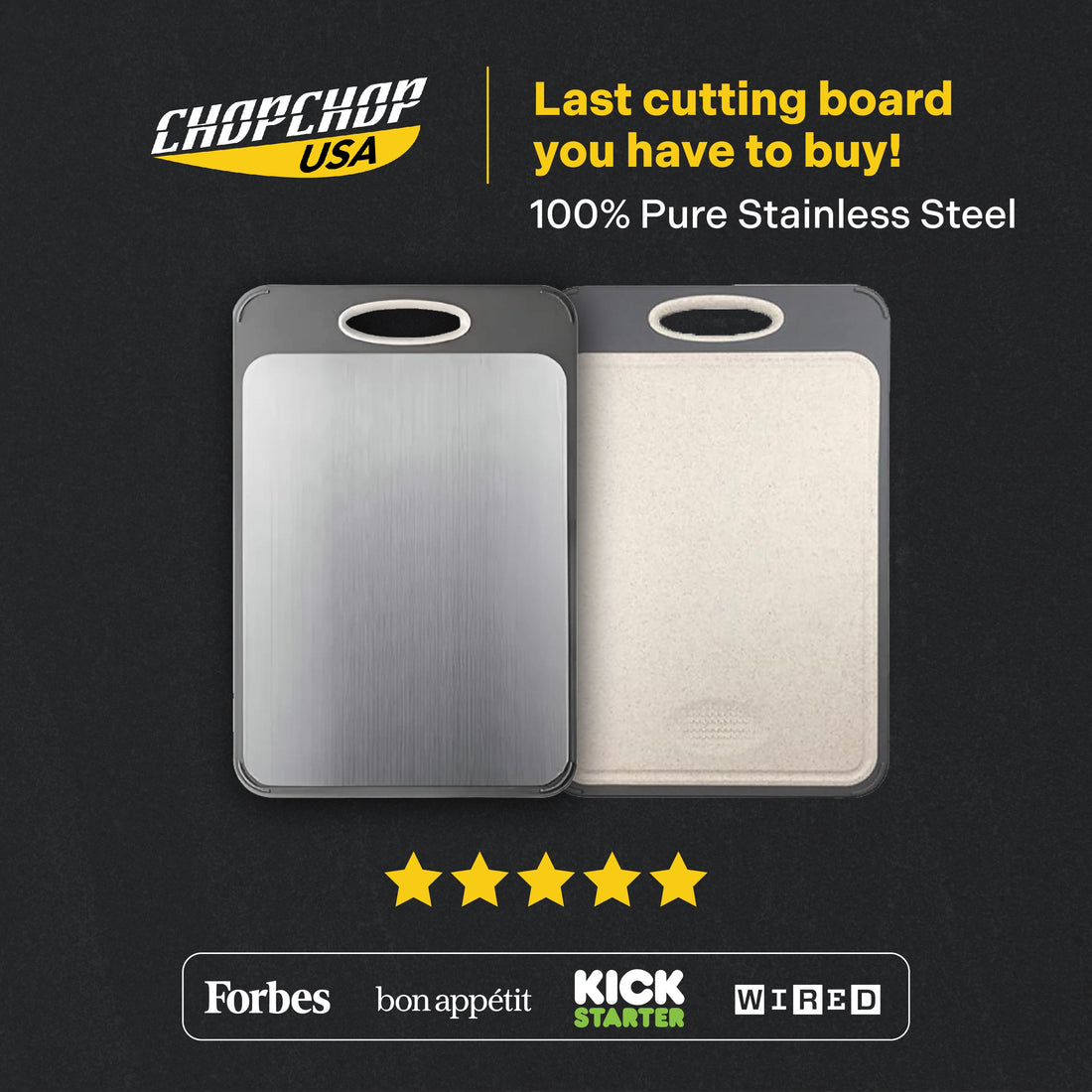
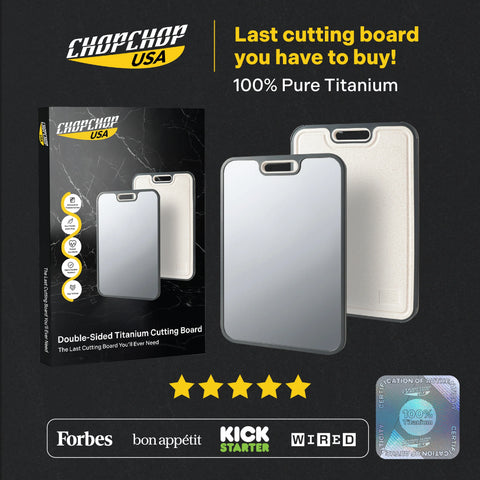
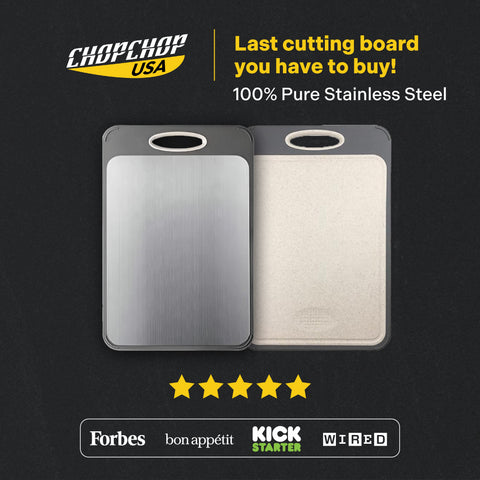
If you’re wondering are stainless steel cutting boards bad for knives, the ChopChop USA Double-Sided Stainless Steel Cutting Board offers a durable, hygienic, and knife-friendly surface. Its innovative design resists warping, staining, and bacteria while simplifying kitchen prep.
Features:
- Two smart sides: Rice husk fiber gentle on knives and a non-porous, antibacterial stainless steel side.
- Built to Last: Resists wear, cracking, and warping under daily use.
- Antibacterial & Odor-Free: Stainless steel surface blocks bacteria, mold, and odors.
- Gentle on Knives: Rice husk side protects knife edges.
- Effortless Cleaning: Wipes clean and dishwasher-safe.
- Zero Microplastics: Made from safe, toxin-free materials.
- Lightweight & Easy to Handle: Despite strength, easy to lift and store.

This dual-sided board addresses concerns for those asking, are stainless steel cutting boards bad for knives, by combining gentle and robust surfaces.
Related: Double-Sided Stainless Steel Cutting Board Review – Is It Worth It?
Final Thoughts
Are stainless steel cutting boards bad for knives? Not when used correctly. In modern kitchens, these boards are a smart, sustainable investment—hygienic, durable, and visually appealing. For anyone seeking a cleaner, sleeker, and longer-lasting prep surface, stainless steel truly stands above the rest.
For more amazing recipes, follow me on Facebook and Instagram! If you have any questions about ChopChop USA's products or promotions, please feel free to contact us at support@chopchopusa.com. Our dedicated team is available 24/7 and always happy to assist you.
Frequently Asked Questions
1. How do I clean a stainless steel cutting board?
Wash with warm, soapy water or place it in the dishwasher. Wipe dry for extra shine.
2. Can I use stainless steel boards for all types of food?
Yes. Their non-porous surface prevents odors and bacteria buildup, making them ideal for meat, produce, and baked goods.
3. Do stainless steel boards make noise while cutting?
A mild metallic sound may occur, but it’s minimal and easy to get used to.
4. Are stainless steel boards better than wooden boards?
Yes. They outperform wood in hygiene, durability, and maintenance while providing a safe, long-lasting prep surface.
5. What is the healthiest material for a cutting board?
Stainless steel ranks highly due to its non-porous, antibacterial, and easy-to-clean surface.