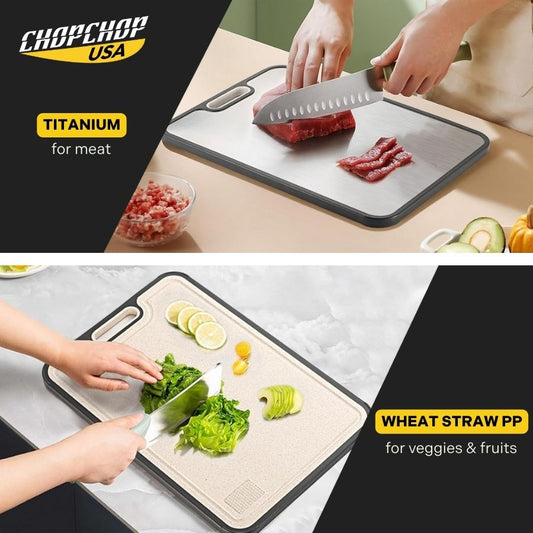
Do stainless steel cutting boards scratch, and should you worry about it? Yes, they can scratch, but the effects are mostly cosmetic and do not reduce hygiene or performance. In this guide, ChopChop USA will help you understand whether do stainless steel cutting boards scratch, why scratches appear, how to reduce them, and whether stainless steel is still a smart, durable kitchen choice.
Related: Are Stainless Steel Cutting Boards Bad For Knives? A Complete Guide
What Causes Scratches on Stainless Steel Cutting Boards?

One of the biggest questions people ask is: do stainless steel cutting boards scratch during everyday kitchen use? The answer is yes, but knowing why this happens helps you manage it. Stainless steel is extremely durable, but it is still softer than certain knife materials, especially carbon steel or ultra-hardened Japanese blades. As a result, regular chopping creates light surface marks.
Another reason do stainless steel cutting boards scratch is friction. When knives repeatedly meet a metal surface, micro-abrasions form naturally over time. These marks don’t affect the board’s sanitary qualities because stainless steel is non-porous, rust-resistant, and easy to clean. The scratches remain shallow and are mostly visible only under certain lighting angles.
Environmental factors also contribute. When cutting gritty ingredients—such as sand-covered vegetables or shells—people may think, why do stainless steel cutting boards scratch so easily? In reality, it’s the debris doing the damage, not the board itself. Rinsing ingredients before chopping significantly reduces this.
Are Scratches on Stainless Steel Cutting Boards a Hygiene Issue?

Many home cooks worry: if do stainless steel cutting boards scratch, can bacteria hide inside? Fortunately, stainless steel’s unique structure prevents this. Unlike wood or bamboo, stainless steel does not absorb moisture or trap food particles even when light scratches develop. This is one reason restaurant kitchens, laboratories, and food-processing facilities rely on stainless steel surfaces daily.
Even when do stainless steel cutting boards scratch after heavy use, the integrity of the material remains intact. Scratches do not become grooves or cracks. They don’t deepen over time unless the board is intentionally scored. Cleaning with soap and hot water is enough to maintain full hygiene, even after years of use.
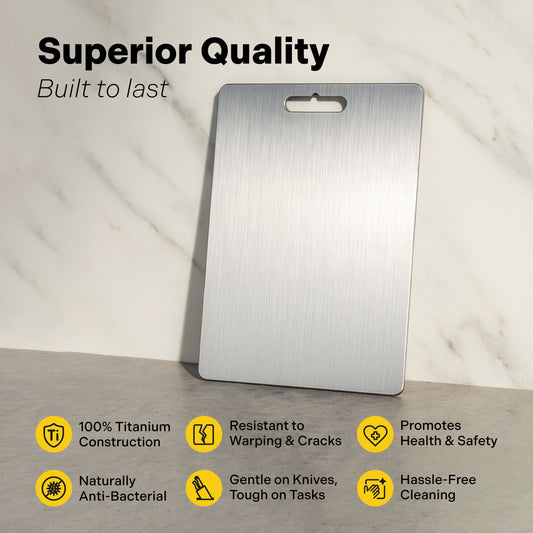
If you’re concerned that do stainless steel cutting boards scratch to the point of looking worn, polishing pastes or stainless steel cleaners can help restore a sleek finish. Some boards, including those from ChopChop USA, feature brushed surfaces that naturally disguise scratches.
Related: Are Stainless Steel Cutting Boards Hygienic?
How to Reduce Scratching on Stainless Steel Cutting Boards

While do stainless steel cutting boards scratch during normal use, you can significantly minimize the appearance of marks with a few smart habits. Using sharp knives reduces friction and prevents scraping, since dull blades drag across the surface instead of slicing cleanly. Avoid using ceramic knives, which are harder than steel and can leave deeper marks.
Another way to keep your board looking newer is by tapping rather than aggressively pounding the blade. When home cooks ask, why do stainless steel cutting boards scratch so quickly, the real issue is often chopping technique, not material quality.
If you’re still wondering why do stainless steel cutting boards scratch despite your efforts, keep in mind that scratches are a natural part of owning any metal surface—including sinks, cookware, and appliances. They do not affect sanitation, durability, or food safety.
Related: Are Stainless Steel Cutting Boards Good?
Knife Care and Cutting Technique

Understanding how do stainless steel cutting boards scratch also teaches you how to protect your knives. Stainless steel boards are extremely hygienic but can dull blades faster than softer boards. For home cooks with premium Japanese blades, a gentler material may be best for daily use.
However, if durability and cleanliness are your main priorities, stainless steel remains an excellent option. Many professionals aware that do stainless steel cutting boards scratch still choose them because scratches don’t compromise performance.
To minimize wear on knives:
- Avoid slamming the blade
- Keep blades sharpened
- Use a smooth slicing technique
- Wipe debris or grit off ingredients before cutting
These small habits reduce both dulling and scratching.
Related: Are Stainless Steel Cutting Boards Safe?
Are Stainless Steel Cutting Boards Worth It?

Even though do stainless steel cutting boards scratch, many kitchens prefer them for their unmatched hygiene, modern look, and longevity. They never warp, crack, mold, or retain odors. They’re dishwasher-safe, heat-resistant, and easy to sterilize.
When shoppers ask whether do stainless steel cutting boards scratch enough to impact value, the answer is no. Scratches are normal signs of wear, not indicators of damage. A stainless steel cutting board can last decades, making it a cost-effective choice.
Scratches may appear more quickly on mirror-polished boards, which is why ChopChop USA uses brushed stainless steel to reduce visible marking. Even when do stainless steel cutting boards scratch, the brushed finish helps maintain a clean, professional look.
Related: Stainless Steel Cutting Board Pros And Cons: Complete Guide
How to Choose the Right Stainless Steel Cutting Board?

Choosing the right stainless steel cutting board can make prep easier, protect your knives, and ensure long-term hygiene. Here are key factors to consider before investing in a high-quality board.
- Size and thickness: Choose a board that fits your kitchen and prep needs. Larger boards are ideal for bulk chopping, while smaller boards save counter space. Thicker boards are more stable but can be harder to store.
- Material grade: Opt for food-grade stainless steel, like 304 or 316, which resists rust, corrosion, and long-term wear.
- Non-slip features: Look for rubber feet, silicone edges, or a textured base to prevent sliding and improve safety.
- Knife-friendliness: Stainless steel is harder than wood or plastic and can dull knives. Micro-textured or dual-sided boards help protect blades.
- Ease of cleaning: Seamless boards with rounded edges are easiest to clean. Dishwasher-safe surfaces simplify maintenance.
- Extra features: Juice grooves, built-in handles, hanging holes, or double-sided designs increase usability and safety.
Keeping these factors in mind helps you select a durable, safe, and versatile board. ChopChop USA offers premium stainless steel options that meet all these criteria for any kitchen.
Related: 5 Best Stainless Steel Cutting Boards - Tested & Reviewed
ChopChop USA Stainless Steel Cutting Boards

ChopChop™ USA Stainless Steel Cutting Board
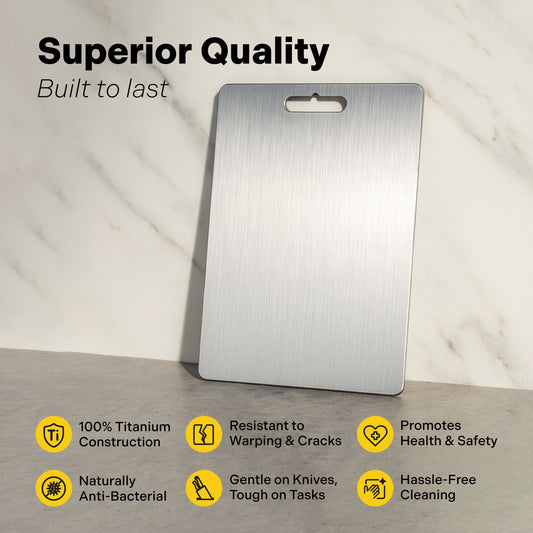
Limited-Time Offer — Get Free GiftsThe ChopChop USA Stainless Steel Cutting Board provides a safer, cleaner, and long-lasting alternative to traditional wood or plastic boards. Available in 11" x 7.9", 14" x 9.8", and 18" x 11.8", it combines durability, hygiene, and sleek design for any kitchen.
This board stands out for its unmatched durability. It won’t warp, crack, stain, or absorb odors. Its antibacterial stainless steel surface helps protect against bacteria and mold, keeping the prep area fresh and hygienic even after daily use. The knife-friendly brushed steel surface resists deep cuts while protecting blades.

Cleanup is simple—rinse, wipe, or place in the dishwasher. With zero microplastics and no harmful chemicals, it offers the best long-term value, saving you from repeatedly replacing worn boards.
Backed by many satisfied customers, ChopChop USA delivers durability, hygiene, and lifetime performance, making it a premium choice for any home cook.
Related: Stainless Steel Cutting Board Review: ChopChop USA Insights
ChopChop USA Double-Sided Stainless Steel Cutting Board

ChopChop USA Double-Sided Stainless Steel Cutting Board
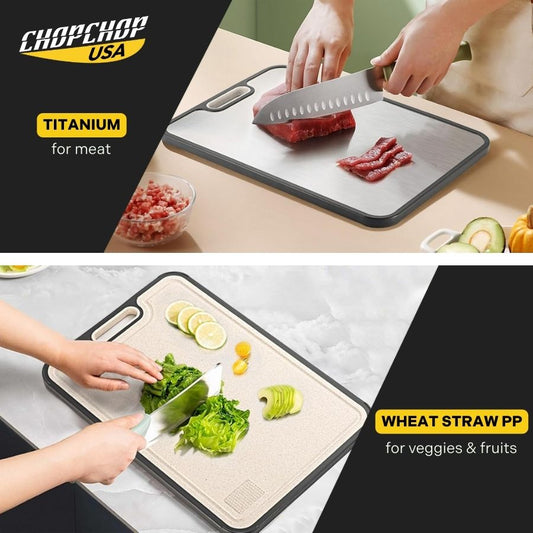
Limited-Time Offer — Get Free GiftsThe ChopChop USA Double-Sided Stainless Steel Cutting Board offers maximum versatility and hygiene in one smart design. One side features durable, antibacterial stainless steel, while the other side uses knife-friendly rice husk fiber, protecting blades during delicate prep.
Available in Medium (15.8" x 10.6") and Large (17.7" x 12.2"), it remains lightweight yet strong. The stainless steel side resists stains, odors, and bacteria, while the fiber side is ideal for fruits, vegetables, or delicate slicing. This dual-sided design keeps tasks clean, safe, and efficient.

Cleaning is easy—simply wipe the fiber side and place the stainless steel side in the dishwasher. With zero microplastics and food-safe materials, it’s built to last 5 to 10 years or more, eliminating warping, cracking, or contamination.
Highly rated by customers, this board combines durability, safety, and convenience, making it a reliable, long-term kitchen companion for home cooks and professionals alike.
Related: Double-Sided Stainless Steel Cutting Board Review – Is It Worth It?
Read more:
- How Long Do Stainless Steel Cutting Boards Last?
- Can You Cut Meat on a Stainless Steel Cutting Board? Explained
Conclusion
ChopChop USA stainless steel cutting boards remain durable, hygienic, and reliable even when light scratches appear. Scratches are natural and do not affect sanitation or performance. Choose stainless steel for long-term value and easy maintenance.
For more amazing recipes, follow me on Facebook and Instagram! If you have any questions about ChopChop USA's products or promotions, please feel free to contact us at support@chopchopusa.com. Our dedicated team is available 24/7 and always happy to assist you.
Frequently Asked Questions
Do stainless steel cutting boards scratch over time?
Yes, stainless steel cutting boards scratch with regular use, but the marks are shallow, cosmetic, and do not affect hygiene, durability, or cutting performance in daily kitchen tasks.
Are scratches on stainless steel cutting boards unsafe?
No, scratches are not unsafe. Stainless steel remains non-porous and sanitary even after developing surface marks from knives or heavy daily food-preparation routines.
How do I prevent deep scratches on stainless steel boards?
Use sharp knives, avoid ceramic blades, clean ingredients before chopping, and use smooth slicing motions instead of pounding or aggressive chopping techniques.
Can stainless steel cutting boards damage knives?
Yes, stainless steel is harder than wood or plastic, so it may dull knives faster. Using proper sharpening techniques helps maintain blade performance.
What are the advantages of a stainless steel cutting board?
Stainless steel cutting boards are durable, non-porous, and hygienic. They resist stains, odors, and bacteria, are easy to clean, heat-resistant, knife-friendly, and provide a long-lasting, modern kitchen surface.