










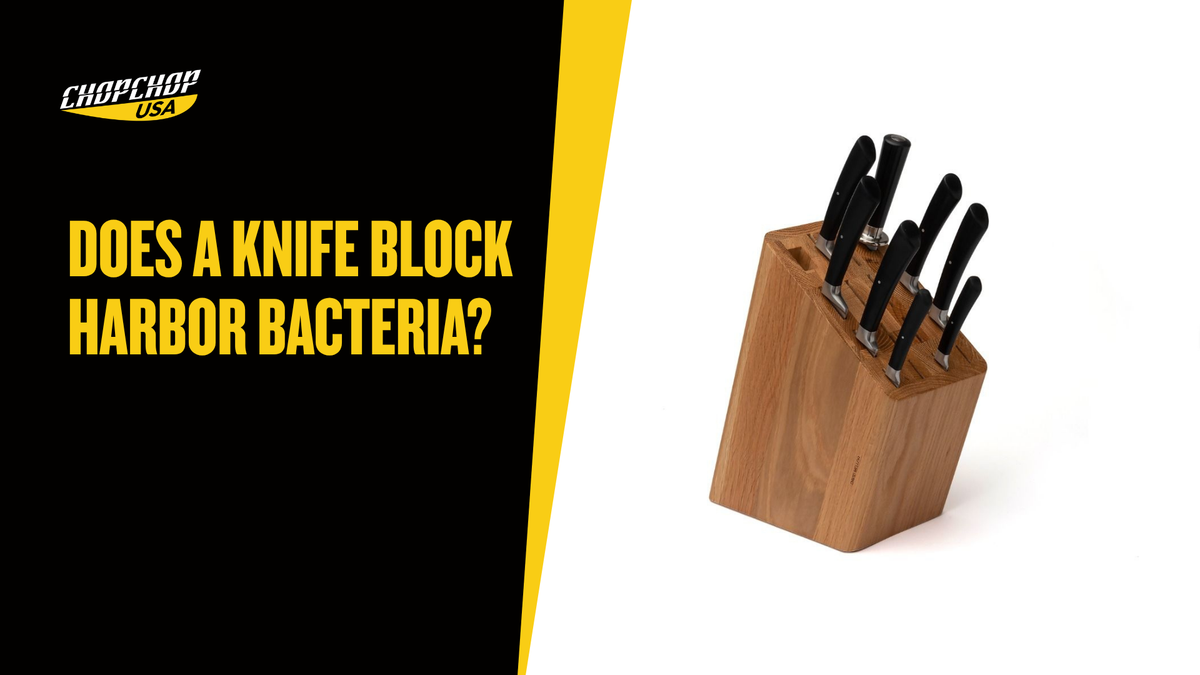
Does a knife block harbor bacteria? Yes—it can if moisture, food residue, and improper cleaning allow bacteria or mold to develop inside the slots. Fortunately, regular maintenance can significantly reduce this risk. In this guide, ChopChop USA will explain why knife blocks can harbor bacteria, how to clean them properly, and how to keep your kitchen safer and more hygienic.
In this article
Does a Knife Block Harbor Bacteria?

Many people ask, does a knife block harbor bacteria? Yes, it can if moisture, food residue, and dust build up inside the slots. However, regular cleaning and proper maintenance greatly reduce this risk.
Traditional wooden knife blocks protect knife blades, but their narrow slots can trap moisture and tiny food particles, especially if knives are stored while still damp. Limited airflow inside the block can make it harder for the interior to dry completely, helping explain why does a knife block harbor bacteria.
Because the inside of a knife block is difficult to inspect, crumbs and residue often go unnoticed. Over time, these conditions may encourage bacteria or mold to develop if the block isn't cleaned regularly.
A knife block doesn't create bacteria on its own. Instead, bacteria are introduced by damp or contaminated knives. If you're wondering, does a knife block harbor bacteria, washing and drying knives thoroughly and cleaning the knife block regularly are the best ways to keep your kitchen safe and hygienic.
Learn how long a magnetic knife block lasts.
You may also like: 7 Benefits Of A Magnetic Knife Block
Why Can Knife Blocks Harbor Bacteria?

Understanding why does a knife block harbor bacteria starts with how traditional knife blocks are designed. Their narrow slots can trap moisture, food residue, and dust, making them difficult to clean thoroughly.
Moisture Gets Trapped
Even after washing, knives may retain small water droplets. Storing damp knives in enclosed slots can trap moisture, creating conditions that may encourage bacteria or mold to grow, especially in humid kitchens.
Food Residue Builds Up
Tiny traces of meat juices, vegetables, fruit, oils, and other food particles can transfer from knife blades into the slots. Without regular cleaning, this residue may accumulate over time.
Limited Airflow Slows Drying
Unlike open storage, traditional knife blocks have very little airflow. Trapped moisture takes longer to dry, increasing the likelihood of bacterial or mold growth. If you've ever wondered, does a knife block harbor bacteria, poor ventilation is a major factor.
Hidden Slots Are Hard to Clean
The inside of a knife block is difficult to inspect and clean. Crumbs, dust, and residue can go unnoticed for months, making regular deep cleaning essential for maintaining good kitchen hygiene.
Mold Can Develop
If moisture remains trapped inside the slots, mold may also develop over time—especially in warm, humid kitchens. Signs include a musty odor, discoloration, or persistent dampness. Drying knives thoroughly and cleaning the knife block regularly helps prevent both mold and bacterial growth.
See more: Why Your Kitchen Needs A Magnetic Knife Block
How to Clean a Knife Block Properly

Cleaning your knife block is one of the easiest ways to maintain a hygienic kitchen. If you're wondering does a knife block harbor bacteria, regular cleaning is the best way to reduce the risk.
Here's a simple step-by-step process.
Step 1: Remove Every Knife
Take all knives out of the block before cleaning.
This allows you to inspect both the knives and the storage slots.
Step 2: Shake Out Loose Debris
Turn the knife block upside down over a trash can.
Gently shake it to remove:
- Crumbs
- Dust
- Food particles
- Loose debris
You may be surprised by how much collects inside over time.
Step 3: Clean the Exterior
Wipe the outside using a soft cloth with warm water and a small amount of mild dish soap.
Avoid soaking a wooden knife block, as excessive moisture can damage the wood.
Step 4: Clean Inside the Slots
Use a bottle brush, pipe cleaner, or narrow cleaning brush to remove residue inside each slot.
Work carefully to reach as much of the interior as possible without damaging the wood.
For stubborn buildup, lightly dampen the brush with warm water.
Step 5: Disinfect If Needed
If your knife block has an odor or hasn't been cleaned in a long time, you may use a food-safe disinfecting solution suitable for wooden kitchen tools.
Avoid using harsh chemicals or excessive bleach, which may damage the finish.
Step 6: Let It Dry Completely
Perhaps the most important step is allowing the knife block to dry thoroughly.
Leave it upside down in a well-ventilated area for several hours—or overnight if possible.
Never return knives until the interior is completely dry.
If you're wondering does a knife block harbor bacteria, proper drying is one of the most effective ways to prevent future problems.
Find the best places to put a magnetic knife block in your kitchen.
Related: How To Use a Magnetic Knife Holder?
Tips to Keep Your Knife Block Hygienic

Keeping your knife block clean doesn't require much effort—just a few consistent habits.
Follow these simple tips:
- Always dry knives thoroughly before storing them.
- Wipe the outside of your knife block every week.
- Deep-clean the inside about once a month.
- Avoid storing dirty or greasy knives.
- Keep your countertop clean and dry.
- Check periodically for musty odors or visible mold.
- Replace a damaged or cracked knife block if it can no longer be cleaned effectively.
Good maintenance not only helps answer the question, does a knife block harbor bacteria, but also extends the life of both your knife block and your kitchen knives.
Read our guide to choosing the perfect magnetic knife block.
Are Magnetic Knife Blocks More Hygienic?

If you're wondering does a knife block harbor bacteria, you may also ask whether a magnetic knife block is a more hygienic option. While no knife storage method is completely maintenance-free, magnetic knife blocks offer several advantages that make them easier to keep clean.
Better Airflow
Unlike traditional slotted knife blocks, magnetic knife blocks store blades on an open surface. Better airflow helps moisture evaporate faster, reducing the chance of moisture becoming trapped.
Easier to Clean
With no enclosed slots, the entire surface is easy to inspect and wipe clean. Dust, fingerprints, and food residue are much easier to remove during routine cleaning.
Better Visibility
Because every knife is fully visible, you can quickly inspect both the blades and the storage surface for dirt or moisture.
Good Maintenance Still Matters
Whether you choose a traditional or magnetic knife block, always wash and dry your knives thoroughly before storing them. Regular cleaning is the key to maintaining good kitchen hygiene.
Overall, traditional slotted knife blocks may be more likely to trap moisture and debris because of their enclosed design. In contrast, magnetic knife blocks are generally easier to clean, inspect, and maintain.
Find out whether a magnetic knife block is a good idea for your kitchen.
Keep Your Kitchen Safer with the ChopChop USA Magnetic Knife Block
$210.00Save 50%

If you're wondering does a knife block harbor bacteria, choosing a storage solution that's easier to clean can help reduce moisture buildup. The ChopChop USA Magnetic Knife Block features an open, double-sided magnetic design that keeps knives visible, organized, and easy to wipe clean.
Crafted with a premium acacia wood finish, it holds up to 12 knives while keeping them visible, organized, and within easy reach. Its compact design (28.5 × 30 × 10 × 22.5 cm) fits comfortably on most countertops, and the wide, non-slip base provides added stability for everyday use.
Why Choose ChopChop USA?
- Holds Up to 12 Knives: Store chef's knives, santoku knives, bread knives, cleavers, utility knives, and steak knives while keeping them organized and easy to access.
- Strong Double-Sided Magnetic Hold: Powerful hidden magnets securely hold knives on both sides, maximizing storage without adding clutter.
- Easy to Clean: The open design is easier to wipe clean than traditional slotted knife blocks and helps reduce moisture buildup.
- Stable Non-Slip Base: A wide, sturdy base keeps the block securely in place during everyday use.
- Premium Acacia Wood Finish: Adds a warm, elegant touch while complementing both modern and classic kitchens.
- Countertop-Ready: No drilling or installation required—simply place it where it's most convenient.
Upgrade your kitchen with a knife storage solution that's cleaner, safer, and designed for everyday convenience.
Not sure which one to buy? Find the best magnetic knife block in our tested reviews.
Conclusion
Does a knife block harbor bacteria? Yes, it can if moisture and food residue are allowed to build up. Fortunately, regular cleaning, proper drying, and choosing an easy-to-maintain storage solution like the ChopChop USA Magnetic Knife Block help keep your knives—and your kitchen—cleaner, safer, and better organized.
For more helpful kitchen tips, follow me on Facebook and Instagram! If you have any questions about ChopChop USA's products or promotions, please feel free to contact us at support@chopchopusa.com. Our dedicated team is available 24/7 and always happy to assist you.
Frequently Asked Questions
1. Do Knife Blocks Harbor Bacteria?
Yes. Knife blocks can harbor bacteria if moisture and food residue build up inside the slots. Regular cleaning and thoroughly drying knives help minimize the risk.
2. Can Mold Grow Inside A Wooden Knife Block?
Yes. Mold can grow if moisture remains trapped inside the block. Clean it regularly and allow it to dry completely to help prevent mold growth.
3. How Do You Sanitize A Knife Block?
Remove all knives, shake out debris, clean the slots with a narrow brush, wipe the exterior, disinfect if needed, and let the block dry completely.
4. How Often Should You Clean A Knife Block?
Deep-clean your knife block about once a month, and wipe the exterior weekly. Clean it immediately if you accidentally store damp or dirty knives.
5. Are Magnetic Knife Blocks More Hygienic Than Traditional Knife Blocks?
Generally, yes. Magnetic knife blocks are easier to clean and promote better airflow, reducing moisture buildup. However, regular cleaning is still essential for hygiene.