

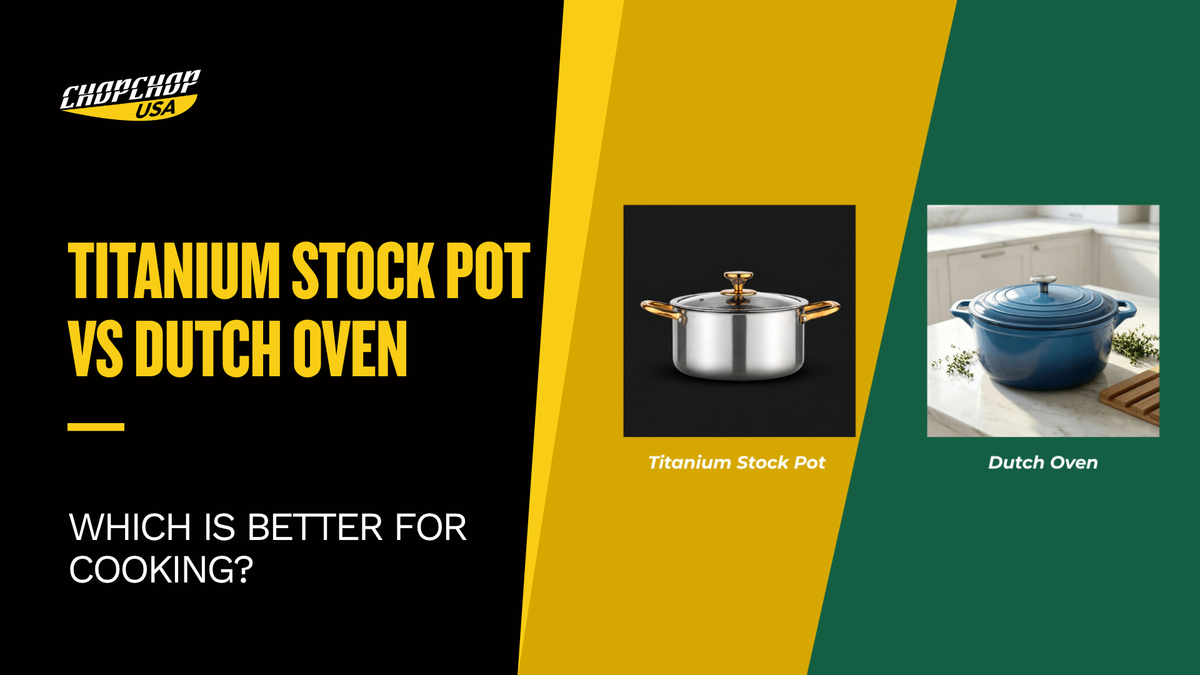
Titanium stock pot vs Dutch oven: which one deserves a spot on your stove? It depends on what you cook most, but for everyday soups, pasta, and stocks, titanium usually wins. In this guide, ChopChop USA will compare both pots side by side so you can choose one with confidence.
In this article
What Is a Titanium Stock Pot?

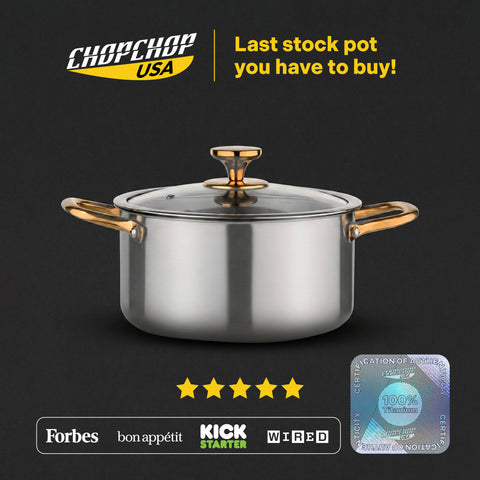
A titanium stock pot is a tall pot with straight sides, built for cooking liquids and large batches. Its height keeps evaporation low, so it is ideal for soups, stocks, bone broth, pasta, and seafood boils.
Modern titanium stock pots use a tri-ply build. A titanium cooking surface touches your food, an aluminum core spreads heat, and a stainless steel exterior adds strength and induction compatibility.
The biggest benefits are clean cooking and easy handling. Titanium is non-reactive, so tomatoes, wine, and vinegar never pick up a metallic taste. There is no coating to wear off, and the pot stays light even when it is full. Knowing this design is the first step in any titanium stock pot vs Dutch oven decision.
Titanium stock pots are also practical for small kitchens. Their tall, narrow shape takes up less burner space, and they can hold a large volume of liquid without crowding the stovetop. For families who cook in big batches, that extra capacity makes weeknight dinners and weekend meal prep much easier.
What Is a Dutch Oven?

A Dutch oven is a heavy, thick-walled pot with a tight-fitting lid. Most modern versions are made from enameled cast iron, while classic camp models use bare cast iron.
Dutch ovens are wider and shorter than stock pots. A typical 5.5-quart model weighs 12 to 14 pounds, so lifting it full of stew takes real effort. That thick iron heats slowly but holds heat for a long time, which is why Dutch ovens are loved for oven braises, pot roast, and crusty no-knead bread.
The tight lid also traps steam and moisture, helping tough cuts of meat like chuck roast and short ribs turn tender over several hours. The trade-offs are weight, slow heat-up, and enamel that can chip if the pot is dropped or heated empty.
That weight and slow heating are key points in the titanium stock pot vs Dutch oven debate, as you'll see below.
Titanium Stock Pot vs Dutch Oven: Key Differences

When you compare a titanium stock pot vs Dutch oven side by side, six differences matter most for home cooks.
Weight and Handling
A Dutch oven is one of the heaviest pots in any kitchen. A titanium stock pot is far lighter, so it is easier to lift, pour, drain pasta, and wash in the sink. That matters most when the pot is full of hot soup, or when anyone in your home has trouble lifting heavy cookware.
Heating Speed and Heat Retention
Cast iron is slow to heat but holds heat well. A tri-ply titanium stock pot heats quickly and evenly thanks to its aluminum core, which saves time and energy on busy weeknights. Once the pot is up to temperature, simply lower the heat for a steady, gentle simmer.
Food Safety and Reactivity
Titanium is non-reactive with acidic, alkaline, and neutral foods. Bare cast iron can react with tomatoes and wine, and once enamel chips, the iron underneath is exposed. Titanium is so stable that it is widely used in medical implants and surgical tools. In your kitchen, that means no flavor transfer and no coating to worry about, even during long, acidic simmers.
Cleaning and Care
Most enameled cast iron Dutch ovens need gentle hand washing to protect the enamel. A titanium stock pot has no coating, resists stains, and is often dishwasher safe. Most messes wipe away with warm water, mild soap, and a soft sponge, so cleanup takes minutes instead of a long soak.
Versatility
Dutch ovens shine at searing and slow oven cooking. Stock pots shine at liquids, big batches, and fast boiling, which covers most family meals. If your weekly menu is full of soups, pasta nights, and big-batch cooking, a stock pot will see far more use than a Dutch oven.
Price and Long-Term Value
Premium enameled Dutch ovens can be expensive, and chipped enamel often means replacing the pot. When you weigh titanium stock pot vs Dutch oven on long-term value, a durable titanium pot with no coating to wear out is a smart, once-and-done investment.
|
Feature |
Titanium Stock Pot |
Dutch Oven |
|
Weight |
Light, easy to lift |
Heavy (12–14 lb) |
|
Heating |
Fast and even |
Slow, holds heat long |
|
Reactivity |
Non-reactive |
Bare iron reacts; enamel can chip |
|
Cleaning |
Dishwasher safe, no coating |
Hand wash, careful with enamel |
|
Best for |
Soups, stocks, pasta, big batches |
Braising, roasting, bread |
In the titanium stock pot vs Dutch oven matchup, titanium wins on weight, speed, safety, and cleanup, while the Dutch oven wins on heat retention.
When to Choose Each Pot

The right choice depends on the meals you cook every week. Think about your last ten dinners and which pot you would have reached for.
Choose a titanium stock pot if you often cook:
- Soups, chili, and bone broth
- Pasta, corn, and seafood boils
- Tomato sauces and other acidic recipes
- Large batches for family meals or meal prep
- Quick weeknight dinners when you need water boiling fast
Choose a Dutch oven if you often cook:
- Slow oven braises and pot roast
- No-knead bread
- Deep-browned stews that start with heavy searing
So, do you need both? Most homes cook soups, pasta, and one-pot meals far more often than braises, so one versatile pot usually covers the week. That makes the titanium stock pot vs Dutch oven choice simple for everyday cooking: start with a lightweight stock pot, then add a Dutch oven later if you bake bread or braise often.
Can a Titanium Stock Pot Replace a Dutch Oven?
For most everyday recipes, yes. A titanium stock pot handles soups, stews, chili, sauces, and pasta with ease, and an oven-safe model like ours can even finish dishes in the oven. Where a Dutch oven still has the edge is very long, high-heat oven baking, such as crusty bread or a slow, all-day pot roast. For everyone else, the titanium stock pot vs Dutch oven question comes down to convenience, and titanium is easier to live with every day.
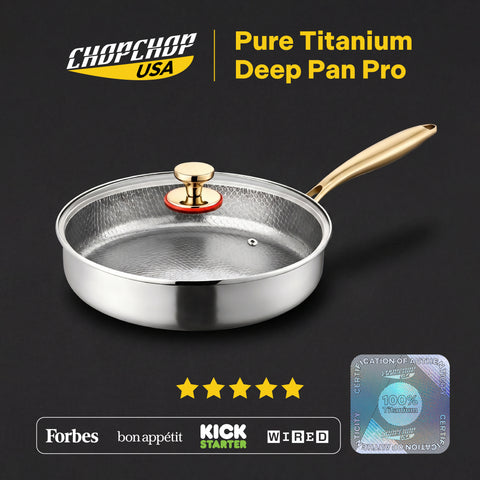
ChopChop USA Titanium Stock Pot Pro: The Lighter Way to Cook Big
$280.00Save 29%
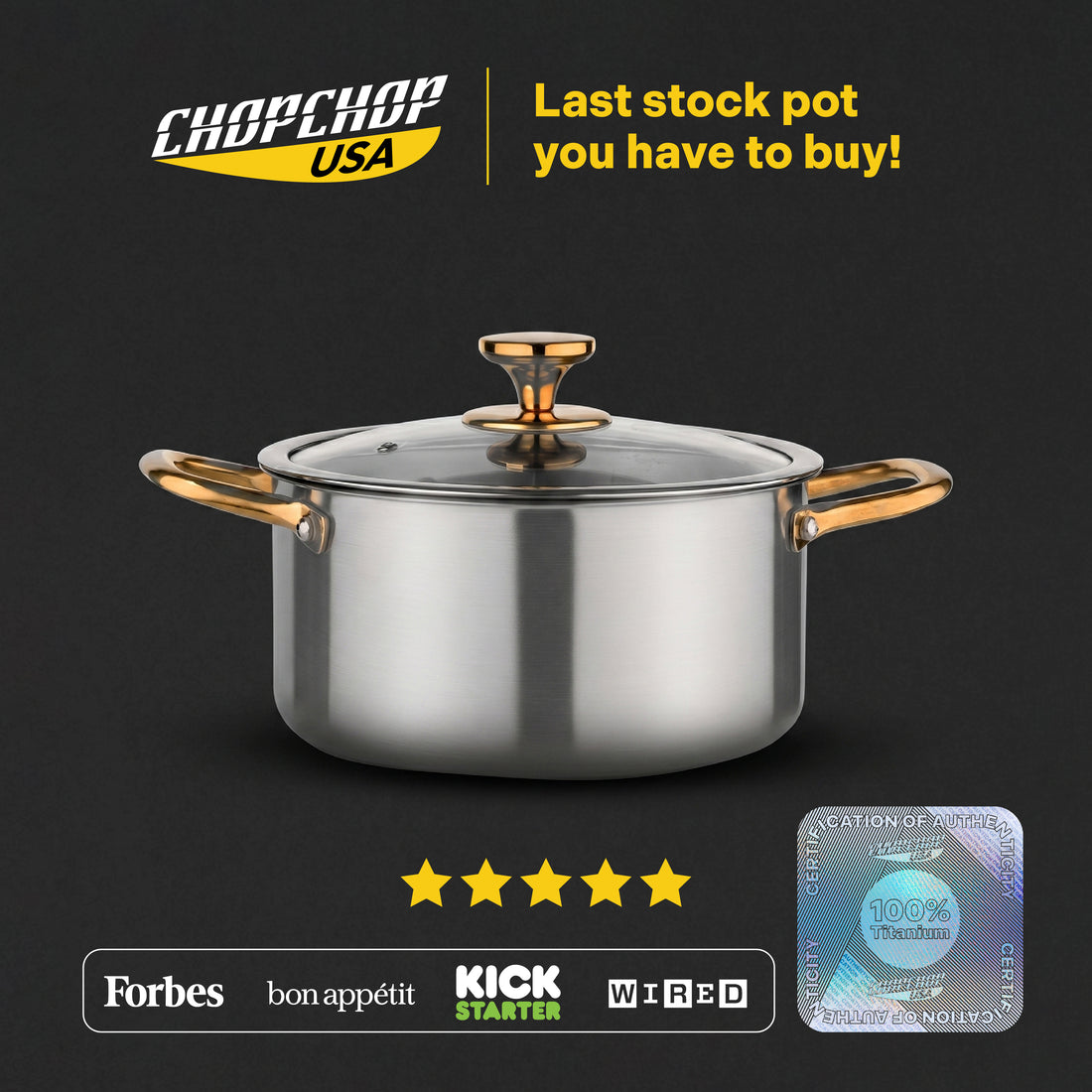
If heavy cast iron keeps your Dutch oven stuck in the cabinet, the ChopChop USA Titanium Stock Pot Pro was made for you. It settles the titanium stock pot vs Dutch oven question for everyday meals with clean flavor and even heat in a pot you'll actually reach for.
Here's how it solves the most common Dutch oven complaints:
|
Dutch oven problem |
Stock Pot Pro solution |
|
Too heavy to lift |
Titanium's strength-to-weight ratio keeps it light and easy to handle |
|
Slow to heat |
High-conductivity aluminum core heats fast and evenly |
|
Enamel can chip |
100% Grade 1 Pure Titanium surface (99.96% lab-verified), with no coating |
|
Hand wash only |
Dishwasher safe, with hand washing recommended for longest life |
|
Limited cooktops |
Works on gas, electric, ceramic, halogen, and induction, and is oven-safe |
Its tri-ply construction also resists warping, corrosion, and stains, so it keeps performing for years. Before first use, simply wash it with warm water and mild dish soap, dry it completely, and it's ready to cook. Store it in a dry place and avoid stacking it with sharp cookware to keep the titanium surface smooth. From Sunday bone broth to a quick weeknight pasta, it brings an easy answer to titanium stock pot vs Dutch oven for busy home kitchens.
Light to lift. Fast to heat. Nothing to chip.
Conclusion
Titanium stock pot vs Dutch oven? For braising and bread, choose a Dutch oven. For everyday soups, pasta, and stocks, choose titanium. The ChopChop USA Titanium Stock Pot Pro gives your family lighter, cleaner, and faster cooking every single day.
For more amazing kitchen information, follow us on Facebook and Instagram! If you have any questions about ChopChop USA's products or promotions, please feel free to contact us at support@chopchopusa.com. Our dedicated team is available 24/7 and always happy to assist you.
Frequently Asked Questions
1. Is a titanium stock pot or a Dutch oven better for everyday cooking?
For daily soups, pasta and stocks, a titanium stock pot is better. It's lighter, heats faster and cleans easily. Dutch ovens suit occasional oven braising.
2. Do I need both a stock pot and a Dutch oven?
Not always. Most home cooks make soups and pasta far more than braises. Start with a titanium stock pot, then add a Dutch oven later.
3. Which pot is better for stew and chili?
Both work well. A Dutch oven holds heat longer, while a titanium stock pot heats evenly, weighs less and also won't react with tomato-based recipes.
4. Titanium stock pot vs Dutch oven: which is easier to clean?
A titanium stock pot is easier. It's dishwasher safe and has no enamel to chip. Enameled cast iron Dutch ovens usually need careful hand washing.
5. Which lasts longer, a titanium stock pot or a Dutch oven?
Both can last for many years. Titanium naturally resists corrosion, stains and warping, while Dutch oven enamel can chip or crack if dropped or overheated.