What not to cook in a cast iron skillet, and why does it matter? Certain foods can damage seasoning, alter flavors, or stick badly—making cast iron harder to maintain and less enjoyable.
In this guide, ChopChop USA will explain what not to cook in a cast iron skillet, why these foods cause problems, and how to protect your skillet for better cooking results.
What Is a Cast Iron Skillet?

A cast iron skillet is a heavy-duty pan made from molten iron poured into molds and cured through seasoning. Unlike coated cookware, cast iron develops a natural nonstick surface over time.
This cookware is prized for its durability, heat retention, and versatility. When properly seasoned, it can last generations while delivering consistent cooking performance on nearly any heat source.
Understanding what not to cook in a cast iron skillet is essential because the material reacts differently than stainless steel or nonstick pans. Some foods can strip seasoning or absorb unwanted flavors.
Benefits of Using a Cast Iron Skillet?

Cast iron skillets are celebrated for their exceptional heat retention, allowing them to hold steady temperatures far longer than most cookware. Once heated, the pan distributes warmth evenly, reducing hot spots and ensuring consistent cooking results. This makes cast iron ideal for high-heat searing, shallow frying, baking, and slow roasting without constant temperature adjustments.
Another major advantage is the naturally nonstick surface developed through seasoning. Instead of relying on synthetic coatings, cast iron builds a durable, chemical-free cooking layer that improves with each use. With regular care, foods release more easily, cleanup becomes simpler, and cooking remains safe and reliable.
Versatility is another standout benefit. Cast iron skillets work on gas, electric, and induction stovetops, and transition seamlessly into ovens, grills, and campfires. Understanding what not to cook in a cast iron skillet helps preserve seasoning and maintain long-term performance.
Additionally, cast iron cookware is completely chemical-free and food-safe, supporting healthier cooking while enhancing flavor through steady, even heat. The result is richer textures and deeper taste that many modern pans simply can’t replicate.
4 Foods You Should Avoid Cooking In Your Cast-Iron Skillet
Even with its strengths, cast iron isn’t ideal for every ingredient. Below are the most common foods that cause problems and explain what not to cook in a cast iron skillet.
Acidic Foods

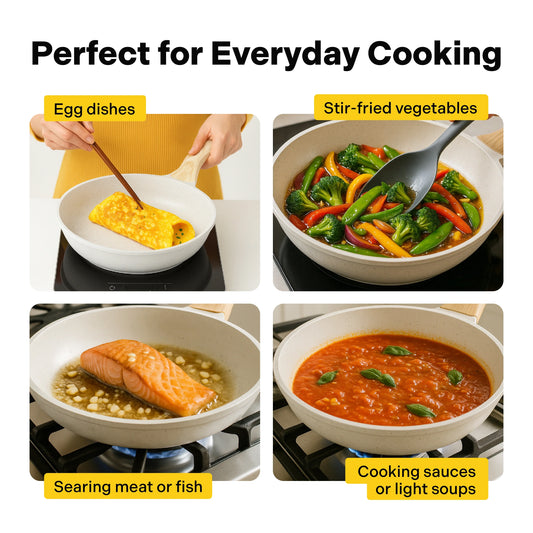
Acidic foods are a common example of what not to cook in a cast-iron skillet, especially for extended cooking times. Ingredients like tomatoes, citrus, vinegar, wine, and tomato-based sauces can react with the iron surface and weaken the seasoning layer.
When seasoning breaks down, food may develop a metallic taste, and the pan becomes more prone to sticking and rust. This effect is strongest in new or lightly seasoned skillets that haven’t built a protective patina yet.
While a well-seasoned pan can tolerate brief exposure, frequent acidic cooking shortens the skillet’s lifespan. For best results, prepare acidic dishes in stainless steel or enameled cookware to protect your cast iron.
Sticky Foods (Eggs, Pancakes, Rice)

Sticky foods such as eggs, pancakes, crepes, and rice are often frustrating in cast iron, particularly for beginners. These foods cling easily to the surface if the skillet isn’t fully seasoned or properly preheated.
When sticking occurs, food tears apart and leaves residue that’s difficult to remove. Scraping or soaking to clean the pan can damage the seasoning and expose bare iron underneath.
Until your skillet develops a smooth, mature seasoning layer, sticky foods are better cooked in nonstick or stainless steel pans to ensure clean release and easier cleanup.
Pungent Or Strong-Flavored Ingredients

Pungent or strongly flavored ingredients can leave lasting odors in cast iron cookware. Foods made with garlic, curry pastes, fermented sauces, or intense spices can be absorbed into the skillet’s porous surface.
These trapped aromas may transfer into future meals, even when cooking mild or sweet dishes. This reduces flavor purity and limits how versatile your skillet can be.
Occasional use is manageable, but frequent cooking of strong-flavored foods requires extra cleaning and re-seasoning. Using alternative cookware helps preserve both taste and skillet performance.
Delicate Fish

Delicate fish is one of the most difficult foods to cook successfully in a cast-iron skillet. Fish like cod, sole, flounder, and tilapia have soft flesh that breaks easily when exposed to high heat.
Cast iron’s heat retention can cause fish to stick or overcook before it releases naturally. Once sticking happens, both the fillet and the seasoning layer may be damaged.
Unless your skillet is extremely well-seasoned and technique is precise, delicate fish is better prepared in nonstick or stainless steel pans for best texture and appearance.
Why You Should Choose the ChopChop USA Cast Iron Skillet?

ChopChop USA Cast Iron Skillet
Limited-Time Offer — Get Free Gifts
If you’re investing in cast iron, choose a skillet that delivers legendary performance from the very first cook. The ChopChop USA Cast Iron Skillet is crafted for cooks who demand bold flavor, powerful heat, and cookware built to last a lifetime.
Forged from premium cast iron, it locks in heat, cooks evenly, and transforms everyday meals into unforgettable dishes. Designed to perform flawlessly on any heat source, this skillet becomes more nonstick and more reliable with every use. When you understand what not to cook in a cast iron skillet, you protect its seasoning—and unlock decades of unbeatable cooking performance with ChopChop USA.
Premium Cast Iron Construction For Unmatched Heat Retention
Pre-Seasoned, Naturally Nonstick Surface That Improves With Use
Each ChopChop USA skillet arrives pre-seasoned and ready to cook, eliminating the long break-in process. With regular use, the natural seasoning layer becomes smoother and more nonstick over time. This allows food to release easily without chemical coatings, supporting healthier cooking, easier cleanup, and better long-term performance. The more you cook, the better the skillet becomes.
Compatible With Stovetop, Oven, Grill, And Campfire
Designed for total versatility, the ChopChop USA Cast Iron Skillet works seamlessly on gas, electric, and induction cooktops, and transitions effortlessly into ovens, grills, and campfires. This flexibility lets you sear on the stove, finish in the oven, or cook outdoors with confidence. One skillet handles every cooking method, reducing the need for multiple pans.
Heavy-Duty Design Engineered For Lifetime Durability
Built to withstand extreme heat and constant use, this skillet features a heavy-duty design engineered for generations. Unlike disposable cookware that degrades or peels, cast iron grows stronger with proper care. The robust structure resists cracking and warping, making it a reliable kitchen tool you can depend on year after year.
Chemical-Free, Food-Safe Material For Pure Cooking
The ChopChop USA Cast Iron Skillet is made from 100% natural iron with no synthetic coatings, ensuring safe, chemical-free cooking. Without toxins or nonstick chemicals, you can cook at high temperatures with peace of mind. This creates a healthier cooking environment while preserving the natural flavors of your ingredients.
Choose Your Perfect Size

Every size is engineered for specific meals, portions, and kitchen needs—so you get perfect results without guesswork.
- 3.9" (10 cm) – 320 g: Best for butter melting, spice toasting, or elegant side servings. Ideal for precision cooking and plating.
- 5.5" (14 cm) – 510 g: Designed for single eggs, personal portions, and small desserts. Compact, fast-heating, and easy to handle.
- 6.3" (16 cm) – 650 g: Perfect for one-person meals, sautéed vegetables, or skillet cookies. A favorite for quick, flavorful cooking.
- 7.9" (20 cm) – 1140 g: A versatile everyday size for searing meats, frying potatoes, or baking cornbread evenly.
- 10.2" (26 cm) – 1950 g: Built for family meals and one-pan recipes. Handles roasts, casseroles, and hearty dishes with ease.
- 11.8" (30 cm) – 3050 g (with handle): Made for serious cooks and large gatherings. Maximum surface area, maximum heat retention.
Conclusion
Knowing what not to cook in a cast iron skillet protects seasoning, preserves flavor, and extends cookware life. ChopChop USA delivers cast iron skillets designed for lasting performance and confident cooking.
For more amazing cooking content, follow us on Facebook and Instagram! If you have any questions about ChopChop USA products or promotions, contact us anytime at support@chopchopusa.com. Our 24/7 team is always happy to help.
Frequently Asked Questions
1. What Food Should Not Be Cooked In Cast Iron?
Foods high in acid, delicate textures, or strong aromas are what not to cook in a cast iron skillet, especially for long durations or frequent use.
2. Why Can't You Cook Tomatoes In Cast Iron?
Tomatoes are acidic and can strip seasoning, cause metallic flavors, and damage surfaces, making them a classic example of what not to cook in a cast iron skillet.
3. Is The ChopChop USA Cast Iron Skillet Safe To Use?
Yes, it is chemical-free, food-safe, and naturally seasoned, making it safe for daily cooking when you understand what not to cook in a cast iron skillet.
4. Will Cast Iron Skillet Work On All Cooktops?
Cast iron skillets work on gas, electric, induction, oven, grill, and campfire surfaces, offering maximum versatility with proper care and correct food choices.
5. Is A Cast Iron Skillet Dishwasher Safe?
No — we recommend hand washing only. Dishwashers can remove the natural seasoning and promote rust. Hand cleaning preserves your skillet’s patina and ensures lasting performance.