Is ceramic cookware vs cast iron the right choice for your kitchen? The answer depends on cooking style, health priorities, and maintenance preferences, as both materials offer unique advantages and trade-offs for home cooks. In this guide, ChopChop USA will explore ceramic cookware vs cast iron in detail, breaking down benefits, drawbacks, and real kitchen performance so you can confidently choose the best cookware for daily use.
What Is Ceramic Cookware?

Ceramic cookware features a metal core, usually aluminum, coated with a ceramic-based non-stick surface. This coating is free from traditional chemical non-sticks and provides smooth food release, easy cleaning, and reliable performance for everyday, moderate-heat cooking.
What Are the Pros of Ceramic Cookware?
- Non-toxic surface: Ceramic cookware is often praised in ceramic cookware vs cast iron discussions for being free from PTFE, PFOA, lead, and cadmium, making it a popular health-conscious choice.
- Even heat distribution: The aluminum core beneath the ceramic coating heats evenly, helping prevent hot spots and ensuring consistent cooking results.
- Non-stick coating: Food releases easily with minimal oil, which supports lighter, healthier meals and reduces sticking during cooking.
- Easy to clean: A quick rinse or gentle wipe is usually enough, making ceramic cookware convenient for busy households.
What Are the Cons of Ceramic Cookware?
- Recommend hand washing: Dishwashers can shorten the lifespan of the ceramic coating, so hand washing is advised.
- Not a good option for high-heat cooking: High temperatures may degrade the ceramic surface over time, especially compared to cast iron.
What Is Cast Iron Cookware?

Cast iron cookware is made from a single piece of molten iron, creating heavy, durable pans known for exceptional heat retention. When properly seasoned, cast iron develops a natural non-stick surface that improves with age and use.
What Are the Pros of Cast Iron Cookware?
- High heat retention and distribution: In ceramic cookware vs cast iron comparisons, cast iron excels at retaining heat, making it ideal for searing, frying, and baking.
- Naturally non-stick (when seasoned): With regular seasoning, cast iron becomes increasingly non-stick without added coatings.
What Are the Cons of Cast Iron Cookware?
- Difficult to handle: Cast iron pans are heavy, which can be challenging for some cooks to lift, flip, or maneuver.
- Requires ongoing maintenance: Regular seasoning, careful drying, and oiling are necessary to prevent rust and maintain performance.
Compare Ceramic Cookware vs Cast Iron

When deciding between ceramic cookware vs cast iron, understanding how they perform side by side helps clarify which best suits your cooking habits and lifestyle.
Durability

- Ceramic cookware: Lightweight and user-friendly, ceramic cookware delivers reliable durability for daily cooking, easy maintenance, and consistent performance when used and cared for properly.
- Cast iron cookware: Extremely durable and long-lasting, but heavier and requires ongoing seasoning and maintenance to preserve performance.
Health

- Ceramic cookware: Ceramic cookware is valued for its non-toxic, chemical-free surface. It contains no PTFE, PFOA, lead, or cadmium, making it a reassuring choice for those prioritizing clean, health-conscious cooking.
- Cast iron cookware: Cast iron is also safe when properly seasoned. It contains no synthetic coatings, and some cooks appreciate that it can release small amounts of iron into food.
Ease of Use

- Ceramic cookware: Lightweight and easy to maneuver, ceramic cookware is beginner-friendly and comfortable for everyday tasks like flipping eggs or sautéing vegetables. It requires minimal cooking experience to use effectively.
- Cast iron cookware: Cast iron is significantly heavier, which can make lifting, pouring, and flipping more challenging. It also requires a learning curve to manage heat and seasoning correctly.
Cleaning and Maintenance

- Ceramic cookware: Ceramic cookware is easy cleaning. Food residue releases quickly, and most messes can be removed with warm water and mild soap. Maintenance is minimal when hand washed.
- Cast iron cookware: Cast iron requires ongoing care, including seasoning with oil, thorough drying after washing, and proper storage to prevent rust. This routine can be time-consuming for some users.
Functionality in the Kitchen

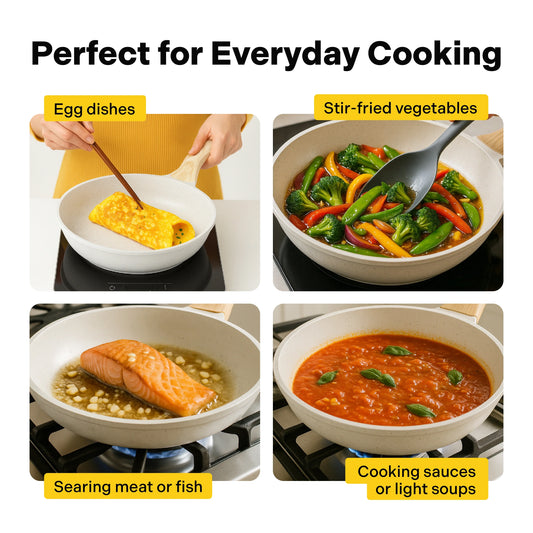
- Ceramic cookware: Ceramic cookware performs best at low to medium heat and excels at cooking delicate foods like eggs, fish, and sauces. It’s ideal for quick meals and everyday cooking.
- Cast iron cookware: Cast iron shines in high-heat applications such as searing steaks, frying, baking cornbread, and oven-based recipes, making it highly versatile for robust cooking techniques.
Heaviness & Weight

- Ceramic cookware: Ceramic cookware is light and easy to handle, reducing strain during cooking and making it suitable for users of all ages and skill levels.
- Cast iron cookware: Cast iron is very heavy, which can be inconvenient for daily use, especially for those with limited strength or mobility.
Non-Stick Properties

- Ceramic cookware: Ceramic cookware features a naturally smooth, non-stick coating that allows food to release easily with little to no oil, supporting healthier cooking.
- Cast iron cookware: Cast iron develops its non-stick properties over time through regular seasoning. The more it’s used and maintained, the better its food-release performance becomes.
Ceramic Cookware vs Cast Iron: Which One Fits Your Cooking Style?
Choosing between ceramic cookware vs cast iron depends on how you cook, how much maintenance you want, and whether health-focused convenience or traditional durability matters more in your kitchen.
When Should You Use Ceramic?

Ceramic cookware is a great choice for everyday cooking when convenience, comfort, and health are top priorities. In ceramic cookware vs cast iron comparisons, ceramic stands out for its lightweight design and low-maintenance performance, making it ideal for busy home kitchens.
Ceramic cookware is best when you:
- Prefer lightweight pans that are easy to lift, flip, and handle
- Want quick and effortless cleanup with minimal scrubbing
- Focus on non-toxic, chemical-free cooking for daily meals
- Cook eggs, fish, vegetables, and sauces at low to medium heat
- Prepare quick meals and use less oil or butter
- Value convenience and ease over long-term seasoning routines
When Should You Use Cast Iron?

Cast iron cookware is the go-to option for cooks who prioritize performance and durability. In ceramic cookware vs cast iron evaluations, cast iron excels in high-heat applications and traditional cooking methods that demand strong heat retention.
Cast iron cookware is best when you:
- Cook frequently at high temperatures for searing and frying
- Want deep, even heat retention for consistent results
- Enjoy oven-to-table cooking, including baking and roasting
- Don’t mind regular seasoning and maintenance
- Prefer cookware that can last a lifetime or longer
- Cook hearty meals like steaks, cornbread, stir-fries, and skillet dishes
This balanced comparison helps clarify ceramic cookware vs cast iron choices based on cooking habits, lifestyle, and long-term preferences.
ChopChop USA Ceramic Frying Pan

ChopChop USA Ceramic Frying Pan
Limited-Time Offer — Get Free GiftsThe ChopChop USA ceramic frying pan is crafted with durable ceramic construction for long-lasting strength and dependable everyday performance. Its 100% ceramic, non-toxic coating contains no PTFE, PFOA, lead, or cadmium, ensuring safe and clean cooking.
The smooth ceramic surface prevents sticking and makes cleaning effortless, while the pan’s even-heat design distributes heat consistently for perfectly cooked results every time.

Why You Need the ChopChop USA Ceramic Frying Pan
- Chemical-free cooking: Made with a natural, toxin-free ceramic coating to ensure safe and clean meals.
- Even heat distribution: Reinforced aluminum base heats quickly and evenly, preventing hot spots for consistent cooking.
- Scratch-resistant surface: Durable ceramic resists scratches and maintains a smooth, high-performing finish over time.
- Effortless cleanup: Nonstick surface allows food to release easily; just a quick rinse or wipe is enough.
- Built to last: Premium ceramic with a sturdy aluminum core ensures long-term durability and daily reliability.
- Lightweight & comfortable: Strong yet lightweight design makes handling easy for everyday cooking.
- Oven & cooktop safe: Oven-safe up to 550°F and compatible with gas, electric, and induction cooktops.
For cooks weighing ceramic cookware vs cast iron, ChopChop USA offers a modern ceramic solution designed for health, comfort, and efficiency.
ChopChop USA Cast Iron Skillet

ChopChop USA Cast Iron Skillet
Limited-Time Offer — Get Free GiftsThe ChopChop USA Cast Iron Skillet is built from solid, premium cast iron to deliver unmatched durability, heat retention, and classic cooking performance. Naturally free from synthetic coatings, PTFE, and PFOA, this skillet offers a traditional, chemical-free cooking surface that improves with use.
Designed to heat evenly and retain warmth longer than other cookware, the skillet excels at searing, sautéing, baking, frying, and slow-cooking. Its naturally seasoned surface creates a reliable, easy-release finish while adding rich flavor and versatility to every meal.

Why You Need the ChopChop USA Cast Iron Skillet
- Naturally chemical-free cooking: Made from pure cast iron with no artificial coatings, ensuring safe, traditional meal preparation.
- Exceptional heat retention: Cast iron holds and distributes heat evenly, delivering consistent results from stovetop to oven.
- Naturally nonstick over time: Pre-seasoned surface improves with use, developing a smooth patina that enhances food release.
- Built for generations: Ultra-durable cast iron construction resists warping and wear, designed to last a lifetime with proper care.
- Unmatched versatility: Perfect for searing, frying, baking, roasting, and even outdoor or campfire cooking.
- Oven, grill & cooktop safe: Compatible with gas, electric, induction, oven, grill, and open-flame cooking.
- Flavor-enhancing performance: Retains heat longer to lock in juices and create beautifully crisp, golden results.
For cooks comparing cast iron vs ceramic cookware, ChopChop USA delivers a timeless cast iron skillet designed for durability, flavor, and all-purpose cooking power.
Conclusion
Ceramic cookware vs cast iron comes down to lifestyle needs. Ceramic offers convenience and safety, while cast iron delivers power and tradition. ChopChop USA ceramic frying pans balance performance, health, and everyday ease.
For more amazing recipes, follow me on Facebook and Instagram! If you have any questions about ChopChop USA's products or promotions, please feel free to contact us at support@chopchopusa.com. Our dedicated team is available 24/7 and always happy to assist you.
Frequently Asked Questions
1. Is It Better To Cook On Cast Iron Or Ceramic?
Ceramic cookware vs cast iron depends on cooking style. Ceramic suits daily, low-heat meals, while cast iron excels at high-heat searing, baking, and long-lasting durability with proper care.
2. What Are The Disadvantages Of Ceramic Cookware?
Ceramic cookware is less durable at high heat, requires gentle cleaning, and may lose non-stick performance faster than well-maintained traditional cookware.
3. What Is The Healthiest Cookware To Use?
Many consider both ceramic and cast iron healthy options. Ceramic is chemical-free, while cast iron is safe when seasoned properly and may add trace iron to food.
4. Do Professional Chefs Use Ceramic Pans?
Professional chefs often prefer cast iron for performance, but ceramic pans are popular for quick tasks, eggs, and delicate foods in modern kitchens.
5. Is Ceramic Frying Pan Non-Toxic?
Yes, high-quality ceramic pans are non-toxic and free from PTFE, PFOA, lead, and cadmium, making them a safe choice for everyday cooking.