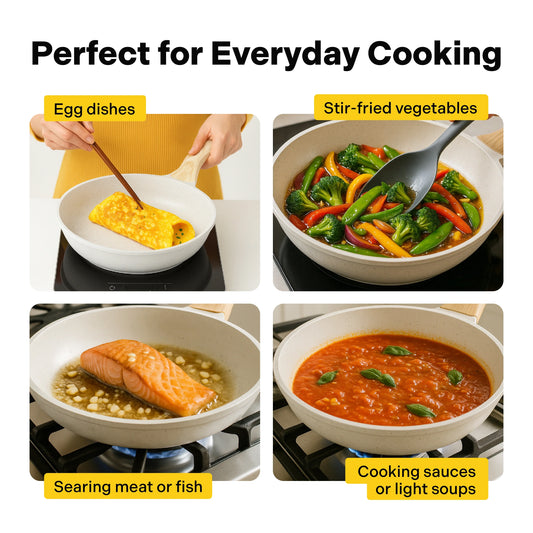
Is ceramic cookware vs carbon steel better for healthy home cooking? Ceramic cookware offers non-toxic convenience and easy maintenance, while carbon steel provides exceptional durability and high-heat cooking performance. In this guide, ChopChop USA compares materials, safety, cooking results, and maintenance needs to help you choose cookware that fits your kitchen habits and cooking priorities.
What Is Ceramic Cookware?

Ceramic cookware consists of a metal core, typically aluminum or stainless steel, coated with a ceramic-based, inorganic non-stick surface. Unlike traditional non-stick coatings, ceramic cookware is free from PTFE and PFOA, making it especially appealing to health-conscious households seeking safer daily cooking solutions.
Key Benefits of Ceramic Cookware
- Non-toxic and safe cooking: A major advantage in ceramic cookware vs carbon steel is safety. Ceramic coatings are naturally non-toxic, stable at normal cooking temperatures, and do not release harmful fumes, making them ideal for families and health-conscious users.
- Easy food release and cleanup: The smooth ceramic surface allows food to slide off easily, reducing the need for oil or butter. Cleanup is fast and gentle, which supports convenient everyday cooking routines.
- Even heat distribution: Ceramic pans heat evenly, minimizing hot spots and improving results for eggs, vegetables, fish, and other delicate foods. This predictable performance makes ceramic cookware beginner-friendly.
- Modern design and visual appeal: Ceramic cookware often features clean finishes and contemporary colors that enhance kitchen aesthetics while maintaining functional simplicity for daily use
Limitations of Ceramic Cookware
Ceramic cookware is hands-on friendly, but it does require mindful use. The ceramic coating can gradually wear if exposed to very high heat or metal utensils. In ceramic cookware vs carbon steel, ceramic prioritizes safety and ease, while durability depends on gentle, everyday handling.
What Is Carbon Steel Cookware?

Carbon steel cookware is made from sheets of iron alloyed with carbon. It shares similarities with cast iron but is thinner, lighter, and faster to heat. Carbon steel is widely used in professional kitchens, where durability and high-heat cooking performance are prioritized.
Key Benefits of Carbon Steel Cookware
- Exceptional heat tolerance: When comparing ceramic cookware vs carbon steel, carbon steel stands out for handling extremely high temperatures. It is ideal for searing meats, stir-frying, and oven use, making it popular in professional kitchens.
- Long-lasting durability: Carbon steel cookware is highly durable and can last decades with proper care. Unlike coated pans, it does not rely on a surface layer that wears down, making it a long-term investment for experienced cooks.
Limitations of Carbon Steel Cookware
- High maintenance requirements: Carbon steel must be seasoned, dried immediately after washing, and lightly oiled to prevent rust. This hands-on care can be inconvenient, especially for beginners comparing ceramic cookware vs carbon steel.
- Limited food compatibility: Carbon steel reacts with acidic foods such as tomatoes and vinegar-based sauces, particularly before full seasoning. This reduces versatility, making it less ideal for everyday use.
Comparing Ceramic Cookware vs Carbon Steel

Comparing ceramic cookware vs carbon steel helps home cooks understand key differences in safety, performance, maintenance, and usability. Each material serves a distinct purpose, but ceramic cookware stands out for non-toxic cooking, ease of care, and everyday kitchen convenience.
Performance and Heat Conductivity

Ceramic cookware: Ceramic cookware heats evenly and gently, making it ideal for low-to-medium heat cooking where control and consistency matter. It reduces hot spots and helps preserve food texture, minimizing the risk of burning during everyday meal preparation.
Carbon steel cookware: Carbon steel heats quickly and reaches very high temperatures, supporting searing, stir-frying, and aggressive cooking techniques. In ceramic cookware vs carbon steel, this rapid heat response benefits experienced cooks but requires careful control to avoid overheating or uneven results, making it less forgiving for beginners.
Durability and Longevity Differences

Ceramic cookware: Ceramic cookware offers reliable performance for daily use but has a shorter lifespan due to gradual coating wear. While it may need replacing over time, many households prefer its non-toxic cooking and ease of maintenance, making it a sensible choice for everyday use.
Carbon steel cookware: Carbon steel is exceptionally durable and can last decades when properly maintained. In ceramic cookware vs carbon steel comparisons, carbon steel clearly wins in longevity, though this comes with the trade-off of high maintenance demands and more time-consuming care routines.
Maintenance Requirements and Safety

Ceramic cookware: Ceramic cookware requires minimal care, needing only gentle washing and utensil consideration. It stands out for safety and simplicity, offering stress-free daily cooking without seasoning, oiling, or rust concerns, making it ideal for busy households and beginners.
Carbon steel cookware: Carbon steel requires consistent seasoning, thorough drying, and occasional oiling to prevent rust. In ceramic cookware vs carbon steel, this maintenance can feel demanding, especially for home cooks who are looking for easy cleanup and minimal upkeep in their daily cooking routines.
Environmental Impact Considerations

Ceramic cookware: Ceramic cookware supports healthier indoor environments through non-toxic, chemical-free coatings. It aligns with eco-conscious values by reducing exposure to harmful substances during cooking, even if replacement may occur sooner. It’s also more straightforward for eco-friendly disposal.
Carbon steel cookware: Carbon steel’s long lifespan reduces waste and replacement frequency, offering environmental advantages. In ceramic cookware vs carbon steel, while carbon steel has an environmental benefit with longevity, poor maintenance can lead to rust, affecting its overall sustainability and lifespan.
Food Compatibility and Cooking Flexibility

Ceramic cookware: Ceramic cookware excels with eggs, vegetables, grains, fish, and low-oil recipes. It offers broader flexibility, allowing cooks to prepare a wide variety of dishes without worrying about seasoning damage or acidic ingredients, making it a more versatile option for daily meals.
Carbon steel cookware: Carbon steel performs best with meats and high-heat cooking but reacts with acidic foods like tomatoes. In ceramic cookware vs carbon steel, this limitation reduces versatility, making it less forgiving for varied everyday cooking, especially for beginners who need more predictable and forgiving cookware.
Which Pan Is Right for You?

Choosing between ceramic cookware vs carbon steel depends on lifestyle and priorities. If you value non-toxic materials, simple cleanup, and ease of use, ceramic cookware is an excellent fit. It supports healthy cooking without requiring advanced skills or time-consuming maintenance routines.
If you enjoy high-heat cooking and are comfortable with seasoning and care, carbon steel may suit you. However, many home cooks find ceramic cookware better aligned with modern lifestyles focused on convenience, safety, and consistent everyday performance.
Many kitchens benefit from using both types strategically. Ceramic cookware handles daily meals effortlessly, while carbon steel can be reserved for specific high-heat tasks. ChopChop USA often recommends this balanced approach for versatility and longevity.
Why Choose the ChopChop USA Ceramic Frying Pan?

ChopChop USA Ceramic Frying Pan
Limited-Time Offer — Get Free GiftsThe ChopChop USA ceramic frying pan is designed for reliable, everyday cooking with an emphasis on health, safety, and performance. Its durable ceramic construction ensures consistent heat distribution and dependable strength, making it an ideal choice for families and individuals seeking safe and effective cookware.
- 100% ceramic, non-toxic coating: Chemical-free, non-toxic coating with no PTFE, PFOA, lead, or cadmium ensures safe cooking, making it ideal for health-conscious users compared to carbon steel.
- Fast, even heat distribution: Reinforced aluminum base ensures uniform heat, eliminating hot spots for consistent cooking, from eggs to stir-fries.
- Scratch-resistant surface: Durable, scratch-resistant surface keeps a smooth, non-stick finish with easy cleanup—perfect for busy households.
- Built to last & versatile: Lightweight yet durable, oven-safe up to 550°F, and compatible with all cooktops, offering versatility without compromising safety or comfort.

In ceramic cookware vs carbon steel, the ChopChop USA pan shines for its ease of use, safety, and low-maintenance design, making it the better option for everyday cooking needs.
Conclusion
Choosing between ceramic cookware vs carbon steel depends on health priorities, cooking habits, and maintenance preferences. ChopChop USA recommends ceramic cookware for its safety, ease of use, and reliability, making it the best choice for most home kitchens seeking consistent results and convenience.
For more amazing recipes, follow me on Facebook and Instagram! If you have any questions about ChopChop USA's products or promotions, please feel free to contact us at support@chopchopusa.com. Our dedicated team is available 24/7 and always happy to assist you.
Frequently Asked Questions
1. Is Ceramic Better Than Carbon Steel?
Ceramic cookware is better for non-toxic, low-maintenance cooking, ideal for everyday use. Carbon steel excels in durability and high-heat performance, making it suitable for skilled cooks.
2. What Is the Advantage of Ceramic Cookware?
Ceramic cookware is PTFE-free, non-toxic, and easy to clean, making it perfect for healthy, low-oil cooking. It’s especially good for busy kitchens and beginners.
3. Which Pan Is Best for Health?
Ceramic pans are considered healthier due to their chemical-free coatings, ensuring safe cooking. While carbon steel is also safe, ceramic is favored for consistent health protection.
4. How to Clean a Ceramic Frying Pan
Let the pan cool, then wash with warm water and mild soap. Avoid abrasive sponges or metal utensils to protect the ceramic coating and extend its life.
5. Are Ceramic Frying Pans Safe?
Yes, ceramic frying pans are safe for everyday cooking. They are free of harmful chemicals and work best at low-to-medium heat, ensuring safe, healthy meals.