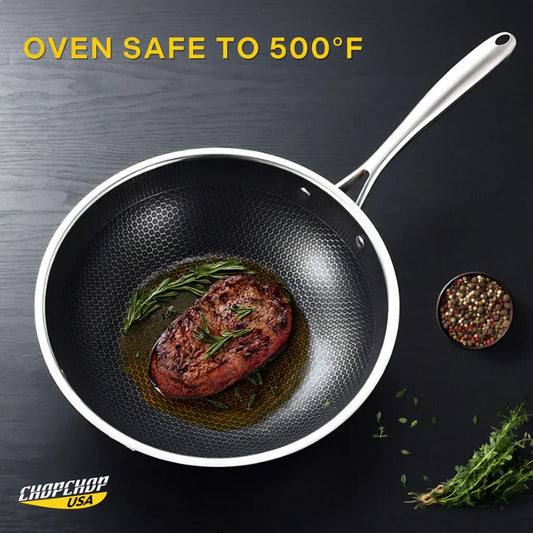
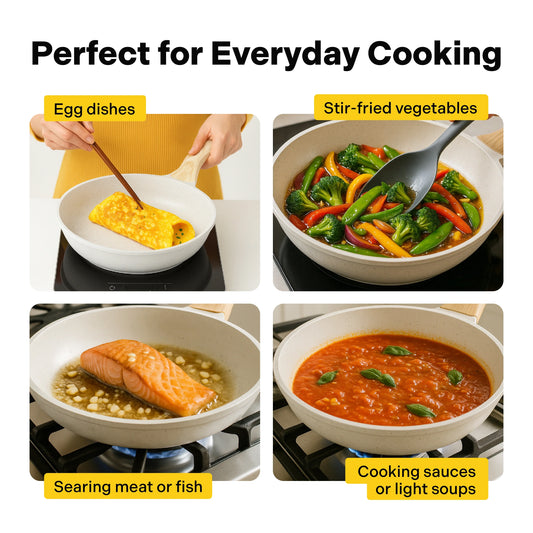
What is the real difference between ceramic vs. non stick cookware? The main differences involve coating materials, durability, safety, and long-term performance. In this guide, ChopChop USA will break down ceramic vs. non stick cookware clearly, helping you understand materials, performance, pros, cons, and which option best matches your cooking style and safety priorities.
What Is Ceramic Cookware?

Ceramic cookware refers to pans coated with a naturally derived ceramic-based layer applied over a metal core, usually aluminum or stainless steel. Despite the name, it is not made from kiln-fired clay like stoneware. Instead, the coating delivers a glossy, smooth surface that mimics traditional non-stick performance.
When discussing ceramic vs. non stick cookware, ceramic stands out because its coating is free from synthetic fluoropolymers. This naturally derived coating allows food to release easily while supporting even heat distribution from the underlying metal base. Many modern ceramic pans also feature reinforced aluminum construction for better thermal efficiency.
In comparisons of ceramic vs. non stick cookware, ceramic cookware gained popularity as consumers sought cleaner, more transparent material options. While performance closely resembles non-stick, ceramic cookware emphasizes peace of mind and minimal chemical concerns.
Pros of Ceramic Cookware

- Naturally non-toxic surface: One of the strongest advantages in ceramic vs. non stick cookware comparisons is safety. Ceramic coatings are naturally free from PFAS, PTFE, PFOA, lead, and cadmium, offering peace of mind for health-conscious households and families.
- Even heat distribution: Ceramic cookware is typically built on aluminum or stainless steel cores, allowing heat to spread evenly across the cooking surface. This makes it ideal for eggs, vegetables, and other delicate foods that require gentle, consistent heat.
- Reduced oil usage: The smooth ceramic surface helps food release easily, minimizing the need for excessive oils or butter while supporting lighter, low-fat cooking methods.
- Modern aesthetic appeal: Available in a wide range of contemporary colors and finishes, ceramic cookware enhances open kitchens and visually driven cooking spaces.
Cons of Ceramic Cookware

- Higher price point: Ceramic cookware often costs more than traditional non-stick options, particularly from premium or design-focused brands. Budget choices exist, but the range is more limited due to newer technology.
- Care sensitivity: To maintain performance, ceramic cookware demands gentle handling, including hand washing and avoiding metal utensils.
What Is Non Stick Cookware?

Traditional non-stick cookware is constructed with a metal base, most commonly aluminum or stainless steel, coated with a synthetic non-stick surface.
This coating creates an exceptionally smooth finish that prevents food from sticking and allows for effortless food release during cooking. Because of this slick surface, non-stick cookware is especially popular for preparing delicate foods such as eggs, fish, crepes, and pancakes.
In ceramic vs. non stick cookware comparisons, non-stick pans are widely recognized for their convenience and ease of use. They require less oil, simplify cleanup, and help streamline everyday cooking. For busy households and beginner cooks, non-stick cookware offers a practical, approachable solution for quick meals and consistent results.
Pros of Non Stick Cookware

- Exceptional convenience: Non-stick cookware is designed for effortless cooking and cleanup. Food releases easily from the surface, often requiring only a gentle wipe or quick rinse, which is ideal for busy households and fast meal preparation.
- Budget-friendly pricing: In ceramic vs. non stick cookware price comparisons, non-stick pans are generally more affordable and widely available, making them accessible to beginners, students, and budget-conscious cooks.
- Longer-lasting coating: When properly cared for, non-stick coatings typically last longer than ceramic coatings. This durability makes non-stick cookware a practical short- to medium-term investment for everyday use.
- Ideal for delicate foods: Non-stick surfaces excel at cooking eggs, fish, crepes, and pancakes without tearing or sticking.
Cons of Non Stick Cookware

- Limited long-term durability: Non-stick cookware is not built to last indefinitely. Even high-quality pans eventually lose their coating and need replacement after several years of regular use.
- Chemical history concerns: In ceramic vs. non stick cookware discussions, older non-stick pans manufactured before 2014 may contain PFOA, a chemical linked to health concerns, requiring careful verification.
- Sensitive to misuse: Metal utensils, high heat, dishwashers, and cooking sprays can damage non-stick coatings, significantly shortening the pan’s lifespan.
- Heat restrictions: Non-stick cookware performs best at low to medium heat and is unsuitable for high-heat cooking methods.
How Do Ceramic and Traditional Non Stick Compare?

When evaluating ceramic vs. non stick cookware, the key differences emerge across performance, durability, and maintenance rather than basic cooking capability.
Cooking Performance
When comparing ceramic vs. non stick cookware, ceramic cookware delivers a more controlled and consistent cooking experience, especially at moderate heat. Its naturally derived coating supports even heating without relying on synthetic surfaces, aligning well with ChopChop USA’s performance-focused design philosophy.
- Ceramic: Provides even heat distribution through reinforced aluminum cores, supports low-fat cooking with minimal oil, maintains stable performance at moderate temperatures, and offers a naturally derived, non-toxic surface ideal for delicate foods like eggs, fish, and vegetables
- Non stick: Offers extremely slick food release at first, but performance can decline more quickly with repeated high-heat use or surface wear
Durability
Durability highlights meaningful differences in ceramic vs. non stick cookware, with ceramic offering long-term reliability beyond its non-stick lifespan. ChopChop USA ceramic pans remain safe, functional, and structurally sound even after the coating naturally wears.
- Ceramic: Coating may fade faster, but the pan stays usable, stable, and consistently PFAS-free, eliminating concerns about aging synthetic materials or hidden chemicals
- Non stick: Coatings typically last longer initially, but once scratched or degraded, the pan often requires full replacement
Maintenance and Care
When comparing ceramic vs. non stick cookware, both types require gentle care to protect the coating, but ceramic cookware offers added reassurance throughout its lifespan. With proper handling, ceramic pans support safer everyday cooking without relying on perfect coating conditions.
- Ceramic: Hand washing recommended, performs best on low to medium heat, remains safe even as non-stick performance decreases, and supports long-term use without chemical concerns
- Non stick: Requires stricter care, including avoiding metal utensils, dishwashers, cooking sprays, and high heat to prevent irreversible coating damage
Which Cookware Option is Right for You?
Choosing the right cookware depends on your cooking habits, safety preferences, and budget. Understanding ceramic vs. non stick cookware helps you select a pan that fits your lifestyle, supports your meals, and delivers consistent performance every day.
Who Should Choose Ceramic Cookware

- Health-conscious cooks who value naturally derived, non-toxic coatings free from PFAS, PTFE, PFOA, lead, and cadmium
- Home cooks who prefer gentle, low- to medium-heat cooking and consistent heat distribution
- Families seeking long-term safety reassurance, even as the non-stick coating gradually wears
- Cooks who appreciate modern design, eco-friendly messaging, and cookware that remains usable beyond its non-stick lifespan
Who Should Choose Nonstick Cookware

- Busy cooks who prioritize ultra-easy food release and quick cleanup
- Beginners looking for affordable, accessible cookware for everyday meals
- Households that prefer short- to medium-term cookware solutions and plan to replace pans as coatings wear
- Cooks who follow strict care guidelines to preserve non-stick performance and avoid coating damage
ChopChop USA Ceramic Frying Pan: A Safer, Smarter Choice

ChopChop USA Ceramic Frying Pan
Limited-Time Offer — Get Free GiftsThe ChopChop USA ceramic frying pan is designed for cooks seeking performance, safety, and modern versatility. Built with a reinforced aluminum base and premium ceramic coating, it delivers even heat and effortless food release.
Key Specifications
- Weight: Lightweight yet sturdy construction for easy handling
- Materials: Reinforced aluminum base, ceramic-coated for non-toxic, eco-friendly cooking. Contains no PTFE, PFOA, lead, or cadmium, ensuring safe and clean cooking
- Diameter: Available in various sizes, typically ranging from 9.45" (24 cm) to 11.81" (30 cm)
- Oven safe: Safe up to 550°F, making it versatile for various cooking methods
- Induction compatible: Yes, works with all stove types, including induction
- Care instructions: Hand-washing is recommended to preserve the coating
This pan fits perfectly into ceramic vs. non stick cookware discussions by offering ceramic performance with durable construction and broad stovetop compatibility.

Conclusion
Ceramic vs. non stick cookware ultimately comes down to personal priorities. ChopChop USA offers thoughtfully designed ceramic frying pan that balances performance, safety, and modern cooking needs without compromising everyday usability.
For more amazing recipes, follow me on Facebook and Instagram! If you have any questions about ChopChop USA's products or promotions, please feel free to contact us at support@chopchopusa.com. Our dedicated team is available 24/7 and always happy to assist you.
Frequently Asked Questions
Is Ceramic Better Than Non-Stick Pans?
Ceramic pans offer chemical-free reassurance, while non-stick pans last longer. Choosing depends on safety preferences, cooking frequency, and willingness to replace pans when coatings wear down.
What Is The Healthiest Type Of Cookware To Use?
Cookware with stable coatings, proper care, and moderate heat use is healthiest. Ceramic cookware is often preferred for its naturally derived, PFAS-free surface.
What Are The Disadvantages Of Ceramic Cookware?
Ceramic cookware coatings wear faster, cost more, and eventually lose non-stick performance, requiring oil or butter to maintain food release over time.
Do Professional Chefs Use Ceramic Pans?
Professional chefs primarily use stainless steel and carbon steel, but ceramic pans are occasionally used for delicate tasks requiring low heat and gentle food handling.
Are Ceramic Pans Safe?
Ceramic pans are safe when properly manufactured and used correctly, offering naturally derived coatings free from PTFE, PFOA, lead, and cadmium.