Will stainless steel rust if you cut it? The short answer is no, stainless steel is highly resistant to rust, even if you cut it. However, under certain conditions, its protective layer can be compromised. In this guide, ChopChop USA will explore whether cutting stainless steel can cause rust, the risks involved, and how to maintain your stainless steel products.
Rust Risks Explored

Stainless steel is praised for its durability and rust resistance, but what happens if it does rust, especially on products like cutting boards? Let’s explore the harmful consequences of rust on stainless steel:
- Compromised Hygiene: If stainless steel cutting boards rust, it can create crevices where bacteria, like Salmonella and E. coli, can thrive. Rust provides an ideal breeding ground for harmful microorganisms, compromising food safety.
- Decreased Durability: Rust weakens the structural integrity of the metal. Over time, a rusted cutting board may become brittle and prone to breaking or warping, making it unsafe for food prep.
- Aesthetic and Odor Issues: Rust on a stainless steel cutting board not only looks unsightly but can also cause unpleasant odors, affecting the overall cooking experience.
In short, will stainless steel rust if you cut it? While it’s unlikely, the consequences of rust on cutting boards—especially when neglected—can lead to hygiene issues and damage to the product itself. Regular maintenance and cleaning are essential to prevent these harmful outcomes.
What Properties Make Stainless Steel Rust-Resistant?

Stainless steel’s rust resistance comes from a combination of its alloy composition and protective properties. However, damage to its surface can raise the question: Will stainless steel rust if you cut it? Let's explore the key properties that make stainless steel rust-resistant and how cutting can affect this.
Protective Layer

The primary reason stainless steel is resistant to rust is the formation of a thin, invisible oxide layer when chromium in the steel reacts with oxygen. This passive layer acts as a shield, preventing further oxidation. However, activities like cutting, grinding, or scratching can disrupt this protective barrier, potentially allowing rust to form.
Non-Porous

Stainless steel has a non-porous surface, meaning it doesn’t easily absorb water, oil, or other liquids. This property helps limit the contact between the metal and corrosive elements like moisture or chemicals, thereby reducing the likelihood of rust formation.
Self-Healing

One of the most remarkable features of stainless steel is its ability to "self-heal." If the protective layer is disrupted, the exposed steel reacts with air, quickly forming a new oxide layer. This natural process helps prevent long-term rust formation, but it is most effective when the damage is minimal and not prolonged. If the damage is extensive or left untreated, rust can still develop.
Will Stainless Steel Rust if You Cut It?

Will stainless steel rust if you cut it? Stainless steel is designed to resist rust, even when cut. Cutting may damage the protective chromium oxide layer, exposing the raw metal underneath. However, stainless steel has a remarkable self-healing ability: once the oxide layer is compromised, fresh chromium quickly reforms, protecting the steel from rust.
This self-healing process is highly effective under normal conditions. But if the cut is deep or the steel is exposed to harsh environments, such as moisture, iron particles, or chemicals, it can overwhelm the protective layer. In these cases, rust may form.
Overall, stainless steel remains highly resistant to rust, even when cut, as long as it is properly maintained and cleaned. Regular care, such as wiping the surface clean and avoiding prolonged exposure to moisture, will help prevent rust from forming. With the right maintenance, stainless steel can stay rust-free for years.
How to Remove Rust from Stainless Steel?

While stainless steel is rust-resistant, it’s not completely immune to corrosion. If rust starts to form, don’t worry! Here’s how to clean or remove rust from stainless steel:
- Use a Non-Abrasive Cleaner: Apply a paste made of baking soda and water to the rust spots. Gently scrub with a soft cloth or sponge to avoid scratching the surface. This will remove light rust stains without damaging the steel.
- Polishing: Stainless steel polish can help remove surface rust and restore the finish. It also helps maintain the steel’s natural shine and smooth surface, keeping it looking like new.
- Commercial Rust Removers: For more stubborn rust, use a commercial cleaner or rust remover designed specifically for stainless steel. These products are formulated to break down and eliminate rust effectively.
In some cases, will stainless steel rust if you cut it? Yes, if the protective oxide layer is damaged, but with regular maintenance and cleaning, rust can be prevented from forming or spreading.
Tips for Keeping Your Stainless Rust-Free

To ensure your stainless steel stays rust-free and maintains its shine, follow these essential tips:
- Regular Cleaning: Clean your stainless steel regularly to remove grime, dirt, and moisture that can cause corrosion over time. Use a soft cloth and mild detergent to avoid damaging the surface.
- Dry After Use: Always dry your stainless steel products immediately after exposure to water. This helps preserve the protective oxide layer and prevents rust formation.
- Avoid Harsh Chemicals: Avoid using harsh chemicals like chlorine or bleach, as they can break down the protective chromium oxide layer and increase the risk of rust.
- Store Properly: Store stainless steel items in a dry area, away from excessive humidity, salt, or corrosive environments.
By following these simple steps, you can prevent rust and keep your stainless steel looking new. Will stainless steel rust if you cut it? Regular care will minimize the chances of that happening.
Discover the Premium Quality of ChopChop USA Stainless Steel Cutting Boards
Stainless Steel Cutting Board

ChopChop™ USA Stainless Steel Cutting Board
Limited-Time Offer — Get Free Gifts
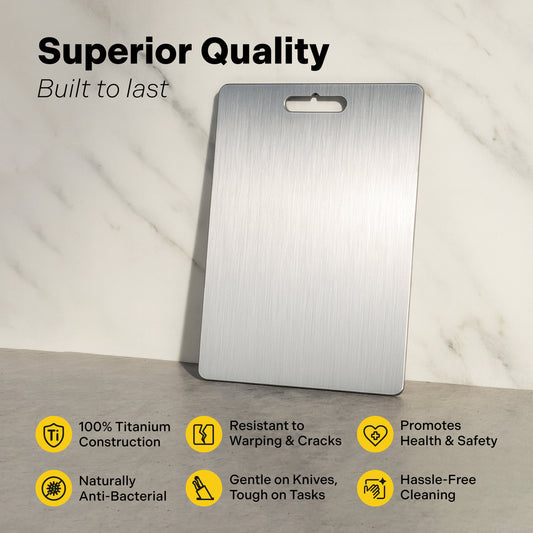
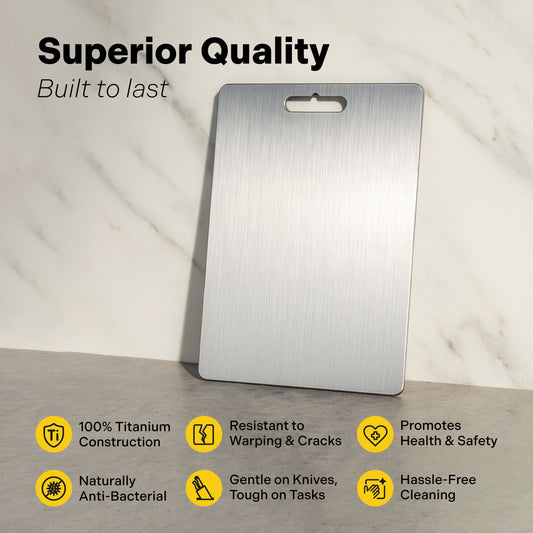
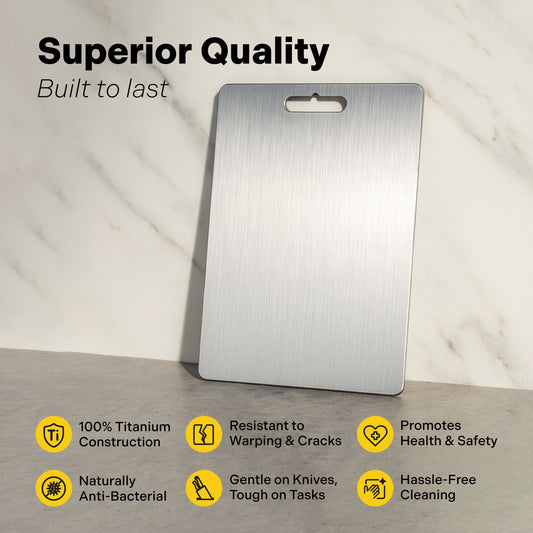
The ChopChop USA Stainless Steel Cutting Boards outshine traditional wood and plastic boards in durability, hygiene, and style. They combine functionality with modern design, offering a safer, cleaner, and longer-lasting solution for food prep. Will stainless steel rust if you cut it? Proper care keeps these boards rust-free.

Key Benefits:
- Durable – Won’t warp, crack, or degrade; built to last a lifetime.
- Antibacterial Surface – Protects against bacteria, mold, and odors for a hygienic prep area.
- Easy to Clean – Simply rinse, wipe, or place in the dishwasher for hassle-free maintenance.
- Zero Microplastics – Made with food-safe materials, free from harmful chemicals and plastic residue.
Double-Sided Stainless Steel Cutting Board

ChopChop USA Double-Sided Stainless Steel Cutting Board
Limited-Time Offer — Get Free Gifts
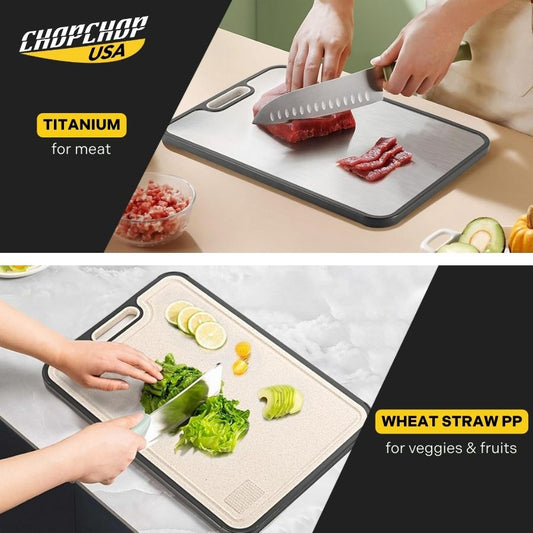
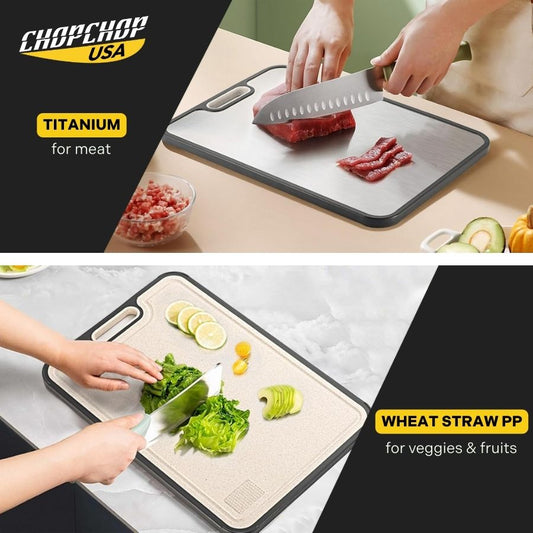
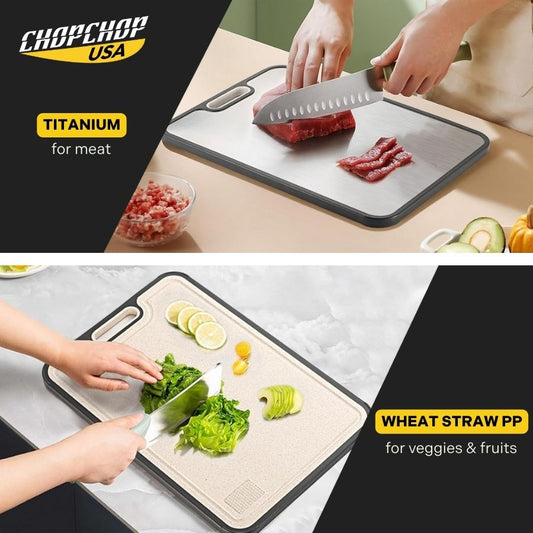
The ChopChop USA Double-Sided Stainless Steel Cutting Board will elevate your food prep. One side features a rice husk fiber surface that’s gentle on knives, while the other has a durable, antibacterial stainless steel surface. It prevents warping, staining, and bacteria buildup—ideal for prepping both meats and vegetables.

Why You’ll Love It:
- Built to Last – Stainless steel resists cracking, warping, and wear, even with daily use.
- Antibacterial & Odor-Free – The stainless steel side blocks bacteria, mold, and lingering smells.
- Gentle on Knives – Use the rice husk side to protect your knife edges and extend sharpness.
- Effortless Cleaning – Wipes clean in seconds and is dishwasher-safe for added convenience.
- Zero Microplastics – Made with food-safe materials—no toxins, no chemical residue.
- Lightweight & Easy to Handle – Despite its strength, the board is light enough for easy lifting and storage
Will stainless steel rust if you cut it? With ChopChop USA, you don’t have to worry about that. These boards are designed to be durable, rust-resistant, and easy to maintain, ensuring a safe and hygienic food prep surface..
Conclusion
In conclusion, will stainless steel rust if you cut it? Cutting stainless steel may damage its protective layer, potentially leading to rust over time. With proper maintenance, it will remain rust-free. At ChopChop USA, we offer durable, hygienic stainless steel cutting boards that combine quality and rust resistance.
For more amazing recipes, follow me on Facebook and Instagram! If you have any questions about ChopChop USA's products or promotions, please feel free to contact us at support@chopchopusa.com. Our dedicated team is available 24/7 and always happy to assist you.
Frequently Asked Questions
1. Will Stainless Steel Rust if You Cut It?
Cutting stainless steel may expose the underlying metal, but it’s highly resistant to rust. However, damage to the surface can lead to rust over time.
2. Do Stainless Steel Cutting Boards Scratch?
Yes, stainless steel cutting boards can scratch. However, scratches don't significantly affect their overall rust resistance as long as they are cleaned and maintained properly.
3. Are Stainless Steel Cutting Boards Healthy?
Yes, stainless steel cutting boards are healthy, as they are non-porous and resistant to bacteria, ensuring a hygienic food preparation surface.
4. Are Stainless Steel Cutting Boards Bad for Knives?
Stainless steel cutting boards can be tough on knives, but they are generally less abrasive than other materials like glass. To preserve knife edges, use a soft, non-abrasive cutting surface.
5. How to Clean a Stainless Steel Cutting Board
Rinse with warm water, use mild detergent and a non-abrasive cloth, scrub stains with baking soda, disinfect with vinegar, and dry thoroughly to maintain hygiene.