What is the best pan material for your kitchen? From stainless steel and cast iron to carbon steel, titanium, and ceramic, each material offers different benefits. The best pan material depends on your cooking style, budget, and maintenance preferences. In this guide, ChopChop USA will compare these options to help you choose the right one with confidence.
How to Choose the Best Pan Material?

Choosing the best pan material is about balancing performance, durability, and ease of use. Understanding the key factors below will help you make a smarter choice.
Heat Conductivity vs Retention
Carbon steel heats quickly and responds fast to temperature changes, while cast iron retains heat for steady, even cooking. The best pan material depends on whether you need quick control or consistent heat for searing and frying.
Durability
Stainless steel and cast iron can last for many years with proper care, while ceramic coatings tend to wear down faster. The best pan material should provide long-term reliability and withstand daily use.
Maintenance
Cast iron and carbon steel require regular seasoning, while stainless steel needs proper cleaning techniques. Choosing the best pan material depends on how much maintenance you’re willing to handle.
Food Safety
Non-reactive materials like stainless steel are ideal for acidic foods and help preserve natural flavors. The best pan material should ensure safe, stable cooking without unwanted reactions.
Budget
The best pan material isn’t always the most expensive—it’s the one that balances cost, durability, and performance based on your cooking needs.
What Is the Best Pan Material?

There is no single answer to the best pan material—it depends on how you cook, what you value most, and how much maintenance you’re willing to handle. Each material offers different strengths, so understanding their core characteristics will help you choose more confidently.
Titanium

ChopChop USA Titanium Pan Pro
Limited-Time Offer — Get Free Gifts
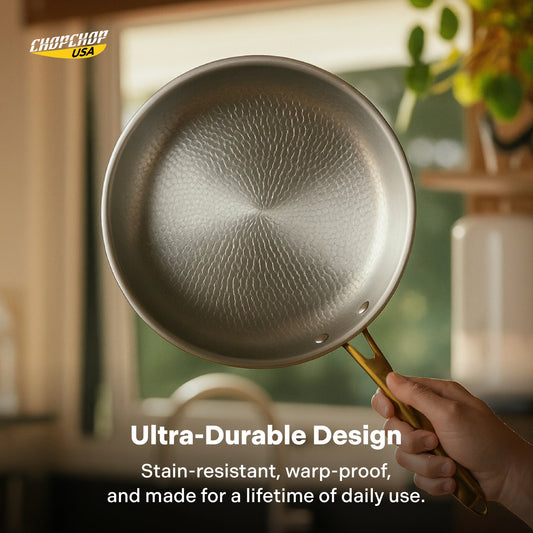
Titanium cookware is a modern, high-performance option designed for durability and everyday convenience. It is often built with multi-layer construction to improve heat distribution while maintaining strength and a lightweight feel.
This material heats efficiently and resists scratches, making it suitable for frequent use. The cooking surface is typically non-reactive and safe for a wide range of ingredients, which adds to its appeal for daily cooking.
Some premium designs, such as the ChopChop USA Titanium Pan Pro, combine a titanium interior with an aluminum core and stainless steel exterior to enhance heat control and consistency. This type of construction helps reduce hot spots and improves overall cooking performance.
Pros:
- Extremely durable and scratch-resistant
- Lightweight yet strong
- Non-reactive and safe for most cooking needs
Cons:
-
Higher upfront cost
Ideal use: Everyday cooking with long-term reliability
Stainless Steel

ChopChop USA Premium Stainless Steel Frying Pan
Limited-Time Offer — Get Free Gifts
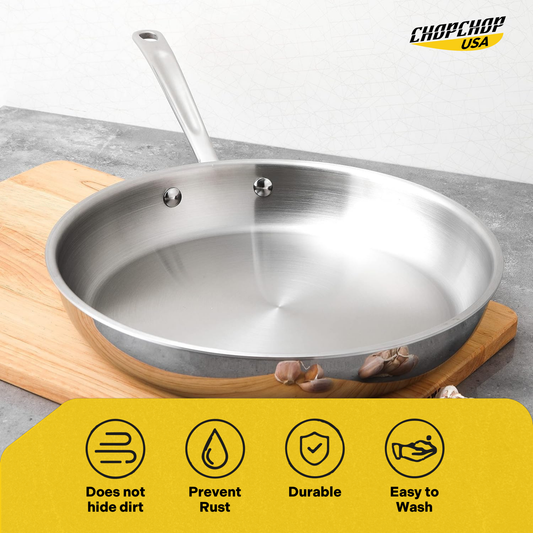
Stainless steel cookware is a classic choice known for its durability, versatility, and precise heat control. It is widely used in both home and professional kitchens thanks to its ability to handle a variety of cooking techniques, from searing to sauce-making.
High-quality stainless steel pans are often built with multi-layer construction, which helps distribute heat evenly and reduce hot spots. The surface is non-reactive, meaning it won’t affect the taste of acidic ingredients like tomatoes or vinegar, making it ideal for a wide range of recipes.
Some premium options, such as the ChopChop USA Stainless Steel Frying Pan, use 18/10 stainless steel with a multi-ply base to improve heat consistency and long-term durability. This type of design also resists rust, stains, and discoloration, helping the pan maintain its appearance over time.
Pros:
- Highly durable and long-lasting
- Non-reactive surface preserves food flavor
- Suitable for high-heat cooking and oven use
Cons:
-
Requires preheating and oil control
Ideal use: Versatile cooking, sauces, and precise temperature control
Carbon Steel

ChopChop USA Carbon Steel Pan
Limited-Time Offer — Get Free Gifts
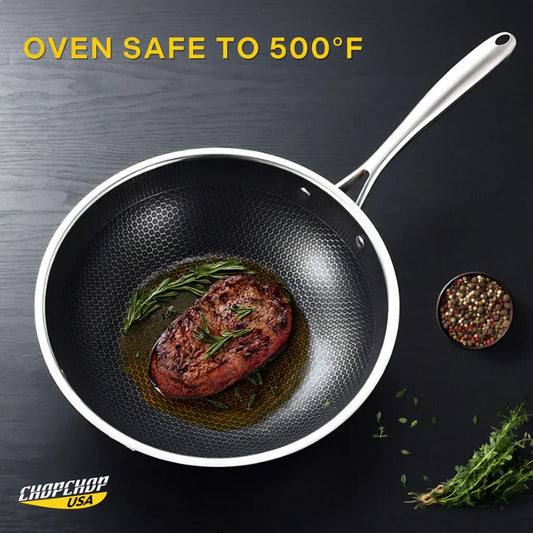
Carbon steel cookware is a favorite among professional chefs for its ability to handle high heat and respond quickly to temperature changes. It combines the strength of cast iron with the lighter weight and responsiveness of stainless steel, making it highly versatile.
This material heats up fast and distributes heat evenly, allowing for better control during cooking. Over time, it develops a natural seasoning layer that improves food release and enhances flavor without relying on synthetic coatings.
Some well-designed options, such as the ChopChop USA Carbon Steel Pan, are built to balance durability with ease of handling. Compared to heavier cookware, carbon steel offers similar performance while remaining more comfortable to use daily.
Pros:
- Fast heating and excellent heat control
- Naturally nonstick with seasoning
- Durable and long-lasting
Cons:
- Requires regular seasoning
- Can rust if not properly maintained
Ideal use: High-heat cooking, searing, and stir-frying
Cast Iron

ChopChop USA Cast Iron Skillet
Limited-Time Offer — Get Free Gifts
Cast iron cookware is a traditional choice known for its unmatched heat retention and ability to deliver deep, even cooking results. It has been used for generations and remains a staple in many kitchens.
Once properly seasoned, cast iron develops a natural nonstick surface that improves over time. It holds heat extremely well, making it ideal for searing meats, frying, and slow cooking dishes that require steady temperatures.
Some classic designs, such as the ChopChop USA Cast Iron Skillet, focus on durability and versatility, allowing use across stovetops, ovens, grills, and even open flames.
Pros:
- Exceptional heat retention
- Naturally nonstick when seasoned
- Extremely durable and long-lasting
Cons:
- Heavy and less convenient to handle
- Requires regular maintenance
Ideal use: Searing, frying, baking, and slow cooking
Ceramic Coated

ChopChop USA Ceramic Frying Pan
Limited-Time Offer — Get Free Gifts
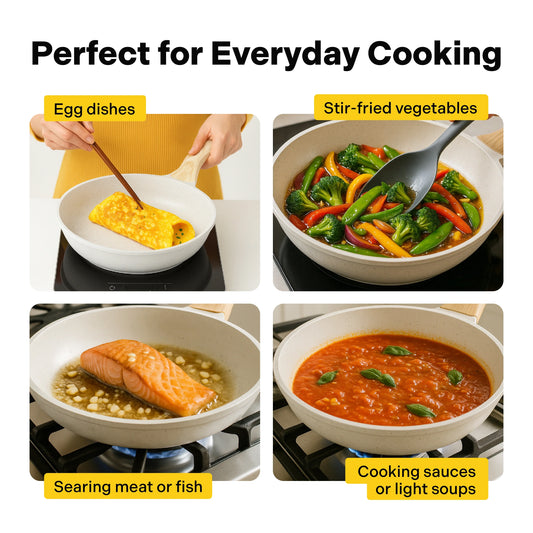
Ceramic cookware is widely appreciated for its nonstick performance and non-toxic cooking surface. It is designed for convenience, making it a popular choice for everyday meals.
The smooth ceramic coating allows food to release easily, reducing the need for oil and simplifying cleanup. It also distributes heat evenly, helping to prevent hot spots and ensure consistent cooking results.
Some modern options, such as the ChopChop USA Ceramic Frying Pan, use reinforced construction to improve durability while maintaining a lightweight feel. These designs are typically free from PTFE, PFOA, and other harmful substances, making them suitable for health-conscious cooking.
Pros:
- Easy to clean with excellent nonstick performance
- PTFE-free and non-toxic surface
- Lightweight and user-friendly
Cons:
- Not ideal for very high heat
Ideal use: Low-oil cooking and everyday meals
Common Mistakes When Choosing Pan Material

Choosing the best pan material can be confusing, and many people make simple mistakes that affect performance and durability.
Choosing Based Only on Price
Going for the cheapest option often leads to poor performance and shorter lifespan. The best pan material should offer long-term value, not just a low upfront cost.
Ignoring Maintenance Needs
Some materials require more care than others. If you’re not prepared for maintenance, even the best pan material won’t perform well over time.
Using the Wrong Pan for the Wrong Heat
Each material has specific strengths. Using ceramic on high heat or underusing cast iron can reduce performance. The best pan material should match how you actually cook.
Expecting Nonstick to Last Forever
Nonstick coatings degrade over time. Even the best pan material with a coating needs proper care and realistic expectations.
Overlooking Food Safety
Not all materials suit every type of food. Choosing the best pan material means ensuring it is safe and appropriate for your regular cooking habits.
Top Pan Materials by Use Case

If you’re still unsure which is the best pan material, this quick comparison helps you decide based on how you actually cook:
- Best Overall (Durability & Versatility): Titanium – a strong all-rounder that balances durability, weight, and ease of use
- Best Non-Toxic & Easy to Clean: Ceramic coated – ideal for low-oil cooking and quick cleanup
- Best for High Heat & Searing: Cast iron or carbon steel – excellent for achieving a deep, even sear
- Best for Heat Control & Precision: Stainless steel – perfect for sauces, sautéing, and controlled cooking
- Best Budget & Low Maintenance: Ceramic or basic stainless steel – practical and beginner-friendly
This simplified breakdown makes it easier to identify the best pan material based on your cooking habits, without overthinking every detail.
Conclusion
Choosing the best pan material depends on your cooking style, budget, and maintenance preferences. Each option—from titanium to cast iron—offers unique benefits. By understanding their strengths and limitations, you can select the best pan material for your needs. ChopChop USA provides versatile cookware designed to support efficient, everyday cooking.
For more amazing cooking content, follow us on Facebook and Instagram! If you have any questions about ChopChop USA products or promotions, contact us anytime at support@chopchopusa.com. Our 24/7 team is always happy to help.\
Frequently Asked Questions
1. What Is The Best Material For A Pan?
The best pan material depends on your needs. Stainless steel is versatile, cast iron retains heat well, and titanium offers durability with lightweight performance.
2. What Do Professional Chefs Use?
Professional chefs often use stainless steel or carbon steel because they provide excellent heat control and consistent cooking results.
3. Which Is Safer, Teflon Or Ceramic?
Ceramic is generally considered safer because it is PTFE-free and does not release harmful chemicals under normal cooking conditions.
4. Is Ceramic Cookware Really Nonstick?
Yes, ceramic cookware is nonstick initially. However, the coating may wear down over time, especially with frequent use or high heat.
5. Can I Use Metal Utensils On Titanium?
Titanium cookware is durable, but using silicone or wooden utensils is recommended to extend the lifespan and maintain surface quality.