Does stainless steel cookware rust? It’s rare, but it can happen under certain conditions. Stainless steel is designed to resist corrosion and maintain its shine over years of use, but exposure to harsh elements, improper care, or scratches can compromise its protective layer.
In this guide, ChopChop USA will explain why stainless steel is rust-resistant, what causes rust, and how to prevent and remove it, so your cookware stays pristine and long-lasting. Understanding does stainless steel cookware rust is key to keeping your pans durable and visually appealing.
What Makes Stainless Steel Rust-Resistant?

Stainless steel’s natural composition gives it remarkable rust resistance. Understanding its properties helps you care for it properly and answer the common question: does stainless steel cookware rust?
Chromium and Protective Layers
Stainless steel contains chromium, which reacts with oxygen to form a thin, invisible chromium oxide layer. This protective barrier prevents moisture and air from penetrating the surface, stopping corrosion before it starts.
Premium cookware often uses 18/10 or 18/8 stainless steel, with higher chromium content for enhanced protection. Knowing this helps reduce risks when people ask, "does stainless steel cookware rust?"
Nickel and Alloy Composition
Nickel adds durability and further boosts corrosion resistance. Multi-ply constructions, like aluminum or copper cores, provide even heat distribution while keeping the exterior protected from rust and wear.
Maintenance Matters
Even rust-resistant stainless steel requires care. Regular washing, thorough drying, and avoiding prolonged exposure to salty or acidic foods help maintain the chromium oxide layer. With proper use, does stainless steel cookware rust becomes an uncommon problem, and your cookware remains reliable for decades.
Common Causes of Rust in Stainless Steel Cookware

While stainless steel is naturally rust-resistant, certain practices and environmental factors can compromise its protective surface, leading to corrosion over time. Understanding these risks is essential for anyone who wonders, "does stainless steel cookware rust?"
Prolonged Moisture Exposure
Leaving pans wet, stacked, or stored in damp areas allows water to sit on the surface and slowly break down the protective chromium oxide layer. Even small amounts of trapped moisture, such as between stacked pans, can initiate oxidation, creating tiny rust spots. Regular drying prevents concerns about does stainless steel cookware rust.
Acidic and Salty Foods
Frequent exposure to acidic foods like tomato sauces, citrus, or vinegar can weaken stainless steel’s protective layer if left on the pan for too long. Salt, particularly in cold water, can create tiny pits. Prompt cleaning reduces the chance that does stainless steel cookware rust.
Surface Damage
Scratches, dents, or abrasions from metal utensils or harsh cleaning pads compromise the stainless steel’s protective barrier. These small imperfections become vulnerable points where rust can form. Careful handling keeps does stainless steel cookware rust at bay.
Read more: Are Scratches on Stainless Steel Pans Safe?
Neglect in Cleaning and Storage
Unwashed, improperly dried, or poorly stored pans increase rust risk. Even minor food residues attract moisture and accelerate corrosion. Preventive care answers the question, "does stainless steel cookware rust?"
How to Prevent Rust

Preventing rust is easier than removing it, and proper care ensures your cookware lasts a lifetime. Every tip below helps reduce concerns about does stainless steel cookware rust.
Proper Cleaning
After every use, wash your stainless steel cookware with warm water and mild dish soap. Avoid harsh detergents, steel wool, or abrasive scrubbers, as these can scratch the protective surface and compromise its rust resistance.
Instead, use a soft sponge, nylon pad, or cloth to gently remove food residue. Prompt cleaning after each use prevents the buildup of corrosive elements like salt, acids, and moisture.
Read more: How to Clean Stainless Steel Pans So They Last For Years
Thorough Drying
Drying your cookware thoroughly is just as important as washing. After cleaning, wipe each pan completely with a clean towel. Never leave pans air-drying in damp sinks or stacked with other wet cookware, as trapped moisture can penetrate the surface and create rust spots.
Proper drying protects the chromium oxide layer and keeps your cookware looking like new.
Safe Cooking Practices
Certain cooking habits can minimize rust risk. Avoid leaving acidic foods, salty water, or sauces in the pan for extended periods. Preheating your pan before adding oil or water also prevents uneven heating and localized pitting. Following these practices ensures does stainless steel cookware rust remains unlikely.
Periodic Maintenance
Occasional cleaning with mild vinegar or a baking soda paste removes stains. Polishing with stainless steel cleaner restores shine and strengthens the protective layer, reducing the chance of does stainless steel cookware rust.
Gentle Handling
Finally, handle your cookware with care. Use wooden, silicone, or plastic utensils to avoid scratching the surface. When stacking multiple pans, place cloth, paper towels, or pan protectors between them to prevent abrasion. These precautions help prevent does stainless steel cookware rust.
By following these preventive measures consistently, your stainless steel cookware will remain rust-free, visually appealing, and highly functional for decades.
How to Remove Rust From Stainless Steel Cookware

Even the best stainless steel can develop minor rust spots, but they can be removed safely, addressing concerns about does stainless steel cookware rust.
Baking Soda Method
Make a paste of baking soda and water, apply to the rusted area, and gently scrub with a soft cloth or sponge. Rinse thoroughly and dry.
Vinegar Method
Soak a cloth in white vinegar and apply to rust spots for a few minutes, then scrub gently. For stubborn corrosion, boil equal parts vinegar and water in the pan. These methods restore cookware and counter does stainless steel cookware rust.
Post-Cleaning Care
Wash and dry the cookware thoroughly after rust removal. Polishing with stainless steel cleaner protects the surface. Avoid harsh abrasives or bleach, which could lead to does stainless steel cookware rust again.
Tip: Regular maintenance and prompt attention to discoloration will keep your stainless steel cookware rust-free and looking new.
Ready To Shop? Upgrade Your Kitchen With ChopChop USA Stainless Steel Cookware
Cooking is easier with premium-quality cookware. ChopChop USA offers professional-grade pans combining durability, performance, and style. Investing in high-quality cookware reduces the likelihood of does stainless steel cookware rust.
ChopChop USA Stainless Steel Frying Pan

ChopChop USA Premium Stainless Steel Frying Pan
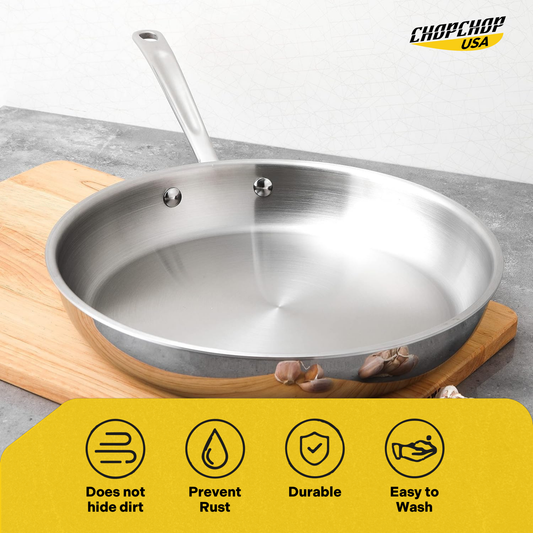
Limited-Time Offer — Get Free GiftsCrafted from top-grade stainless steel with a triple-layer construction, this ChopChop USA Stainless Steel Frying Pan ensures even heating and exceptional searing. Its non-reactive surface preserves the flavor of your ingredients, while the ergonomic, stay-cool handle provides comfort and control.
Oven-safe and induction compatible, this pan is versatile enough for all your cooking needs. This pan is rated as one of the best stainless steel frying pans in 2025.
Available Sizes:
- 8.66" (22 cm) — 725g
- 9.45" (24 cm) — 825g
- 10.24" (26 cm) — 980g
- 11.02" (28 cm) — 1,120g
- 11.81" (30 cm) — 1,290g
ChopChop USA Hybrid Nonstick Frying Pan

ChopChop USA Hybrid Nonstick Frying Pan
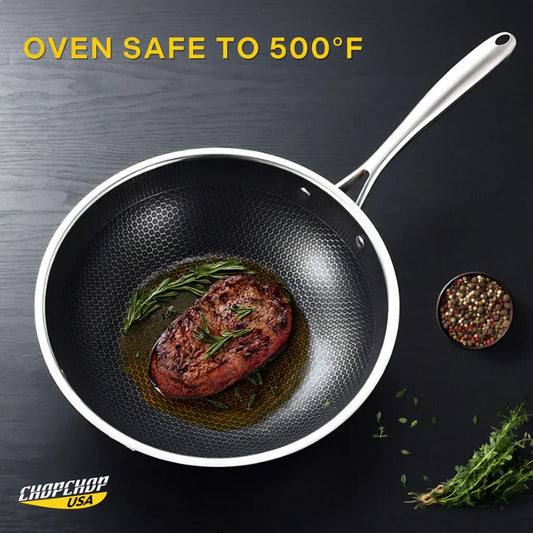
Limited-Time Offer — Get Free GiftsThis ChopChop USA Hybrid Nonstick Frying Pan combines stainless steel durability with advanced micro-carving technology for effortless nonstick performance. It delivers professional searing power while making cleanup easy. Safe for metal utensils, oven, and dishwasher, it’s perfect for cooking delicate foods like eggs, fish, or stir-fries. This pan is also rated as one of the Best Non Stick Frying Pans in 2025.

Available Sizes:
- 12.6" (32 cm) – 3.09 lbs (1400 g)
- 13.4" (34 cm) – 3.53 lbs (1600 g)
With ChopChop USA, you get cookware that’s built to last, designed for professional performance, and perfect for home kitchens looking to upgrade.
Read more:
- Is ChopChop USA Cookware Truly Non-Toxic?
- How to Cook With Stainless Steel Pans: Tips, Tricks & Common Mistakes
- What Food Should You Cook in a Stainless Steel Pan? Best Uses & Tips
- Stainless Steel vs Nonstick Cookware: Which Is Better?
Conclusion
While stainless steel cookware is naturally rust-resistant, proper care and maintenance are essential to prevent corrosion. Avoid prolonged moisture exposure, harsh cleaning methods, and scratches. With regular cleaning, drying, and careful cooking practices, your stainless steel pans will remain durable, efficient, and visually stunning for years.
Upgrade your kitchen with ChopChop USA’s premium stainless steel and hybrid nonstick pans — built for longevity, performance, and exceptional cooking results.
Frequently Asked Questions
1. Does stainless steel cookware rust?
It’s rare, but rust can occur if the protective layer is damaged or exposed to moisture and acidic foods.
2. How do I prevent rust on stainless steel pans?
Dry pans thoroughly, avoid abrasive cleaners, store in dry areas, and wash after every use.
3. Can vinegar remove rust from stainless steel cookware?
Yes, soaking a cloth in vinegar or boiling a vinegar solution in the pan can help lift minor rust spots.
4. Are all stainless steel pans rust-proof?
No, higher-quality grades with sufficient chromium and nickel resist rust better than lower-grade metals.
5. Can I use metal utensils on stainless steel without causing rust?
Yes, but avoid deep scratches. Minor scratches won’t usually cause rust if the pan is cared for properly.