





Want to know how to use a titanium stock pot for better everyday cooking? Start with moderate heat, add ingredients in the right order, and choose recipes that benefit from its corrosion-resistant surface. In this guide, ChopChop USA will share practical cooking tips, cleaning advice, and common mistakes to avoid.
In this article
- Understand How a Titanium Stock Pot Works
- Prepare Your Titanium Stock Pot Before Cooking
- Use the Right Heat for Better Cooking Results
- What Can You Cook in a Titanium Stock Pot?
- Follow These Everyday Cooking Tips
- Common Mistakes to Avoid
- How to Clean and Maintain Your Titanium Stock Pot
- Try the ChopChop USA Titanium Stock Pot Pro
- Conclusion
- Frequently Asked Questions
Understand How a Titanium Stock Pot Works

Before learning how to use a titanium stock pot, it helps to understand its construction. Some titanium cookware is solid titanium, while others use a layered design that changes how the pot heats and performs.
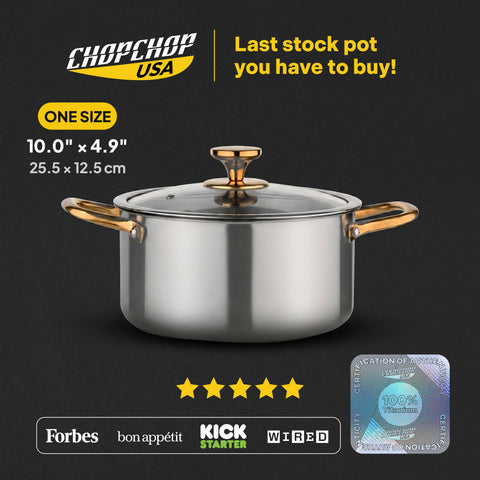
A tri-ply stock pot combines a titanium cooking surface, an aluminum core, and a stainless steel exterior. The titanium surface provides corrosion resistance, the aluminum core spreads heat more evenly, and the stainless steel exterior adds strength and cooktop compatibility.
Titanium is not naturally nonstick like cookware with a conventional coating. However, a stock pot is mostly used for liquid-based recipes, so sticking is less of a concern than when frying eggs or searing meat.
Understanding these basics makes how to use a titanium stock pot much more intuitive, because you know why moderate heat works best.
Prepare Your Titanium Stock Pot Before Cooking

Learning how to use a titanium stock pot does not require complicated seasoning or special treatment. A few simple steps help you get consistent results.
Wash the Pot Before Its First Use
Wash the pot with warm water, mild dish soap, and a soft sponge to remove any residue from manufacturing and packaging. Rinse and dry it thoroughly. An uncoated titanium surface does not need cast-iron-style seasoning.
Check the Pot and Cooktop
Place the pot on a burner that matches the size of its base. Titanium itself is not magnetic, so for induction cooking, confirm that the pot has a compatible exterior. On a gas stove, keep the flame beneath the base rather than letting it climb the sides.
Leave Enough Room
Fill the pot only about two-thirds full. This leaves room for ingredients and bubbling, prevents boil-overs, and makes stirring and lifting safer.
Use the Right Heat for Better Cooking Results

Heat control is one of the most important parts of how to use a titanium stock pot. Durable cookware does not mean every recipe needs high heat.
Start With Medium Heat
For most soups, stocks, and stews, begin on medium heat. Once the liquid reaches a boil, lower the heat to a gentle simmer. A rolling boil can cause excess evaporation, break ingredients apart, and make stock cloudy.
Avoid Excessive Heat
Constant maximum heat can scorch ingredients at the bottom, evaporate liquid too quickly, and leave stubborn residue. An aluminum core spreads heat more evenly than solid titanium, so moderate settings usually work best.
Adjust as You Cook
Different stages need different temperatures: medium heat to boil, low heat to simmer, and a brief increase when adding cold ingredients. On induction, make small adjustments instead of jumping between the lowest and highest settings.
Once heat control feels natural, the rest of how to use a titanium stock pot becomes much easier.
What Can You Cook in a Titanium Stock Pot?

A stock pot's deep shape gives larger meals room to simmer without splashing. Knowing what to cook is a big part of how to use a titanium stock pot well.
Soups, Stocks, and Broths
Cover your ingredients with water or stock, bring the mixture to a boil, then lower the heat and simmer. For clearer broth, skim off foam in the early stages and avoid stirring too vigorously.
Pasta and Boiled Vegetables
Use enough water for pasta, potatoes, or corn to move freely, and stir pasta after adding it to prevent clumping. Add salt once the water is hot so it dissolves quickly instead of sitting on the bottom.
Stews, Beans, and Batch Cooking
The deep design is ideal for chili, bean dishes, and family-sized stews. Soften aromatics first, add liquid, then lower the heat to simmer. Leave room for beans and grains to expand.
Acidic Recipes
Tomato soups and vinegar-based dishes suit an uncoated titanium surface, which is generally non-reactive with common food acids under normal cooking conditions. Your recipes keep their natural flavor without a metallic taste. This is one of the best reasons to learn how to use a titanium stock pot for everyday sauces and soups.
Follow These Everyday Cooking Tips

Small habits make a noticeable difference when learning how to use a titanium stock pot:
- Add ingredients in the right order. Aromatics, vegetables, meat, and liquids need different cooking times.
- Avoid overcrowding. Too many ingredients lower the liquid temperature and make stirring harder.
- Use the lid wisely. A lid retains heat and reduces evaporation. For thick stews or sauces that need to reduce, follow the recipe.
- Stir when needed. Thick soups, beans, and starchy dishes can settle and scorch on the bottom.
- Monitor the liquid level. Add liquid during long simmers, and never let the pot boil dry.
- Use the oven only when approved. Check the manufacturer's temperature limit for the pot, lid, and handles.
These habits matter more than turning up the heat when it comes to how to use a titanium stock pot. They help ingredients cook evenly and reduce burned-on residue.
Common Mistakes to Avoid

Even durable cookware benefits from proper handling. Avoid these common mistakes:
- Treating titanium like nonstick. When sautéing before adding liquid, use a little oil, control the heat, and let food brown before moving it.
- Using high heat for every recipe. High heat boils water quickly, but lower it once the liquid boils.
- Ignoring the pot's construction. Not all "titanium" cookware is made the same way, so read the specifications before choosing a heat source.
- Storing leftovers in the pot. Transfer leftovers to food-storage containers and refrigerate them promptly.
- Washing the pot while it is very hot. Let it cool first to avoid burns and thermal stress.
Avoiding these mistakes is the easiest way to master how to use a titanium stock pot.
How to Clean and Maintain Your Titanium Stock Pot

Good cleaning habits are part of how to use a titanium stock pot for the long term.
- Let it cool first. Never pour cold water into a hot pot.
- Soak stuck-on food. Use warm, soapy water for 10 to 15 minutes, or simmer a little water to loosen residue.
- Wash gently. Use mild dish soap and a soft sponge. Avoid steel wool and harsh abrasive cleaners.
- Dry right away. Towel-dry the pot to prevent water spots.
- Remove marks easily. Wipe rainbow tints or hard-water spots with diluted white vinegar, then rinse and dry.
- Store it carefully. Keep it dry and away from sharp cookware that could scratch the surface.
Many titanium stock pots are dishwasher safe, but hand washing keeps the finish looking new longer.
Try the ChopChop USA Titanium Stock Pot Pro
$280.00Save 29%
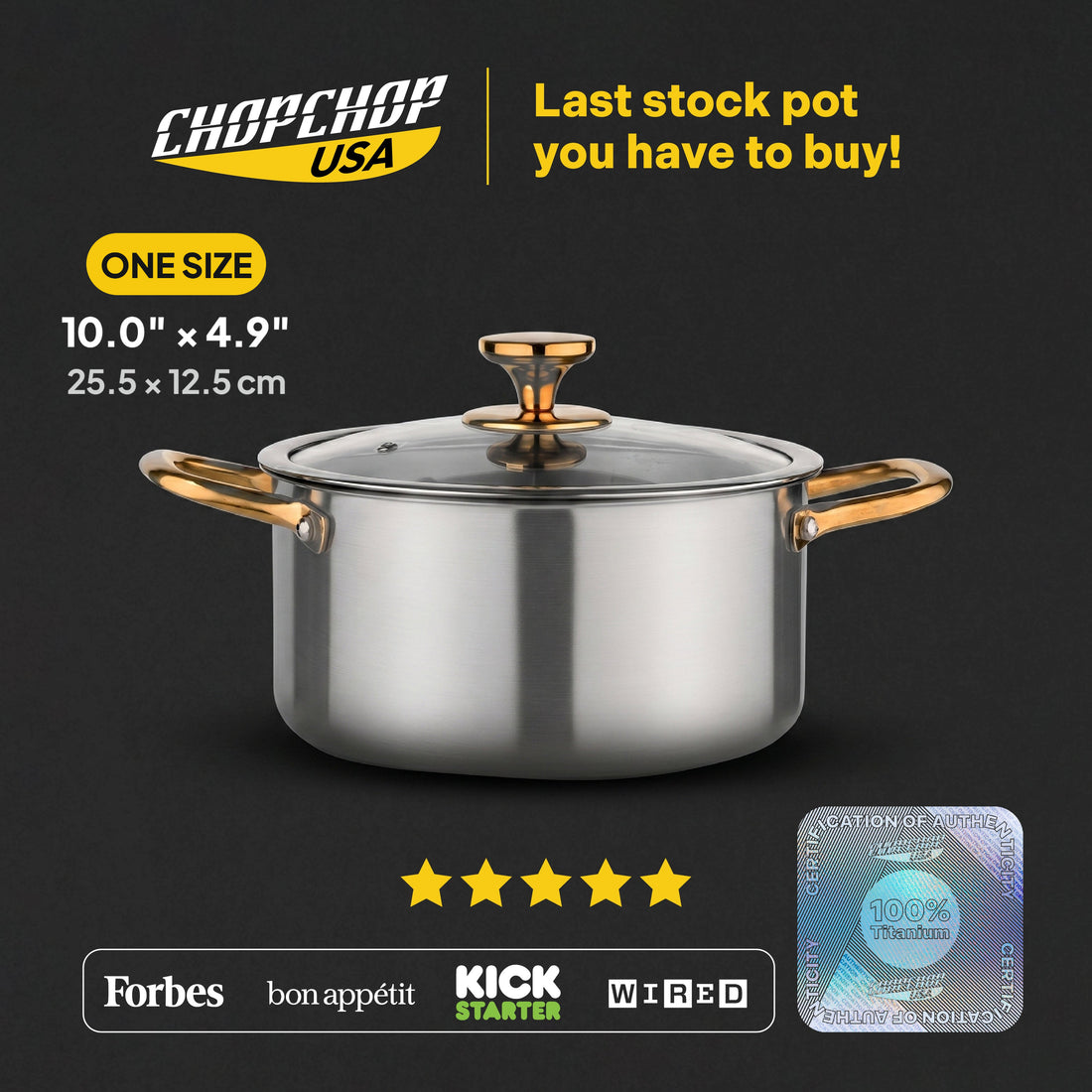
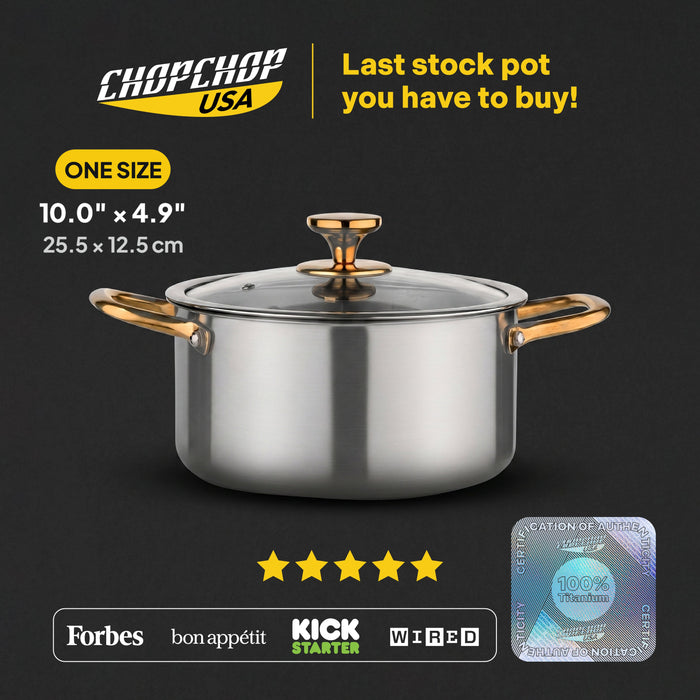
If you are looking for a pot for soups, stocks, pasta, and everyday family meals, the ChopChop USA Titanium Stock Pot Pro is worth considering. It makes everything you have learned about how to use a titanium stock pot easy to put into practice.
- 100% Grade 1 pure titanium cooking surface: 99.96% lab-verified purity, with no conventional nonstick coating to chip or peel.
- High-conductivity aluminum core: Spreads heat more evenly than titanium alone.
- Durable stainless steel exterior: Works on gas, electric, ceramic, halogen, and induction cooktops.
- Convenient maintenance: Dishwasher safe, with hand washing recommended to preserve its appearance.
From homemade stock and soups to pasta and seafood boils, the Titanium Stock Pot Pro gives you a clean, reliable cooking surface built for everyday use. Three premium materials. One professional-grade stock pot.
Conclusion
Learning how to use a titanium stock pot is mainly about managing heat, choosing suitable recipes, and simple care. For soups, stocks, pasta, and batch cooking, the ChopChop USA Titanium Stock Pot Pro offers a titanium surface with layered construction.
For more amazing kitchen information, follow us on Facebook and Instagram! If you have any questions about ChopChop USA's products or promotions, please feel free to contact us at support@chopchopusa.com. Our dedicated team is available 24/7 and always happy to assist you.
Frequently Asked Questions
1. How to Use a Titanium Stock Pot for the First Time?
Wash it with warm water and mild dish soap, then rinse and dry thoroughly. Traditional seasoning is generally unnecessary for an uncoated titanium cooking surface.
2. What Heat Setting Should You Use With a Titanium Stock Pot?
Start with medium heat for most liquid-based recipes, then reduce it to maintain a simmer. Adjust the setting according to your cooktop and the recipe.
3. Can You Cook Tomato Soup in a Titanium Stock Pot?
Yes. An uncoated titanium cooking surface is generally non-reactive with common food acids, so tomato-based recipes keep their natural flavor under normal home cooking conditions.
4. Does Food Stick to a Titanium Stock Pot?
Food can stick, especially in thick mixtures with little liquid. Use suitable heat, stir regularly when needed, and avoid letting ingredients scorch on the bottom.
5. Can You Put a Titanium Stock Pot in the Dishwasher?
Many are dishwasher safe, including the ChopChop USA Titanium Stock Pot Pro. Check the care instructions, and hand wash when possible to preserve the finish.