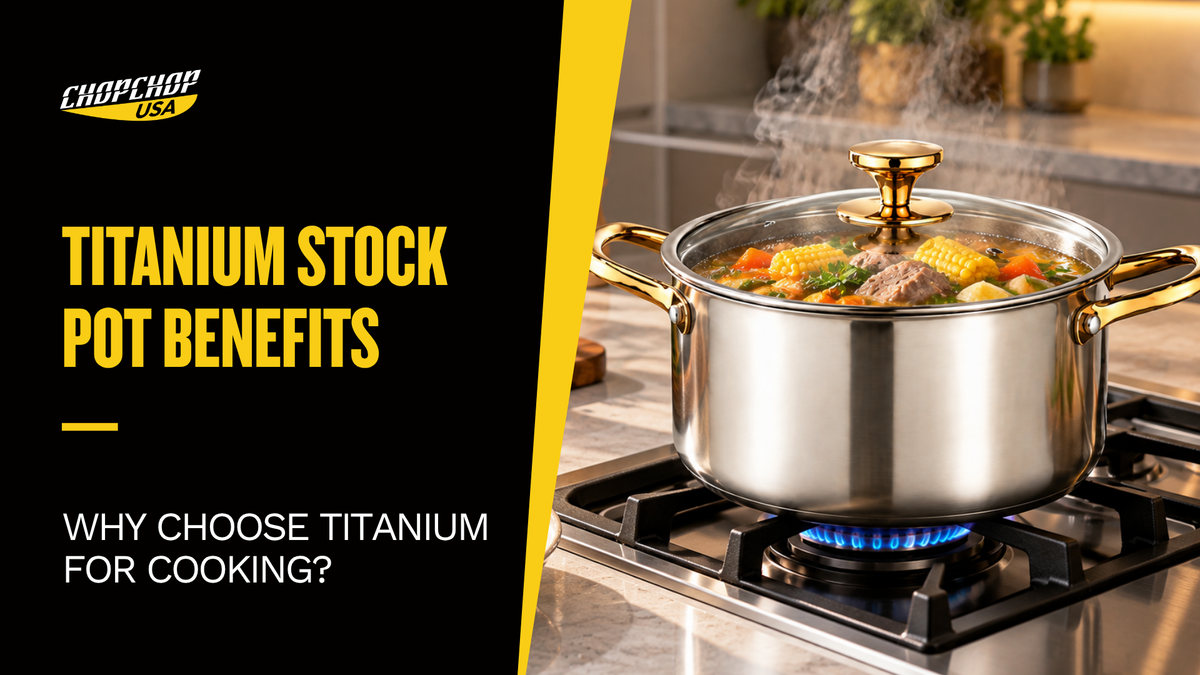
What are the main titanium stock pot benefits for everyday cooking? Key advantages include a generally non-reactive cooking surface, no conventional nonstick coating to wear away, and long-term durability. In this guide, ChopChop USA will explore the advantages, limitations, and features worth considering before you buy.
In this article
- What Are the Main Titanium Stock Pot Benefits?
- Are There Any Downsides?
- Titanium vs. Stainless Steel vs. Aluminum: Which Is Better?
- Is a Titanium Stock Pot Safe for Everyday Cooking?
- How to Choose the Right Titanium Stock Pot
- ChopChop USA Titanium Stock Pot Pro: A Practical Choice for Everyday Cooking
- Conclusion
- Frequently Asked Questions
What Are the Main Titanium Stock Pot Benefits?

A stock pot is essential for preparing soups, homemade broth, stews, pasta, and seafood boils. It often holds large amounts of liquid for hours, so the material that touches your food matters. Most kitchen titanium stock pots use tri-ply construction: a titanium cooking surface, an aluminum core, and a stainless steel exterior. Together, these layers deliver the following titanium stock pot benefits.
Corrosion Resistance and Durability
Titanium naturally resists corrosion, so salty stocks, brines, and seafood boils will not cause rust or pitting on the cooking surface. In a tri-ply pot, the stainless steel exterior adds structural support and helps the pot resist warping. With proper care, a well-made pot can stay in service for many years. Corrosion resistance is one of the most reliable titanium stock pot benefits for cooks who simmer stock or broth often.
A Non-Reactive Cooking Surface
Titanium is generally non-reactive with acidic ingredients such as tomatoes, citrus fruits, and vinegar. On reactive surfaces like bare aluminum or cast iron, long acidic simmers can cause a metallic taste or discoloration. A titanium surface avoids these reactions, so tomato soup, chili, and wine-based stews keep their natural flavor.
It also resists odors and stains from spices like curry and turmeric. For cooks who want non-reactive cookware for long simmers, this is one of the most valuable titanium stock pot benefits.
No Conventional Nonstick Coating
A coating-free titanium surface does not rely on a traditional nonstick layer that can peel or chip away. There is nothing to wear off into your soup, even after years of stirring. This is one of the most practical titanium stock pot benefits for cooks who simmer bone broth for hours at a time.
It also needs no seasoning, and routine cleaning with warm water, mild dish soap, and a soft sponge is generally straightforward. However, titanium is not naturally nonstick, as the next section explains.
Versatility for Everyday Cooking
A titanium stock pot handles homemade stock, slow-simmered stews, pasta, and seafood boils. In tri-ply cookware, the aluminum core spreads heat evenly across the base, while a compatible stainless steel exterior allows use on induction, gas, electric, ceramic, and halogen cooktops. For families who cook in large batches, these titanium stock pot benefits add up quickly.
Are There Any Downsides?

No cookware material is perfect. Before you buy, it helps to understand where titanium falls short:
- Not naturally nonstick. Proper preheating, moderate heat, and a little oil when searing help reduce sticking.
- Titanium alone heats slowly. Solid titanium pots can develop hot spots, which is why an aluminum core matters.
- Higher price. Tri-ply titanium cookware usually costs more than basic stainless steel or aluminum.
Knowing these trade-offs helps you judge real titanium stock pot benefits rather than marketing claims. For most cooks who simmer often, the advantages outweigh these limitations.
Titanium vs. Stainless Steel vs. Aluminum: Which Is Better?

Titanium is one of several materials used in stock pots. Stainless steel and aluminum can also perform well, depending on their construction and intended use.
|
Feature |
Tri-ply titanium |
Stainless steel |
Aluminum |
|
Cooking surface |
Titanium |
Stainless steel |
Bare, lined, or coated |
|
Reacts with acidic food |
Generally no |
Very little |
Bare aluminum can react |
|
Corrosion resistance |
High |
Generally good |
Depends on finish |
|
Heat distribution |
Even, with aluminum core |
Depends on construction |
Fast and efficient |
|
Naturally nonstick |
No |
No |
Only if coated |
|
Induction compatible |
Yes, with stainless exterior |
Depends on base |
Needs an induction base |
|
Price |
Often premium |
Wide range |
Usually affordable |
Stainless steel offers versatility, and aluminum provides efficient heat conduction. A tri-ply titanium stock pot combines titanium's surface benefits with an aluminum core for even heating. The titanium stock pot benefits are clearest for acidic recipes and long simmers, where a stable cooking surface matters most.
So which should you choose? If you often cook tomato sauce, chili, or bone broth, the titanium stock pot benefits make the biggest difference. If you mostly boil pasta or water, a good stainless steel pot may be all you need. Aluminum suits cooks who want speed on a tight budget.
Is a Titanium Stock Pot Safe for Everyday Cooking?

Cookware safety depends on the materials that contact food, manufacturing quality, intended use, and care instructions. Titanium is valued for its corrosion resistance and chemical stability, and a genuine titanium cooking surface is generally non-reactive with common foods.
However, not every product marketed as titanium cookware has the same construction.
Pure Titanium vs. Titanium-Reinforced Nonstick
Some cookware uses titanium metal as the cooking surface. Other products use an aluminum or stainless steel body with a conventional nonstick coating reinforced with titanium particles.
These are different designs. A titanium-reinforced coating is not the same as a pure titanium food-contact surface.
If a coating-free cooking surface is important to you, review the manufacturer's material specifications and check which material directly touches the food. Product names alone may not provide enough information.
Use Appropriate Cooking Temperatures
Even durable cookware should be used according to its instructions. Avoid prolonged heating of an empty pot over high heat, and adjust the temperature to suit the recipe.
For soup and stock, bring the liquid to the required temperature before reducing the heat to maintain a steady simmer.
Follow the Manufacturer's Instructions
Use suitable cleaning products and avoid methods that may damage the cookware's finish or bonded structure. Also, check the specified cooktop compatibility before using the pot.
The titanium stock pot benefits related to corrosion resistance and a coating-free surface may suit many home cooks, but no cookware material removes the need for appropriate use and maintenance.
How to Choose the Right Titanium Stock Pot

Once you know what to look for, these questions make it easier to pick the right pot:
- What touches your food? Look for a pure titanium cooking surface if you want a coating-free option.
- How is it built? A tri-ply design with an aluminum core gives more even heating than solid titanium.
- What size do you need? An 8-quart pot suits most families, while larger pots suit batch cooking and meal prep.
- Which cooktop do you use? For induction, choose a pot with a magnetic stainless steel exterior.
- How much care do you want? Dishwasher-safe pots save time, but hand washing preserves the finish longer.
Answering these questions helps you match the titanium stock pot benefits to your own cooking habits and choose a pot you can use with confidence every day.
ChopChop USA Titanium Stock Pot Pro: A Practical Choice for Everyday Cooking
$280.00Save 29%
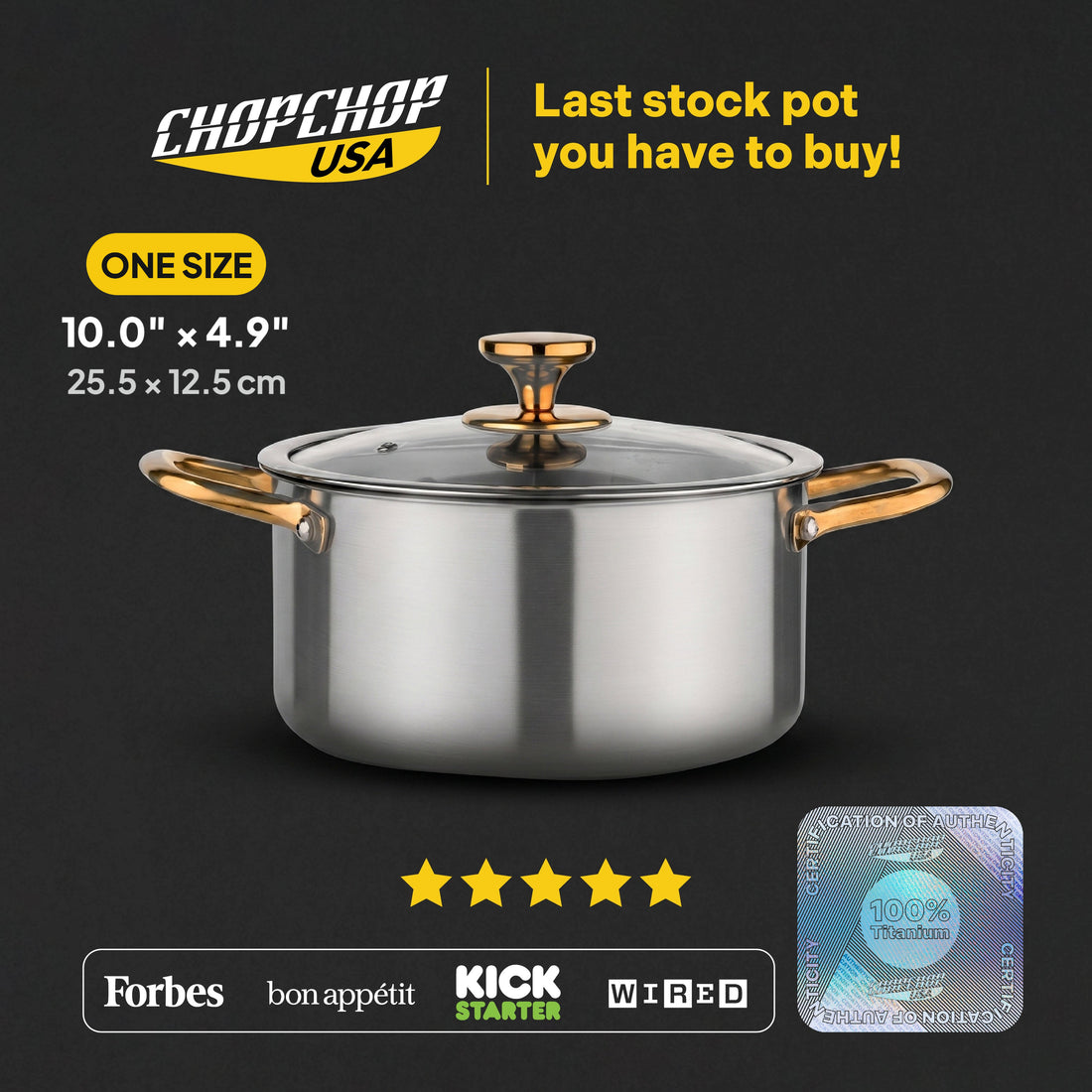
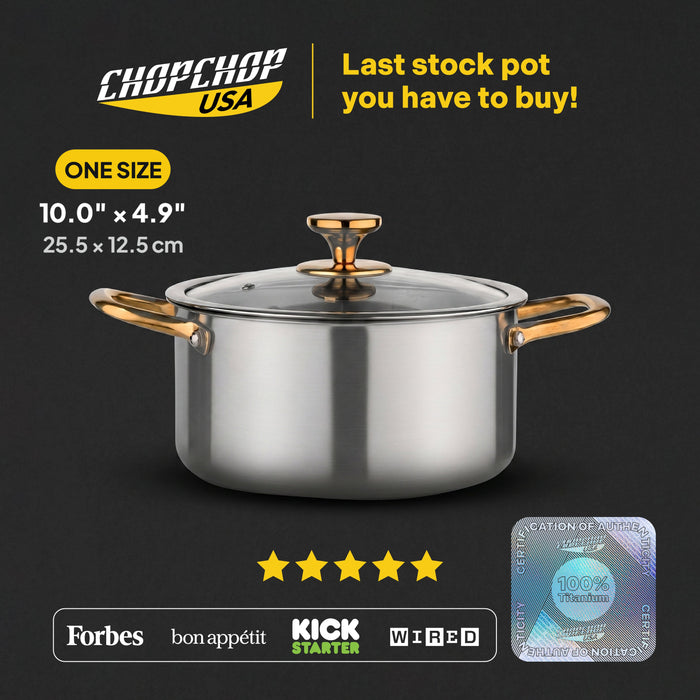
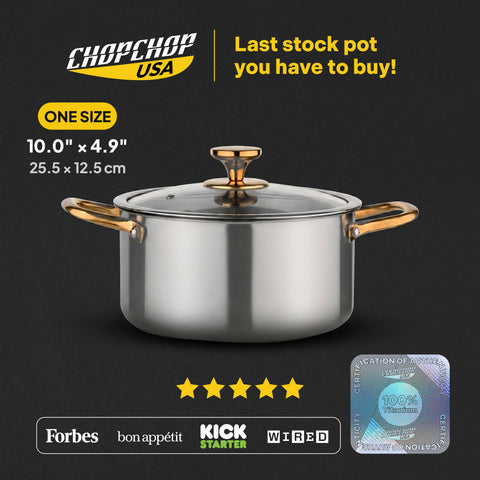
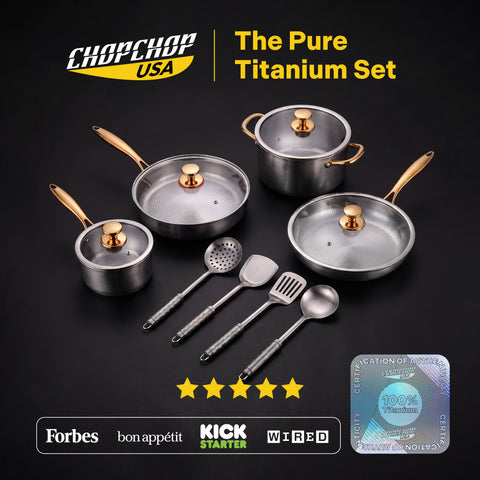
The ChopChop USA Titanium Stock Pot Pro combines a pure titanium cooking surface with tri-ply construction. It is designed for home cooks who want a coating-free food-contact surface and one pot for a wide range of everyday recipes.
- 100% Grade 1 pure titanium cooking surface: 99.96% lab-verified purity. It resists corrosion, is generally non-reactive, and has no coating to peel or chip.
- High-conductivity aluminum core: Helps distribute heat for simmering broth, preparing soups, boiling pasta, and cooking family meals.
- Stainless steel exterior: Provides structural support and works on gas, electric, ceramic, halogen, and induction cooktops.
- Easy care: Dishwasher safe, with hand washing recommended to preserve its appearance. No seasoning is required.
Whether you are simmering homemade stock, boiling pasta, or cooking a seafood boil for the whole family, it gives you a clean, reliable cooking surface built for everyday use.
Each material serves a different purpose. Titanium protects your food, aluminum manages heat, and stainless steel adds strength and cooktop compatibility. For home cooks who want all the titanium stock pot benefits in one pot, the Titanium Stock Pot Pro is a practical everyday choice.
Conclusion
The main titanium stock pot benefits include corrosion resistance, a non-reactive cooking surface, and a coating-free design. For everyday soups, stocks, and stews, the ChopChop USA Titanium Stock Pot Pro brings these features together in one practical tri-ply stock pot.
For more amazing kitchen information, follow us on Facebook and Instagram! If you have any questions about ChopChop USA's products or promotions, please feel free to contact us at support@chopchopusa.com. Our dedicated team is available 24/7 and always happy to assist you.
Frequently Asked Questions
1. What Are the Main Titanium Stock Pot Benefits?
Titanium offers corrosion resistance and a generally non-reactive cooking surface. A tri-ply design with an aluminum core also improves even heat distribution and everyday versatility.
2. Is a Titanium Stock Pot Better Than Stainless Steel?
It depends on your priorities. Titanium provides a non-reactive, corrosion-resistant surface, while stainless steel offers durable cookware across a wide range of designs and prices.
3. Can You Cook Acidic Foods in a Titanium Stock Pot?
Yes. A genuine titanium cooking surface is generally non-reactive with common acidic ingredients, so tomatoes, citrus fruits, and vinegar keep their natural flavor when cooked.
4. Are Titanium Stock Pots Naturally Nonstick?
No. A coating-free titanium surface is not naturally nonstick. Proper preheating, moderate heat, and a little oil help reduce food sticking during everyday home cooking.
5. Is the ChopChop USA Titanium Stock Pot Pro Dishwasher Safe?
Yes. It is dishwasher safe, although hand washing with mild dish soap and a soft sponge is recommended to help preserve its appearance over time.