

Titanium stock pot vs stainless steel: which is better for everyday cooking? Both materials offer durability and reliable performance, but titanium stands out for corrosion resistance, while stainless steel offers more price options. In this guide, ChopChop USA will compare their key differences, cooking performance, maintenance, and value to help you choose.
In this article
What Is a Titanium Stock Pot?

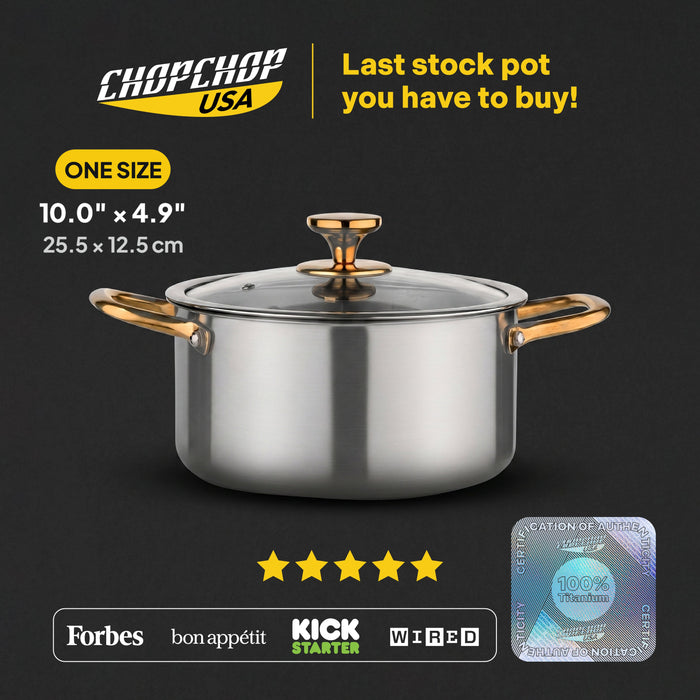
A titanium stock pot is a large, deep pot with a titanium cooking surface, designed for stocks, soups, stews, pasta, and seafood boils. Most kitchen versions use tri-ply construction: a pure titanium interior, an aluminum core for even heat, and a stainless steel exterior for strength and induction compatibility.
Be careful with labels. Some pots marketed as titanium only use titanium particles in a nonstick coating, so the coating, not titanium, touches your food. Understanding what a titanium stock pot is, and what it is not, is the first step in any honest titanium stock pot vs stainless steel comparison.
Pros of a Titanium Stock Pot
- Fully non-reactive surface. Tomato sauce, chili, and wine-based stews keep their natural flavor.
- No coating to chip or peel. The metal itself is the cooking surface.
- Excellent corrosion resistance. Titanium resists rust, salt pitting, stains, and odors.
- Even heating. The aluminum core spreads heat across the base.
- Works on every cooktop. A stainless steel exterior makes it induction ready.
Cons of a Titanium Stock Pot
- Higher price. Tri-ply titanium usually sits at the premium end of the market.
- Not nonstick. A little oil and proper preheating help when searing.
- Fewer choices. There are fewer brands and sizes than with stainless steel.
What Is a Stainless Steel Stock Pot?

A stainless steel stock pot has a stainless steel cooking surface and is one of the most common pots in American kitchens. Many use 18/10 or 18/8 stainless steel, popular grades known for their shine, strength, and rust resistance.
Quality varies widely. Fully clad pots have an aluminum core that runs up the sides, while budget pots often have an aluminum disc only on the base.
Because stainless steel is so common, it is the natural benchmark in the titanium stock pot vs stainless steel debate. The real question is whether titanium's advantages are worth the higher price for the way you cook.
Pros of a Stainless Steel Stock Pot
- Affordable. Options range from budget to premium.
- Widely available. Many brands, sizes, and matching sets.
- Durable. Stainless steel resists rust and everyday wear.
- Even heating in clad models. Fully clad pots heat evenly up the sides.
- Easy care. Most are dishwasher safe and induction compatible.
Cons of a Stainless Steel Stock Pot
- Not nonstick. Food can stick without proper preheating and oil.
- Uneven heat in disc-bottom pots. Heat stays on the base and does not climb the sides.
Titanium Stock Pot vs Stainless Steel: Key Differences

Here is a side-by-side look at the titanium stock pot vs stainless steel comparison:
|
Feature |
Tri-ply titanium stock pot |
Clad stainless steel stock pot |
|
Cooking surface |
Pure titanium |
Stainless steel (often 18/10) |
|
Stain and odor resistance |
High |
Good |
|
Reaction with acidic food |
Generally non-reactive |
Very low |
|
Heat distribution |
Even, with aluminum core |
Even in fully clad models |
|
Induction compatible |
Yes |
Usually |
|
Nonstick |
No |
No |
|
Price |
Premium |
Wide range, often more affordable |
Cooking Surface and Flavor
This is where the titanium stock pot vs stainless steel difference matters most. Titanium is fully non-reactive, so acidic foods like tomato sauce, chili, and wine-based stews keep their natural flavor, even after hours of simmering. It also resists odors and stains from strong spices like curry and turmeric.
Stainless steel is also a safe, reliable cooking surface that home cooks and professional chefs have trusted for decades, and it handles everyday acidic recipes well. The difference is subtle: titanium simply offers an extra level of stability and stain resistance for cooks who simmer acidic recipes for many hours.
Heat Performance
On heat, the titanium stock pot vs stainless steel gap is small. Both metals conduct heat slowly on their own, so quality pots of either type rely on an aluminum core. With a fully clad design, both heat evenly and hold a steady simmer. Call it a tie. Just check whether a stainless pot is fully clad or disc-bottom, because in a titanium stock pot vs stainless steel comparison, construction matters as much as material.
Durability and Care
Both are built to last. Titanium resists salt pitting, stains, and odors slightly better, so it needs a little less attention to stay looking new. Both clean easily with mild dish soap and a soft sponge. Stainless steel can show rainbow discoloration from starchy water or minerals, which usually cleans off with vinegar. In the titanium stock pot vs stainless steel durability test, both perform well over many years of use.
Price and Value
Price is where stainless steel wins. If you mostly boil pasta or water, the extra cost of titanium may not make sense. If you simmer stocks and sauces every week, the titanium stock pot vs stainless steel price difference buys a fully non-reactive surface you will use for years. When you compare titanium stock pot vs stainless steel over ten years of weekly cooking, the cost per use narrows considerably.
Which Stock Pot Should You Choose?

The best answer to titanium stock pot vs stainless steel depends on the recipes you make most often.
Choose a titanium stock pot if you:
- Simmer acidic recipes like tomato sauce, chili, or wine-based stews often
- Make bone broth or stock that cooks for many hours
- Prefer a fully non-reactive, coating-free cooking surface
- Want a surface that resists stains and odors
Choose a stainless steel stock pot if you:
- Want the most budget-friendly option
- Mostly boil pasta, potatoes, or water
- Already own stainless steel cookware and want a matching set
A simple rule: the pot you reach for most often deserves the best surface you can afford. For long simmers and acidic recipes, that is usually titanium. For quick boils on a budget, stainless steel does the job well.
Real-Kitchen Examples
- Sunday bone broth: A 12-hour simmer benefits most from a fully non-reactive surface. Titanium is the stronger pick.
- Weeknight pasta: A 15-minute boil does not stress either surface, so stainless steel works well.
- Big-batch chili or marinara: Acidic, thick, and long-simmered recipes favor titanium for flavor and peace of mind.
- Holiday seafood boil: Both handle salty water, though titanium resists salt pitting better over time.
These everyday examples make the titanium stock pot vs stainless steel decision much easier.
Explore the ChopChop USA Titanium Stock Pot Pro
$280.00Save 29%
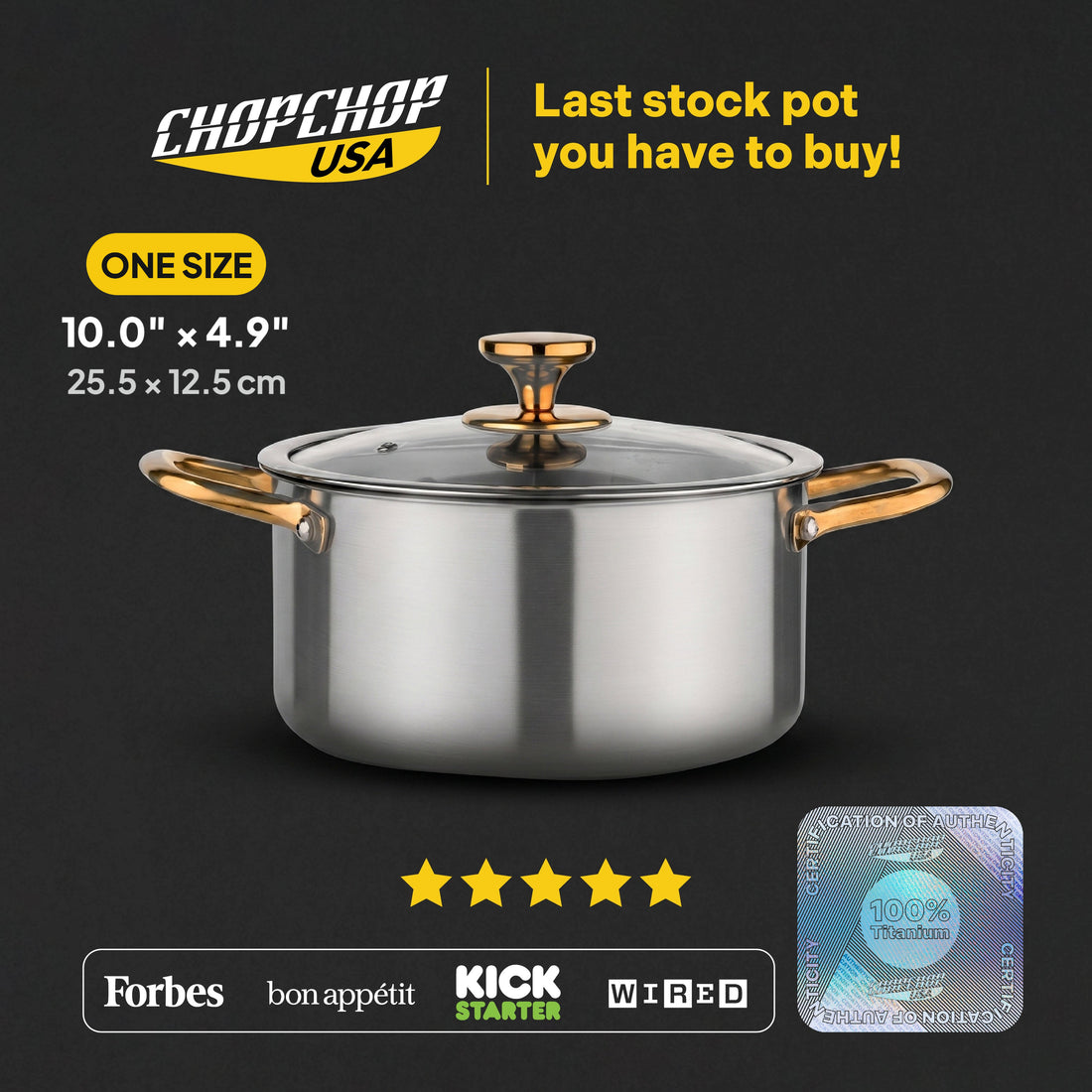
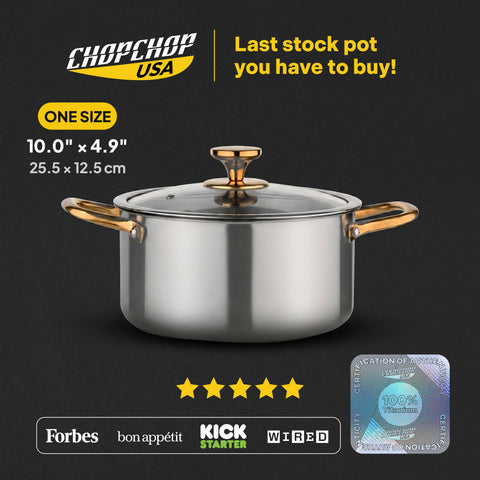
If the titanium side of the titanium stock pot vs stainless steel comparison fits your kitchen, the ChopChop USA Titanium Stock Pot Pro brings the best of both materials together.
- 100% Grade 1 pure titanium cooking surface: 99.96% lab-verified purity, so only pure titanium touches your food.
- High-conductivity aluminum core: Fast, even heat for stocks, soups, pasta, and family-sized meals.
- Durable stainless steel exterior: Adds strength, resists warping, and works on gas, electric, ceramic, halogen, and induction cooktops.
- Easy care: Dishwasher safe, with hand washing recommended for maximum longevity.
You get the clean, non-reactive surface of titanium with the strength and cooktop compatibility of stainless steel, so you do not have to choose sides in the titanium stock pot vs stainless steel debate. Three premium materials. One professional-grade stock pot.
Conclusion
In the titanium stock pot vs stainless steel debate, both are durable, but titanium offers a non-reactive, stain-resistant surface. For long simmers and acidic recipes, the ChopChop USA Titanium Stock Pot Pro is the smarter everyday choice for home cooks.
For more amazing kitchen information, follow us on Facebook and Instagram! If you have any questions about ChopChop USA's products or promotions, please feel free to contact us at support@chopchopusa.com. Our dedicated team is available 24/7 and always happy to assist you.
Frequently Asked Questions
1. Is a Titanium Stock Pot Better Than Stainless Steel?
It depends on your cooking. Titanium offers a non-reactive, stain-resistant surface, while stainless steel is more affordable. Both heat evenly with an aluminum core inside.
2. Is a Stainless Steel Stock Pot Safe for Cooking?
Yes. Stainless steel is a safe, durable, and trusted choice for everyday cooking, used by both home cooks and professional chefs alike for many decades.
3. Which Is Easier to Clean, Titanium or Stainless Steel?
Both clean easily with mild dish soap and a soft sponge. Titanium resists stains and odors better, while stainless steel may need vinegar for discoloration.
4. Which Heats Better, Titanium or Stainless Steel?
Both conduct heat slowly on their own. Quality pots of either material use an aluminum core, so their heating performance is very similar in practice.
5. Is the ChopChop USA Titanium Stock Pot Pro Induction Compatible?
Yes. Its stainless steel exterior works on induction, gas, electric, ceramic, and halogen cooktops, so it fits almost any home kitchen setup you may have.