Titanium vs nonstick—which pan truly performs better in modern kitchens? The short answer depends on durability, health safety, and cooking style, as each material offers unique strengths and trade-offs.
In this guide, ChopChop USA will explore titanium vs nonstick cookware in depth, comparing performance, safety, longevity, and maintenance to help you confidently choose the pan that best fits your cooking needs.
What Is a Titanium Pan?

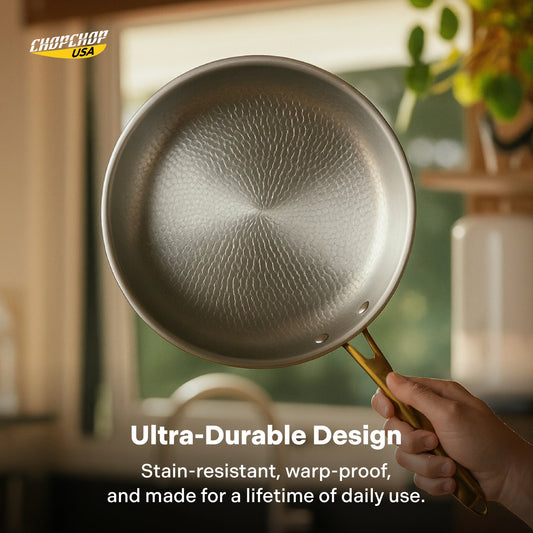
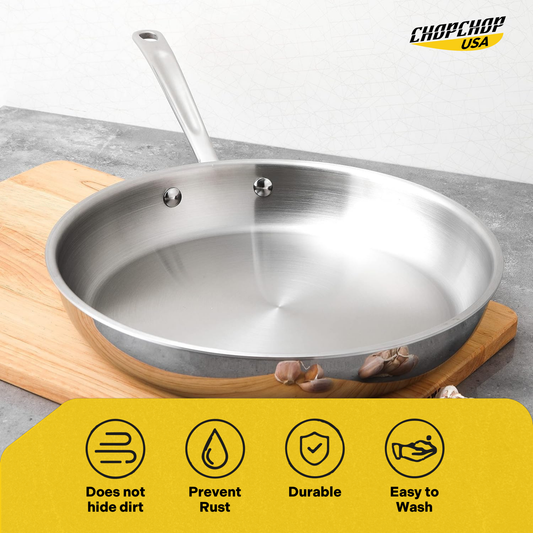
A titanium pan is cookware made either from pure titanium or reinforced titanium alloy bonded with a base metal like aluminum or stainless steel. In the titanium vs nonstick debate, titanium pans are prized for durability and chemical stability.
Pure titanium cookware contains no coatings and remains completely inert during cooking. Titanium-reinforced pans, commonly found in home kitchens, enhance strength while improving heat responsiveness. Unlike nonstick coatings, titanium surfaces do not peel or flake.
Because titanium is corrosion-resistant and non-reactive, it handles acidic, alkaline, and salty foods without altering flavor or releasing toxins. This makes titanium vs nonstick comparisons especially relevant for health-conscious cooks.
Pros of Titanium Pan

One of the biggest advantages in titanium vs nonstick discussions is durability. Titanium pans can last 10–30 years when properly maintained, far outlasting traditional nonstick cookware.
Titanium cookware is chemically inert and contains no PFAS, PFOA, or heavy metals. This makes it a safer option for daily cooking, especially at high temperatures where nonstick coatings may degrade.
Another benefit is weight. Titanium pans are about 45% lighter than stainless steel pans of the same size, offering easier handling without sacrificing strength. Professional chefs appreciate this balance of control and resilience.
Titanium pans are also rustproof and resistant to corrosion, even with frequent exposure to moisture or acidic ingredients. This reliability gives titanium an edge in the titanium vs nonstick comparison.
Cons of Titanium Pan
The primary drawback in the titanium vs nonstick comparison is cost. Titanium pans are more expensive than most nonstick cookware due to material rarity and complex manufacturing processes.
What Is a Nonstick Pan?

A nonstick pan typically features an aluminum base coated with PTFE or ceramic layers designed to prevent food from sticking. In titanium vs nonstick debates, nonstick pans are often favored for convenience.
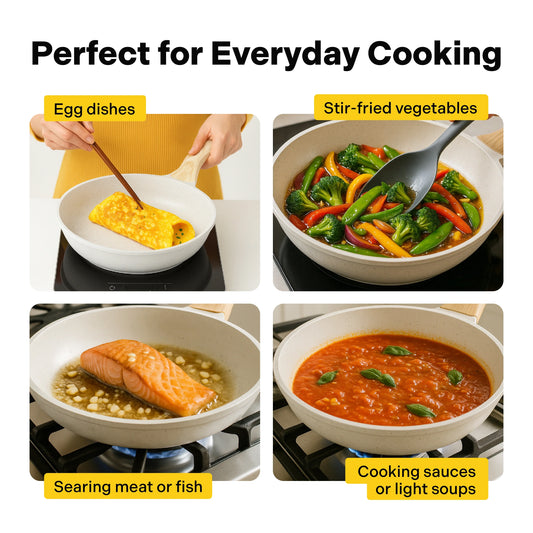
These pans excel at cooking delicate foods like eggs, pancakes, and fish with minimal oil. The lightweight aluminum base heats quickly, making nonstick pans ideal for fast, everyday meals.
However, nonstick coatings are consumable. Over time, scratches, peeling, and degradation reduce effectiveness, which directly impacts the titanium vs nonstick longevity comparison.
Pros of Nonstick Pan

The standout advantage in titanium vs nonstick discussions is nonstick performance. Multi-layer commercial coatings deliver effortless food release with little to no oil.
Nonstick pans heat evenly thanks to their aluminum core, reducing the risk of hot spots. This makes them beginner-friendly and efficient for quick cooking tasks.
Another benefit is affordability. Nonstick cookware typically costs about one-third the price of titanium cookware, making it accessible for most households.
Cleaning is also simple. Warm water and gentle wiping usually remove residue, reinforcing nonstick’s convenience advantage in the titanium vs nonstick comparison.
Cons of Nonstick Pan

The biggest limitation in titanium vs nonstick comparisons is lifespan. Most nonstick pans last only 2–3 years before coatings deteriorate.
Once coatings peel or scratch, the underlying aluminum oxidizes easily. At high temperatures, degraded coatings may release harmful PFAS residues.
Nonstick pans require strict care. Metal utensils, abrasive scrubbers, and dishwashers can significantly shorten their usable life.
Comparison Between Titanium and Nonstick Pan

Choosing between titanium and nonstick cookware depends on health priorities, cooking style, and long-term value. Understanding how each material differs in safety, performance, durability, and maintenance helps you decide which option best fits your everyday kitchen needs.
Health Safety
- Titanium cookware: Titanium contains no chemical coatings, is free of heavy metals, and remains chemically inert against acids and bases, ensuring safe cooking even at high temperatures.
- Nonstick cookware: Nonstick pans rely on surface coatings that may degrade over time, potentially releasing PFOA or PFAS residues when overheated or damaged.
Service Life
- Titanium cookware: Built with hardened pure titanium, these pans can last 10–30 years with proper care, making them a long-term kitchen investment.
- Nonstick cookware: Most nonstick pans last only 2–3 years, as coatings gradually wear, scratch, or peel with regular use.
Heat Conductivity
- Titanium cookware: Titanium conducts heat at about one-fifth the rate of iron, requiring controlled heat to prevent hot spots, often balanced by layered construction.
- Nonstick cookware: An aluminum base with coating provides fast, uniform heating, ideal for quick, everyday cooking.
Nonstick Performance
- Titanium cookware: Food release improves with surface hardening, proper preheating, and light oil use, though it is not naturally slick.
- Nonstick cookware: Multi-layer commercial coatings deliver strong nonstick performance with minimal oil.
Cleaning
- Titanium cookware: Cleaning is simple but may require soaking; warm water, a soft cloth, and baking soda handle stubborn residue.
- Nonstick cookware: Cleans easily with warm water, but abrasive tools must be avoided to protect the coating.
Corrosion Resistance
- Titanium cookware: Completely rustproof and highly resistant to acids and alkalis, even with frequent use.
- Nonstick cookware: Once coatings peel, exposed metal becomes more susceptible to oxidation.
Weight
- Titanium cookware: About 45% lighter than stainless steel of the same size, offering easier handling.
- Nonstick cookware: Slightly heavier due to aluminum bases and coating layers.
Price
- Titanium cookware: Higher cost due to rare materials and complex manufacturing processes.
- Nonstick cookware: More affordable, typically costing about one-third the price of titanium cookware.
Cleaning & Maintenance Tips

Proper cleaning and maintenance play a crucial role in preserving cookware performance and longevity. Understanding the correct care methods helps prevent damage, maintain cooking efficiency, and ensure your pan delivers reliable results through years of daily use.
Titanium Pan
Titanium cookware is designed for durability and low maintenance, making daily care simple and stress-free. After cooking, allow the pan to cool slightly before washing to protect the metal structure.
Use warm water, mild dish soap, and a soft sponge or cloth to clean the surface. For stuck-on or burnt food, soak the pan briefly and apply baking soda instead of abrasive scrubbers. Titanium is rustproof and corrosion-resistant, so it maintains performance and appearance with minimal effort.
Nonstick Pan
Nonstick cookware requires gentler handling to preserve its coating. Always allow the pan to cool before cleaning, as sudden temperature changes can damage the nonstick layer.
Wash using warm water, mild detergent, and soft sponges only. Avoid metal utensils, steel wool, or harsh cleaners, as these can scratch and degrade the coating. Hand washing is strongly recommended to extend the lifespan and nonstick performance of the pan.
Titanium vs Nonstick Pan: Which Is Better for You?

Choosing between titanium and nonstick cookware depends on cooking habits, health concerns, and long-term goals. Understanding who benefits most from each option makes it easier to select the pan that fits your kitchen, lifestyle, and daily cooking needs.
Who Should Use Titanium Pans
Titanium pans are ideal for cooks who value durability, non-toxic materials, and long-term performance. They suit frequent cooking, higher heat methods, and households seeking reliable cookware with minimal maintenance.
Who Should Use Nonstick Pans
Nonstick pans are best for beginners or occasional cooks who prefer easy food release and quick cleanup. They work well for low-heat cooking and simple meals that require minimal oil or technique.
ChopChop USA Titanium Pan Pro

ChopChop USA Pure Titanium Pan Pro
Limited-Time Offer — Get Free Gifts
The ChopChop USA Titanium Pan Pro is designed for home cooks who want premium performance, safety, and durability in one versatile pan. Built with advanced tri-ply construction, it delivers professional results without complicated care or maintenance.
Key highlights include:
- Pure titanium cooking surface that is non-toxic, corrosion-resistant, and free from chemical coatings
- Aluminum core for fast, even heat distribution and precise temperature control
- Stainless steel exterior compatible with all stovetops, including induction
- Scratch-resistant, lightweight design ideal for daily cooking and easy handling
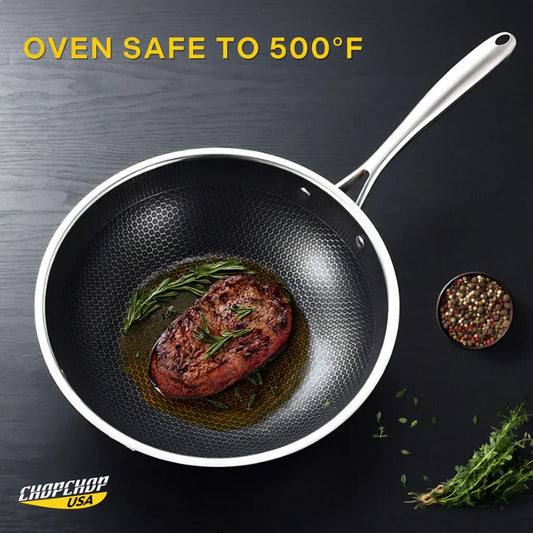
- Oven-safe construction for seamless stovetop-to-oven cooking
Unlike traditional nonstick pans, the Titanium Pan Pro prioritizes long-term performance and health safety. Whether searing, sautéing, or finishing dishes in the oven, ChopChop USA Titanium Pan Pro delivers consistent results, effortless control, and reliable durability for modern, performance-driven kitchens.
Conclusion
In the titanium vs nonstick debate, titanium stands out for durability, safety, and lifetime value. ChopChop USA Titanium Pan Pro offers a premium solution for cooks seeking performance without compromise.
For more amazing cooking content, follow us on Facebook and Instagram! If you have any questions about ChopChop USA products or promotions, contact us anytime at support@chopchopusa.com. Our 24/7 team is always happy to help.
Frequently Asked Questions
1. Is Titanium Non-Stick Pan Healthy?
Titanium pans are considered healthy because they contain no chemical coatings, remain inert during cooking, and do not release toxins at high temperatures.
2. What Is The Healthiest Pan Material To Cook With?
Titanium is among the healthiest pan materials due to its chemical stability, absence of PFAS, and resistance to corrosion and food reactions.
3. Do Professional Chefs Use Titanium Pans?
Many professional chefs use titanium pans for durability, safety, and precision cooking, especially in environments requiring reliable, long-lasting cookware.
4. Is Titanium Good For A Pan?
Titanium is excellent for pans because it is lightweight, rustproof, non-reactive, and capable of lasting decades with proper care.
5. Titanium Vs Nonstick Pan: Which Is Better?
Titanium is better for long-term health and durability, while nonstick is better for short-term convenience and low-cost cooking needs.