Titanium vs aluminum cookware is a common question for home cooks seeking safer, longer-lasting pans. Titanium generally offers superior durability and safety, while aluminum excels in heat conductivity and affordability for everyday cooking.
In this guide, ChopChop USA will explore titanium vs aluminum cookware in depth, comparing material properties, health safety, performance, durability, and ideal use cases to help you confidently choose the right cookware.
Understanding Titanium Cookware
What Is Titanium Cookware?
Titanium cookware is made using pure titanium or titanium-reinforced materials known for exceptional strength and chemical stability. Widely used in aerospace and medical fields, titanium is non-reactive, corrosion-resistant, and safe for cooking all types of foods, including acidic recipes.
Pros Of Titanium Cookware
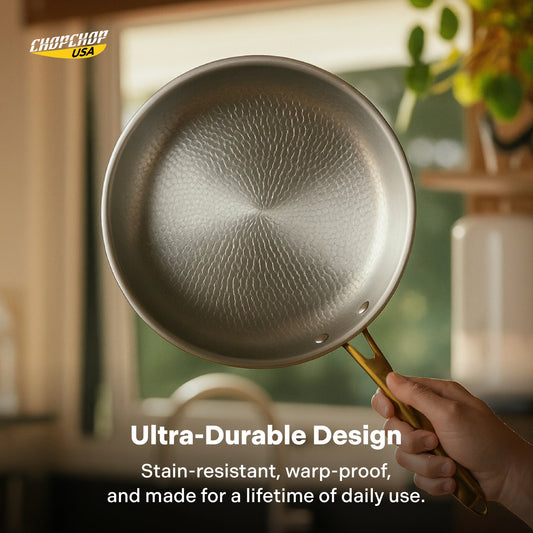
- Exceptional durability and strength – Titanium resists warping, scratching, and corrosion far better than most cookware materials, maintaining performance even with daily, high-heat use.
- Non-reactive and food-safe surface – Titanium does not interact with acidic, salty, or alkaline foods, preventing metallic taste or chemical leaching into meals.
- Lightweight yet highly resilient – Despite its strength, titanium cookware remains easy to lift and maneuver, reducing strain while cooking.
- Long lifespan with minimal maintenance – Titanium maintains its structure and cooking surface over time, requiring less frequent replacement compared to aluminum pans.
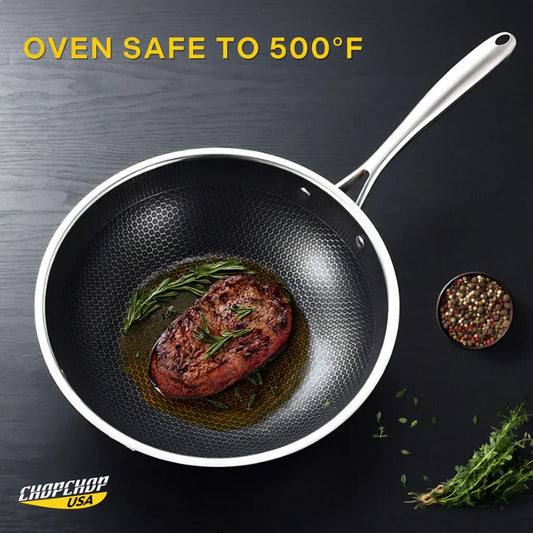
- Stable under extreme temperatures – Titanium handles high heat without degrading, making it suitable for searing, frying, and oven use.
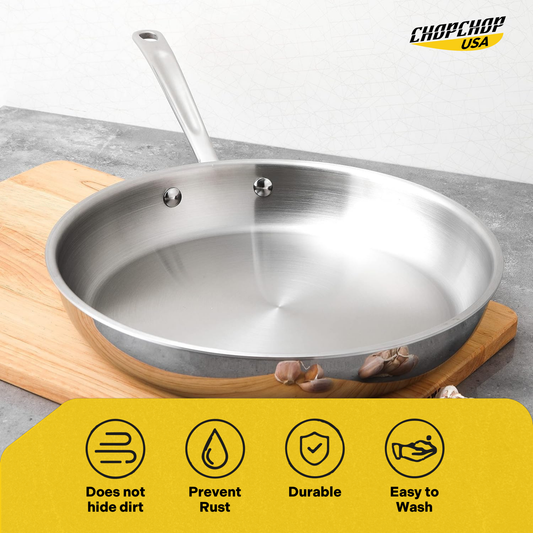
- Retains appearance and performance – Its resistance to wear helps cookware stay smooth, clean, and functional for years.
Cons Of Titanium Cookware
-
Higher upfront cost compared to basic aluminum cookware
Understanding Aluminum Cookware
What Is Aluminum Cookware?
Aluminum cookware is made from lightweight aluminum metal, long valued for its excellent heat conductivity and affordability. It heats quickly and responds fast to temperature changes, making it a popular choice in both home and professional kitchens.
Pros Of Aluminum Cookware
- Excellent heat conductivity – Aluminum heats quickly and responds rapidly to temperature changes, allowing precise control during cooking.
- Lightweight and easy to handle – Aluminum cookware is comfortable to use, especially for beginners or quick, everyday meals.
- Affordable and widely available – Aluminum pans are accessible at various price points, making them popular for budget-conscious buyers.
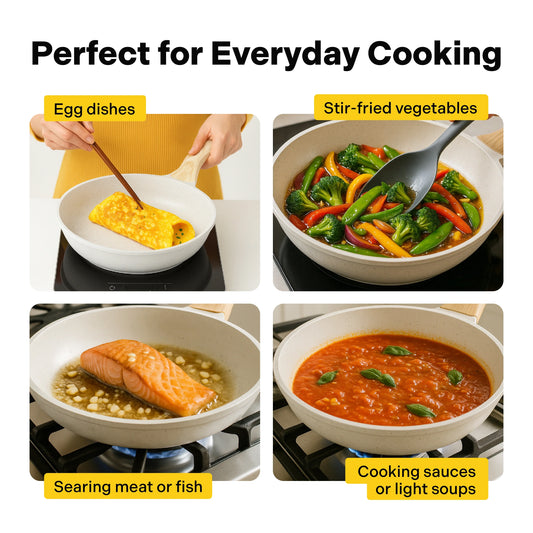
- Versatile for many cooking tasks – Ideal for sautéing, simmering, and fast-paced cooking where quick heat response matters.
- Common in professional kitchens – Many chefs use aluminum cookware for tasks requiring immediate heat adjustments.
Cons Of Aluminum Cookware
- Softer metal that dents and scratches easily
- May react with acidic foods if uncoated or damaged
- Coatings can wear down over time, reducing safety and performance
- Shorter overall lifespan compared to titanium cookware
Health & Food Safety: Why Titanium Stands Out
Health and food safety are major considerations when choosing cookware, especially for families focused on clean, chemical-free meals. When comparing titanium vs aluminum cookware, the materials behave very differently under heat, daily use, and long-term wear, directly affecting food safety and peace of mind.
Titanium: A Naturally Biocompatible, Non-Reactive Metal
Titanium is widely regarded as one of the safest metals available for cooking. It is biocompatible, meaning it is trusted for medical implants and does not trigger chemical reactions inside the human body. In cookware, titanium remains completely non-reactive and will not leach metals, toxins, or unwanted substances into food.
This stability gives titanium a clear advantage in the titanium vs aluminum cookware comparison. Even when exposed to high temperatures or acidic ingredients such as tomatoes, vinegar, or citrus, titanium maintains its integrity, preserving both food flavor and nutritional quality.
Aluminum: Potential Safety Concerns To Consider
Aluminum cookware can present safety concerns, particularly when the cooking surface becomes scratched or worn. Uncoated aluminum may release small amounts of metal into food, a risk that increases when cooking acidic or salty dishes.
While many aluminum pans rely on nonstick coatings or anodized surfaces to improve safety, these layers can degrade over time. As a result, titanium vs aluminum cookware discussions often favor titanium for long-term safety, since its performance does not depend on coatings that may eventually wear down.
Practical Performance: Everyday Benefits And Limitations
Beyond safety, everyday usability plays a crucial role when deciding between titanium vs aluminum cookware. Factors like weight, heat control, and maintenance significantly impact the cooking experience.
Weight Comparison
Both titanium and aluminum are considerably lighter than cast iron or stainless steel cookware. Aluminum is easy to lift and maneuver, but titanium offers superior strength at a similar or even lighter weight.
In the titanium vs aluminum cookware comparison, titanium’s exceptional strength-to-weight ratio makes it especially appealing for frequent cooks who want cookware that feels light without sacrificing durability or control.
Heat Performance
Aluminum is one of the most efficient heat conductors used in cookware. It heats quickly and responds immediately to temperature changes, which is why it’s commonly used in professional kitchens.
Titanium alone conducts heat less efficiently, but modern titanium vs aluminum cookware designs overcome this limitation by incorporating aluminum cores. This layered construction ensures fast, even heat distribution while retaining titanium’s safety and durability advantages.
Durability And Care
Durability is where titanium clearly outperforms aluminum. Titanium resists corrosion, scratching, and warping far better than aluminum, even with daily use and high-heat cooking.
When comparing titanium vs aluminum cookware, titanium consistently wins for cooks seeking long-lasting performance, minimal maintenance, and cookware that continues to look and function like new for years.
Best Uses In The Kitchen: When Each Material Makes Sense
Choosing between titanium and aluminum cookware depends on how you cook, how often you cook, and what you value most in the kitchen. Each material serves a different purpose, offering distinct advantages that suit specific cooking styles, budgets, and long-term expectations.
Who Should Use Titanium Cookware
Titanium cookware is ideal for cooks who value long-term performance, safety, and durability. It is especially suited for:
- Health-conscious households seeking non-toxic, non-reactive cooking surfaces
- Home cooks who prepare meals daily and need reliable, scratch-resistant cookware
- Users who want low maintenance and long-lasting value
- Those who cook at high heat or with acidic ingredients regularly
Who Should Use Aluminum Cookware
Aluminum cookware is a practical choice for lighter or occasional use. It works best for:
- Beginners learning basic cooking techniques
- Budget-focused buyers seeking affordable cookware
- Cooks who prioritize fast heat response for quick meals
- Users comfortable replacing cookware more frequently due to wear
Titanium Vs Aluminum Cookware: Side-By-Side Comparison
|
Feature |
Titanium Cookware |
Aluminum Cookware |
|
Weight |
Very lightweight with high strength |
Lightweight but softer |
|
Heat Conductivity |
Moderate alone, excellent with aluminum core |
Excellent natural conductor |
|
Heat Distribution |
Even with layered construction |
Can develop hot spots |
|
Durability |
Extremely high, warp-resistant |
Moderate, may warp over time |
|
Scratch Resistance |
Excellent |
Low |
|
Reactivity With Food |
Non-reactive, safe for acidic foods |
Reactive if uncoated or damaged |
|
Health Safety |
Non-toxic, no chemical leaching |
Depends on coating condition |
|
Induction Compatibility |
Yes, with stainless steel base |
Only if induction-ready |
|
Maintenance |
Low, easy to clean |
Medium, coating care required |
|
Dishwasher Safe |
Often yes (check manufacturer) |
Not always recommended |
|
Lifespan |
Long-term investment |
Short to medium term |
|
Best For |
Daily cooking, high heat, long-term use |
Quick meals, budget cooking |
This table highlights why titanium vs aluminum cookware often favors titanium for premium, long-lasting kitchens.
ChopChop USA Titanium Pan Pro: The Smart Upgrade Your Kitchen Deserves

ChopChop USA Pure Titanium Pan Pro
Limited-Time Offer — Get Free Gifts
If you’re ready to replace ordinary cookware, the ChopChop USA Titanium Pan Pro represents the best of titanium vs aluminum cookware innovation. Lightweight yet impressively strong, it blends modern engineering with everyday practicality.
Its advanced tri-ply construction features a pure titanium interior for food safety, an aluminum core for fast, even heating, and a stainless steel exterior for durability and compatibility with all stovetops. This design eliminates the traditional weaknesses found in titanium vs aluminum cookware comparisons.
From quick family meals to refined culinary creations, the titanium-reinforced surface resists scratches, handles high heat, and cleans easily. With professional-grade performance and minimal maintenance, the ChopChop USA Titanium Pan Pro is a long-term investment in healthier, better cooking.
Conclusion
In the debate of titanium vs aluminum cookware, titanium offers superior safety, durability, and longevity. ChopChop USA combines both metals’ strengths for reliable, healthy, and high-performance everyday cooking.
For more amazing cooking content, follow us on Facebook and Instagram! If you have any questions about ChopChop USA products or promotions, contact us anytime at support@chopchopusa.com. Our 24/7 team is always happy to help.
Frequently Asked Questions
1. Is Titanium Cookware Nonstick Without Chemical Coatings?
Titanium cookware often provides natural food release due to its smooth, hard surface, reducing sticking without relying on PTFE or other chemical nonstick coatings.
2. Is Aluminum Cookware Safe For Everyday Cooking?
Aluminum cookware can be safe when properly anodized or coated, but damaged surfaces may increase metal leaching, especially with acidic or high-heat cooking.
3. Does Titanium Cookware Work Well On Induction Stovetops?
Pure titanium is not induction-compatible, but titanium cookware with stainless steel bases or tri-ply construction works perfectly on induction cooktops.
4. Which Is Easier To Clean, Titanium Or Aluminum Cookware?
Titanium cookware is generally easier to clean due to its scratch-resistant surface, while aluminum pans may stain, discolor, or degrade as coatings wear.
5. Is Titanium Cookware Worth It For Home Cooks?
Titanium cookware is worth it for home cooks seeking long-lasting durability, low maintenance, and superior food safety compared to traditional aluminum cookware.