Which is better for your kitchen—titanium or a cast iron pan? The direct answer is both excel differently, depending on heat control, maintenance preferences, safety priorities, and the cooking style you practice daily.
In this guide, ChopChop USA will clearly compare performance, durability, safety, and usability to help you decide whether a titanium vs. cast iron pan best fits your kitchen and lifestyle.
What Is a Titanium Pan?

A titanium pan is cookware made using titanium or titanium-based layers, valued for being lightweight, non-reactive, and highly resistant to corrosion. In the titanium vs. cast iron pan comparison, it is designed for safe, modern cooking.
In most cases, a titanium pan is not solid titanium. Instead, it features a titanium cooking surface combined with an aluminum or stainless steel core to improve heat distribution and overall performance.
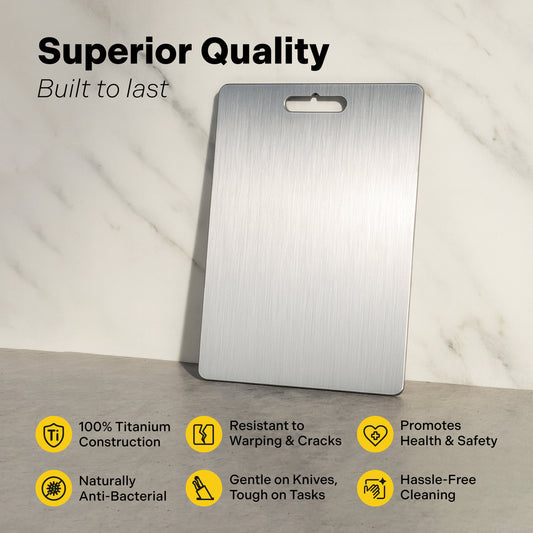
Compared with traditional materials in the titanium vs. cast iron pan debate, a titanium pan heats quickly, does not rust, and requires minimal maintenance. Because titanium is chemically stable, it does not react with acidic foods or release harmful substances, supporting healthier cooking and clean flavors.
Advantages of Titanium Pan

Titanium pans are increasingly popular in modern kitchens for their lightweight design, high safety standards, and everyday convenience. In the titanium vs. cast iron pan comparison, they deliver reliable cooking performance with minimal maintenance, making daily meal preparation faster, easier, and more efficient.
Advantages of Titanium Pan:
- Lightweight and easy to handle, reducing wrist strain
- Corrosion-resistant and naturally rust-proof
- Non-reactive surface, safe for acidic foods
- Does not leach metals or affect food flavor
- Heats quickly and evenly with layered construction
- Improves cooking efficiency and temperature control
- Low maintenance, no seasoning required
- Easy to clean and suitable for daily use
Disadvantages of Titanium Pan

Although titanium pans have a few limitations, they remain a strong choice for modern kitchens. Their drawbacks are relatively minor compared to the benefits, especially when designed with high-quality construction and thoughtful engineering.
Disadvantages of Titanium Pan:
- Higher upfront cost compared to basic cookware
- Heat retention is moderate rather than extreme
What Is a Cast Iron Pan?

A cast iron pan is cookware made by pouring molten iron into a mold, creating a thick, heavy pan known for exceptional heat retention and long-lasting durability. In the titanium vs. cast iron pan comparison, it represents a traditional, time-tested cooking option.
Cast iron pans heat slowly but retain heat extremely well, making them ideal for searing meats, frying foods, baking dishes, and slow cooking. This steady heat performance is a key factor in the titanium vs. cast iron pan debate.
When properly seasoned, a cast iron pan develops a natural nonstick surface and strong resistance to rust. However, compared with a titanium pan, it requires regular care, including drying and oiling after use, to maintain performance and extend its lifespan.
Advantages of Cast Iron Pan

Cast iron pans have remained popular for generations because of their strength, heat performance, and versatility. In the titanium vs. cast iron pan comparison, they are favored by cooks who value traditional techniques, consistent results, and long-term durability in everyday and high-heat cooking.
Advantages of Cast Iron Pan:
- Exceptional heat retention for steady cooking temperatures
- Ideal for searing, frying, and baking
- Develops natural nonstick properties with proper seasoning
- Handles high heat without performance loss
- Suitable for stovetop, oven, grill, and outdoor cooking
- Often more affordable upfront
- Extremely durable and long-lasting
- Can last for generations with proper care
Disadvantages of Cast Iron Pan

Despite its strengths, cast iron cookware comes with notable drawbacks that may not suit every kitchen. In the titanium vs. cast iron pan comparison, weight, maintenance requirements, and food reactivity are important factors to consider when choosing between cast iron and modern cookware options.
Disadvantages of Cast Iron Pan:
- Very heavy and difficult to handle for some users
- Not ideal for cooks with limited strength or mobility
- Requires regular seasoning to prevent rust
- High maintenance compared to modern cookware
- Can react with acidic foods if seasoning is weak
- May affect food flavor and pan surface
- Slow to heat up compared to lighter materials
Titanium vs. Cast Iron: What Is the Difference?

Understanding the differences in a titanium vs. cast iron pan comparison helps you choose the right cookware for your kitchen. Each material offers unique strengths in weight, heat performance, maintenance, and cooking style, making this evaluation essential for informed decisions.
|
Feature |
Titanium Pan |
Cast Iron Pan |
|
Material Behavior |
Lightweight, corrosion-resistant, non-reactive |
Heavy, dense, highly heat-retentive |
|
Weight |
Very light and easy to handle |
Very heavy, requires two-hand handling |
|
Heat Retention |
Moderate, heats quickly |
Excellent, holds heat for long periods |
|
Heat Distribution |
Even when layered with a core |
Even once fully heated |
|
Maintenance |
Low maintenance, no seasoning required |
High maintenance, requires regular seasoning |
|
Rust Resistance |
Naturally rust-resistant |
Prone to rust if not cared for properly |
|
Reactivity With Food |
Non-reactive, safe for acidic foods |
Can react with acidic foods if seasoning is weak |
|
Cooking Style |
Modern, everyday, convenience-focused |
Traditional, high-heat and slow cooking |
|
Ease of Use |
Ideal for daily use and quick cleanup |
Best for experienced cooks who enjoy upkeep |
|
Best For |
Users seeking safety, ease, and light cookware |
Users valuing classic performance and heat control |
Which Is Better for Induction Cooking?

In the titanium vs. cast iron pan comparison, induction cooking performance depends heavily on magnetic compatibility. Cast iron naturally works on induction cooktops because its iron content interacts directly with the magnetic field, ensuring efficient heat transfer and stable cooking temperatures.
Titanium pans do not respond to induction on their own and must include a magnetic base, usually stainless steel. Well-designed titanium cookware performs excellently on induction, heating quickly, offering precise control, and providing a lighter, easier-to-handle alternative to heavy cast iron.
Which Is More Durable: Titanium or Cast Iron?

Durability plays a key role in the titanium vs. cast iron pan debate. Titanium is highly resistant to corrosion, rust, and warping, allowing it to withstand frequent use, temperature changes, and daily handling without losing structural integrity.
Cast iron is also extremely durable but more brittle. While it can last decades with proper care, it is vulnerable to cracking if dropped or exposed to sudden temperature shifts, making titanium a more forgiving option for everyday kitchens.
Which Is Safer: Titanium vs. Cast Iron?

Safety is an important consideration in the titanium vs. cast iron pan comparison. Titanium is non-reactive and remains stable at high cooking temperatures, making it safe for acidic foods and consistent for long-term health-focused cooking.
Cast iron can release iron into food, which may be beneficial for some but problematic for others. Additionally, inadequate seasoning can lead to rust or food reactions, requiring careful maintenance to ensure safe use.
Titanium vs. Cast Iron Pan: What Is Better?

Choosing a titanium vs. cast iron pan depends on your cooking style and maintenance preferences. Each option serves different kitchen needs.
Titanium pans are ideal for cooks who value lightweight handling, safety, and low maintenance. They are perfect for busy households, beginners, and everyday cooking.
Cast iron pans suit experienced cooks who enjoy traditional techniques and high-heat cooking. They excel at searing, baking, and slow cooking but require regular seasoning and care.
Upgrade Your Kitchen with the ChopChop USA Titanium Cookware Collection

ChopChop USA Pure Titanium Pan Pro
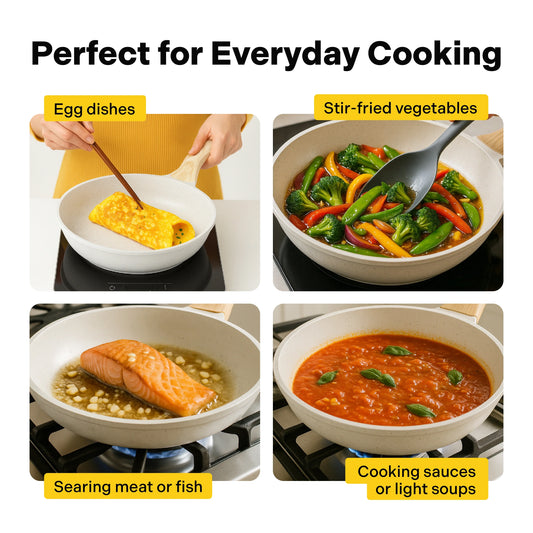
Limited-Time Offer — Get Free GiftsThe ChopChop USA Titanium Pan Pro combines pure titanium, an aluminum core, and stainless steel exterior for fast, even heating and lasting durability. Lightweight yet strong, its non-reactive cooking surface supports safer everyday meals while making food release and cleanup easier.

ChopChop USA Pure Titanium Deep Pan Pro
Limited-Time Offer — Get Free GiftsThe ChopChop USA Titanium Deep Pan Pro brings extra depth and capacity to everyday cooking. Perfect for stir-fries, pasta, curries, sauces, and family-sized meals, it features a pure titanium interior, even heat distribution, and durable tri-ply construction for effortless cooking and cleanup.

ChopChop USA Pure Titanium Saucepan Pro
Limited-Time Offer — Get Free GiftsThe ChopChop USA Titanium Saucepan Pro is made for sauces, soups, grains, oatmeal, and reheating. Its pure titanium cooking surface provides a durable, non-reactive interior, while tri-ply construction promotes consistent heating and easy cleanup, making it a versatile everyday kitchen essential.

ChopChop USA Pure Titanium Stock Pot Pro
Limited-Time Offer — Get Free GiftsThe ChopChop USA Titanium Stock Pot Pro is built for generous portions, from homemade stocks and soups to stews, pasta, and family meals. Its pure titanium interior resists corrosion and food buildup, while tri-ply construction delivers dependable heating, durability, and easy everyday maintenance.
Conclusion
Choosing between titanium vs. cast iron pan depends on lifestyle and priorities. ChopChop USA recommends titanium for modern convenience, safety, and durability, while cast iron suits traditional, high-heat cooking enthusiasts.
For more amazing cooking content, follow us on Facebook and Instagram! If you have any questions about ChopChop USA products or promotions, contact us anytime at support@chopchopusa.com. Our 24/7 team is always happy to help.
Frequently Asked Questions
1. Is Titanium Cookware Safe?
Titanium cookware is safe because it is non-reactive, corrosion-resistant, and stable at high temperatures, making it suitable for everyday cooking without chemical coatings.
2. Are Titanium Pans Better Than Cast Iron?
Titanium pans are better for lightweight handling and low maintenance, while cast iron excels at heat retention, making each better for different cooking styles.
3. What Is The Healthiest Pan Material To Cook With?
The healthiest pan material is non-reactive and stable under heat, such as titanium or stainless steel, which do not leach harmful substances into food.
4. What Are The Disadvantages Of Titanium Cookware?
Titanium cookware can be more expensive and may not retain heat as well as cast iron without layered construction or a conductive core.
5. Is The ChopChop USA Titanium Pan Pro Dishwasher Safe?
The ChopChop USA Titanium Pan Pro is dishwasher safe, but hand washing is recommended to preserve performance, finish, and long-term durability.